




During the Focus Italia event held in Milan on 29 January 2026, Prologis presented its 2025 operating results and its outlook for 2026, outlining the growing role of logistics as critical infrastructure for industrial competitiveness, supply chain resilience and the energy transition. In this context, the group confirmed a strategy focused on high-quality property development, targeted investments and the integration of energy solutions within logistics assets.
The overall backdrop remains supported by solid fundamentals but is constrained by significant structural limits. According to Prologis Research, the European logistics market is expected to remain highly active in 2026, with vacancy rates forecast to fall below 5% and new supply slowed by permitting complexities, construction costs and challenges in securing electricity grid connections. In Italy, these factors are compounded by sustained growth in e-commerce, whose penetration is estimated to rise from around 11% today to approximately 14–14.5% by 2030, and by increasing attention to energy availability as a key criterion for logistics site selection.
In 2025 Prologis invested around €120 million in Italy across new developments and acquisitions, bringing total investments in the country over the past five years to approximately €960 million. During the year the company delivered or launched more than 80,000 square metres of new space, while its overall portfolio reached more than 1.8 million square metres across 119 buildings in the main markets of Milan, Bologna and Rome. The occupancy rate stood at 99.6%, around three percentage points above the market average.
Prologis considers 2025 a year of consolidation, marked by intense development activity, with projects launched for around €100 million, more than 50% of which were built-to-suit, confirming demand for customised solutions with a high degree of industrial integration. For new developments, the company placed strong emphasis on the redevelopment of brownfield sites. This was complemented by acquisitions totalling around €25 million, aimed at further strengthening its presence in areas with the greatest imbalance between supply and demand.
Activity in the south of Milan, one of the most constrained quadrants of the metropolitan area, was particularly significant. This includes the launch of construction at Carpiano DC1, a logistics and industrial facility developed on a built-to-suit basis for Cedaspe, an Italian company within the Maschinenfabrik Reinhausen group. The project, launched at the end of December 2025, is located along the SP40 Melegnano–Binasco corridor, just two kilometres from the A1 motorway, on what represents the last available plot designated for logistics use in the Carpiano area.
Carpiano DC1 involves the construction of a single-tenant building of around 10,500 square metres, including approximately 9,012 square metres of warehouse space and 1,494 square metres of offices. Delivery is scheduled for August 2026, with operations starting in September. The building is designed to high industrial standards, with a clear height of 12.5 metres, eight loading bays, a manoeuvring yard of around 35 metres and a flexible layout suitable for future reconfigurations. Temperature-controlled areas are also planned to support production, assembly and testing activities for transformer components. The new site will enable Cedaspe to consolidate two existing industrial facilities, currently located within a three-kilometre radius, into a single modern, purpose-built complex.
Elsewhere in the Milan area, in 2025 the company also launched the Pozzuolo DC4 project, covering around 9,853 square metres, and strengthened its presence through the acquisitions of Carpiano DC2, totalling 14,000 square metres, and Vimodrone DC1, at approximately 8,350 square metres. In the Piacenza area, construction began on Piacenza DC8 and on the speculative development of Piacenza DC11, while in Lazio the speculative development of Tor Cervara DC1 continued, supporting growing demand in the Rome metropolitan area.
Energy sustainability is one of the cornerstones of the group’s strategy. In Italy, Prologis is advancing the SolarSmart programme, which provides for installation of photovoltaic systems on portfolio buildings. By the end of 2025, total renewable capacity had reached around 24 MWp, including owned systems and third-party installations on Prologis assets, resulting in annual emissions reductions of more than 8,000 tonnes of CO2. Among the most significant projects is the development at Lodi DC8 of the largest self-consumption photovoltaic plant ever built by the group in Europe, with a capacity of 5 MWp.
Alongside property development, activity at Prologis Essentials Operations also expanded in 2025. This platform brings together integrated solutions to improve energy efficiency and operational features within warehouses. During the year, 53 projects were supported, with total customer investments of €7.8 million, up 19% on 2024. For 2026, growth of around 10% is expected, supported by a well-defined pipeline and the strengthening of the local technical team.
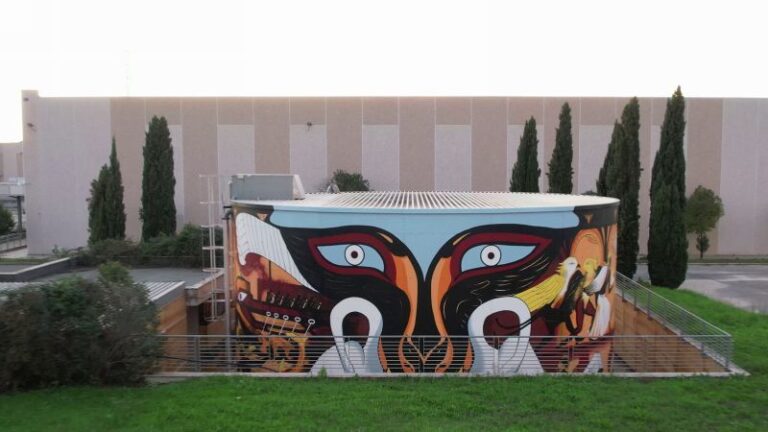
On the social and local engagement front, the PARKlife programme continued in 2025 with new urban art initiatives and services within logistics parks, alongside the inauguration of the second Prologis Sports Center in Piacenza and the expansion of the facility at the Interporto di Bologna. Further extensions to sports facilities and an expansion of free guided tours, including to parks in Rome, are planned for 2026.
Anna Maria Boidi