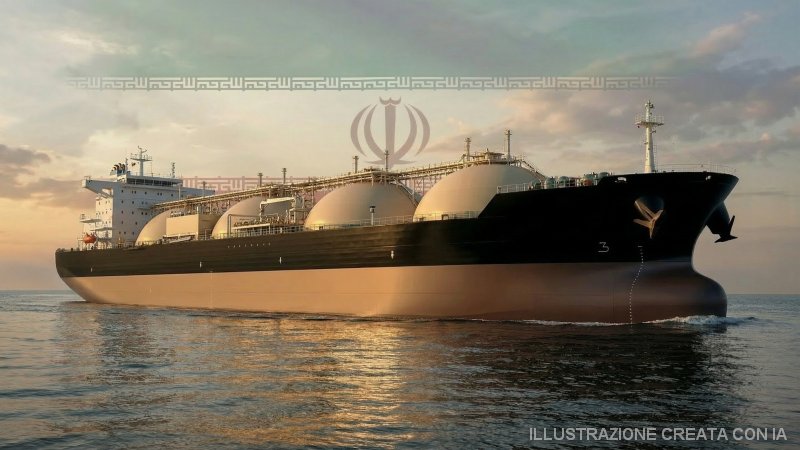




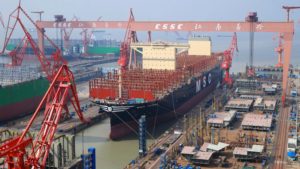
Msc, the world's largest container shipping company by capacity, continues to expand and upgrade its fleet. Undeterred by the penalties announced by Donald Trump against vessels built in China, the Swiss company placed orders in July 2025 with shipyards in the People’s Republic of China totalling more than 2.5 billion dollars. The most significant of these, worth 1.3 billion dollars and dated 17 July, involves the construction of six 22,000 teu vessels equipped with dual-fuel engines (conventional fuel and liquefied natural gas). These will be built between Shanghai Waigaoqiao Shipbuilding and Hengli Heavy Industries, with delivery scheduled between the second half of 2028 and 2029.
Also in July, Msc confirmed it would increase the capacity of six vessels already under construction at Sws, raising their capacity from 19,000 to 22,000 teu—a decision made less than a year after the original order. Earlier in the month, the company commissioned three new vessels, plus three optional units, each with a 22,000 teu capacity and LNG propulsion, from the China Merchants Heavy Industry Haimen shipyard. With a total value exceeding 1.2 billion dollars, this marks the first-ever order for ultra-large container vessels in the history of Cmhi Haimen. All these ships are intended for the Asia-Europe route and will be able to use LNG to reduce CO2 emissions.
Msc’s fleet expansion is among the fastest ever recorded in the container shipping industry. By mid-2025, the company operated a fleet of 923 vessels, with a total capacity of 6.657 million teu. An additional 125 vessels were under construction, pushing the total beyond 7 million teu by year-end. In 2025 alone, Msc signed orders for 62 large container vessels, all placed with Chinese shipyards. This is part of an industrial strategy aimed not only at increasing operational capacity but also at securing the most modern and efficient vessels in a market that rewards economies of scale and ecological transition.
The decision to entrust all orders to Chinese shipyards is particularly significant at a time when the United States is increasing pressure to reduce industrial dependence on Beijing. Msc, however, shows no intention of altering its approach. As stated by Marie-Caroline Laurent, the company’s senior vice president, “changes in US policy will not be an obstacle to ordering more ships in China.” In 2024, Chinese shipyards captured over 70 per cent of global new container vessel orders, consolidating their position as the world’s production hub for the sector.
The aggressive fleet expansion also reflects a structural shift in Msc’s commercial strategy. Following the end of the historic 2M alliance with Maersk in January 2025, the company is now operating independently. This move requires greater control over available capacity and demands a larger, more flexible and autonomous fleet. In this context, the newly announced orders are a structural response to the reshaped market landscape.