




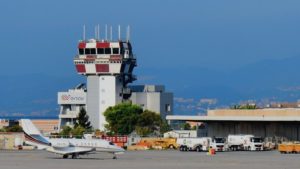
The Board of Directors of Aeroporto di Genova Spa met in Genoa on 2 July 2026 for its first session following the renewal of the company’s management. The body granted powers to general manager Francesco D'Amico and adopted the resolutions required for the operation of the corporate bodies, including the setting of directors’ remuneration, while chairman Matteo Paroli confirmed at the meeting that he would waive the remuneration attached to his role.
The board also received an update on traffic performance for the first half of 2026, which closed with a 10.4% increase in passenger numbers compared with the same period the previous year. June alone recorded a 17% rise in flights, a figure that chairman Paroli described as encouraging when commenting on the start of the new management phase: "Today’s meeting was dedicated to the operational launch of the new management team. The board began its work by addressing the main institutional requirements and the first issues relating to the company’s management. We face a process that will require commitment, the ability to listen and shared objectives, in the awareness of the value that Genoa airport represents for mobility, the economy and the development of our region. The data presented today to the board are encouraging in this respect, showing a 17% increase in flights in June alone."
On the cargo side, the Ligurian airport is showing an uneven trend. Over the whole of 2025 it handled 236.8 tonnes, down 71.4% on the previous year. In the first five months of 2026 there appeared to be a recovery, with volumes rising by 23.5% compared with the same period of the previous year to reach 107.6 tonnes. In May alone, however, the figures returned to negative territory, with a 30.9% fall and just 14.3 tonnes handled.
Genoa faces two disadvantages in cargo: the substantial lack of cargo flights, as its freight travels mainly as belly cargo, and the proximity of Malpensa, which draws freight from across the north-west. What, then, caused the increase in the first five months? Two factors can be identified. The first is the shift in traffic caused by the Hormuz crisis, which may have favoured hybrid air-sea solutions. The second is the increase in passenger flights and therefore in belly-hold capacity, against a backdrop of congestion at primary hubs.
Looking ahead, one driver of cargo growth could also come from the private shareholder in Aeroporto di Genova’s ownership structure. This is MSC, which already has a strong direct presence in the port in both containers and cruises, has acquired 15% of the airport company and could increase that stake. The Swiss group also has an Air Cargo division, based at Malpensa following the acquisition of AlisCargo. Strong interest in the Ligurian airport is also coming from Consorzio Goas, created at the initiative of Spediporto specifically to relaunch cargo at the airport. It has 21 Genoese freight forwarders as members and has obtained an Enac (National Civil Aviation Authority) licence as a Ground Handler.