





After three years of development, the German Kiba project (Künstliche Intelligenz und diskrete Beladeoptimierungsmodelle zur Auslastungssteigerung im Kombinierten Verkehr – Artificial Intelligence and Discrete Load Optimisation Models to Increase Capacity Utilisation in Combined Transport) successfully ended in October 2025, establishing itself as one of the most interesting applications of artificial intelligence in combined rail freight transport.
According to Kombiverkehr, the intermodal company that coordinated the initiative, the trials demonstrated how the combined use of artificial intelligence algorithms and mathematical optimisation models can substantially improve the efficiency, safety and sustainability of European rail transport. The project led to the creation of a demonstrator for an integrated system for network capacity management and optimised train load planning, supported by a central master data management system and a web interface for operational use.
Kombiverkehr brought together a consortium of scientific and industrial partners for Kiba, including the Technical University of Darmstadt, Goethe University Frankfurt, Deutsche Umschlaggesellschaft Schiene-Straße (Duss), Vtg Rail Europe, Inform and KombiConsult. The project received €2.34 million in funding from the Federal Ministry for Digital Transformation and Modernisation as part of the “Artificial Intelligence in Mobility” programme.
According to Kombiverkehr, Kiba’s success stems from close collaboration between academia and industry. “Only by combining these different areas of expertise was it possible to achieve such an innovative result,” said Heiko Krebs, Managing Director of the company. “As a business born from a university research project more than fifty-five years ago, we consider it essential to maintain a constant link with universities, particularly in the field of artificial intelligence, to remain internationally competitive,” added Eva Savelsberg, Senior Vice President and Board Member at Inform.
The challenges faced by Kiba reflect the complexity of European intermodal transport, characterised by multiple types of load units, rail wagons and constantly changing freight timetables. The main objective was to improve the allocation of transport units to rail wagons, taking into account static constraints (dimensions, weight, wagon characteristics) and variable ones (actual loads, operational priorities, timetables). The system had to deliver, in a short time, an optimal loading proposal even in the absence of complete information, dynamically adapting to the availability of transport units at terminals and to changes in the rail network.
The project produced two main modules: Optimised Network Planning and Optimised Train Load Planning. Both use machine learning algorithms and mathematical optimisation techniques applied to large volumes of operational data. The network planning module combines AI-based volume forecasts with mathematical optimisation to maximise train utilisation and reduce transport times and transshipments. Thanks to historical data and real-time bookings, the system can dynamically redistribute load units in the event of operational changes, line closures or train cancellations.
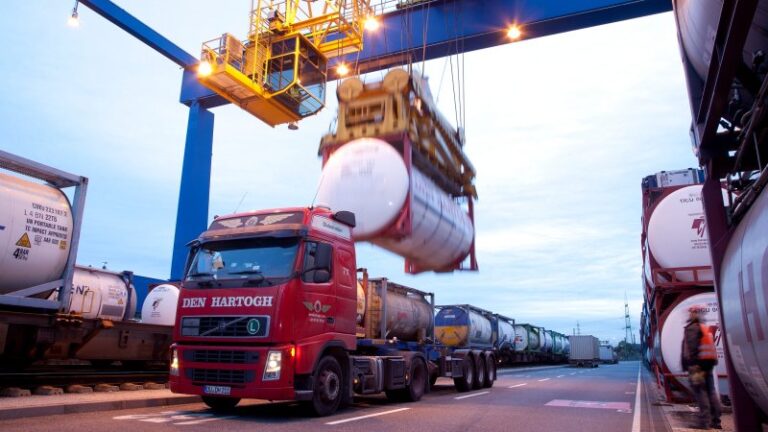
The train load planning module improves the positioning of load units on wagons, reducing crane movements, minimising handling operations and ensuring compliance with safety standards, especially for dangerous goods. This reduces handling times and increases the overall utilisation of available resources.
The optimisation models developed ensure that trains are used to their full capacity in terms of weight and length, while at the same time reducing reloading processes and yard manoeuvres. Numerous variables are considered in parallel, allowing more precise and predictable operational management. “With Kiba, we have shown how artificial intelligence can make rail freight transport more efficient,” said Heiko Krebs of Kombiverkehr. “The prototypes developed help maximise train capacity, use resources more effectively and make combined transport more attractive. It is an important step towards shifting freight traffic from road to rail and thus towards climate protection.”
With the conclusion of the project, Kombiverkehr announced that a solid foundation has been laid for further practical trials and the integration of the solutions into existing operational systems. The next steps include improving data quality, automating information exchange and conducting real-time operational tests at terminals and railway operators. The prototype will be used initially by intermodal terminal operators and combined rail transport companies, with the aim of assessing its scalability in different European contexts.
The experience gained in Kiba offers valuable insights for the future development of artificial intelligence technologies in logistics. The modularity of the solutions allows gradual and customisable implementation, while the integration of complementary technologies – such as the Internet of Things, digital twins, blockchain and 5G networks – could further expand the optimisation and control capabilities of logistics processes.