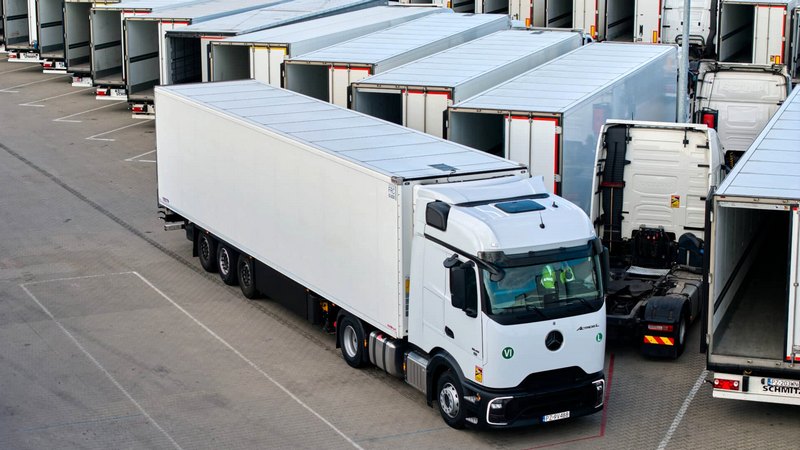





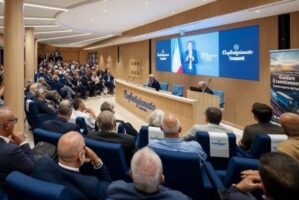

On 13 July 2026, DSV presented Leverage to Lead, the strategic programme that will define the group’s priorities until 2030. The announcement comes in the 50th year since the Danish company was founded and a few months after the completion of its integration with DB Schenker, the largest transaction in the group’s history, completed in 2025. The deal doubled DSV’s size, strengthening its global position across all three of the group’s operating divisions: Road, Air & Sea and Contract Logistics.
DSV introduced the plan by explaining that it comes at a time of deep transformation for logistics, marked by increasingly complex supply chains, geopolitical instability, changing production models and a growing need to integrate decarbonisation and technology. Against this backdrop, the Danish multinational aims to turn the scale achieved through the integration of DB Schenker into greater investment and innovation capacity. "DSV was founded 50 years ago on a simple but revolutionary idea: to bring independent businesses into a network to create something greater than the sum of its individual parts. The market has changed profoundly over these decades, but that vision has remained the same. Today, the challenge is not to grow in order to become bigger, but to use scale, expertise and technology to help companies operate in an increasingly complex and unpredictable environment", said Alfredo Gaio, Executive Vice President of DSV Air & Sea.
The strategy is built around five pillars. For customers, DSV aims to strengthen integration with their supply chains through specialist solutions, greater visibility over logistics flows and digital tools to support faster decision-making. Operationally, the company wants to increase efficiency by leveraging a more integrated global network and harmonised processes across different geographical areas and business lines. Technology remains central, with the adoption of digital platforms, advanced analytics tools and artificial intelligence applications to improve planning and transparency. The fourth pillar concerns governance, with investment in skills development and management growth. The fifth is dedicated to mergers and acquisitions: the group will continue its growth path through targeted acquisitions, to strengthen its territorial presence and broaden its specialist expertise.
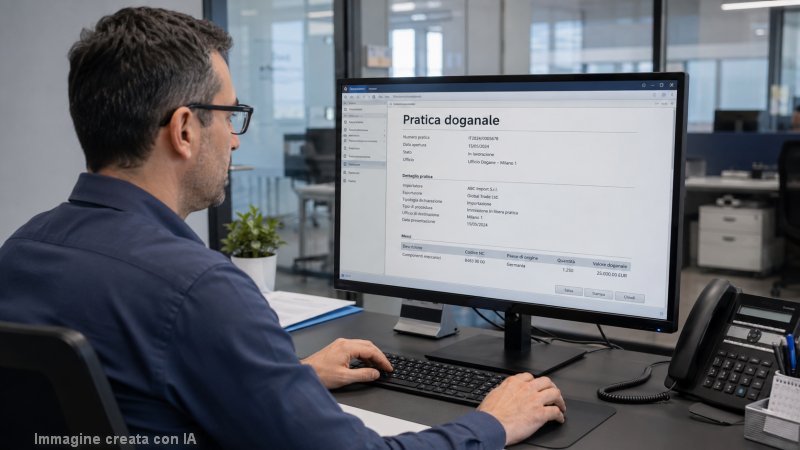
Artificial intelligence has a central role in the new strategy. It is already being applied in the group’s operational and administrative processes, as well as in order management and predictive tools designed to anticipate demand and synchronise supply chains and production. "Italy has extraordinary manufacturing capabilities and highly specialised companies. The challenge in the coming years will be to make these areas of excellence increasingly connected, efficient and responsive to market changes", said Davide Uracchi, Managing Director of DSV Contract Logistics, underlining how logistics can play "a decisive role in this process, not only as a service infrastructure, but as an element of integration between all players in the supply chain".
DSV was founded 50 years ago, on 13 July 1976, when Leif Tullberg and nine other independent Danish hauliers founded De Sammensluttede Vognmænd (The United Hauliers), initially operating in freight transport on the domestic market. The first incorporations, Borup Autotransport, Hammerbro/Bech Trans and Samson Transport, were followed in 2000 by the acquisition of the Dfds Dan Transport group, which brought DSV into air and international transport to the United States and Asia Pacific and defined the three operating divisions: Road, Air & Sea and Contract Logistics. In 2016, the acquisition of UTi Worldwide strengthened the group’s presence in the United States and Africa, and three years later the merger with Panalpina Welttransport made DSV the world’s fourth-largest logistics company. The integration of Agility GIL in 2021 brought the group into the top three global operators in the sector, while the completion of the acquisition of DB Schenker in 2025 doubled its size. DSV now has around 150,000 employees in more than 90 countries.
Pietro Rossoni