




D-Tec will present new products at IAA Transportation in Hanover, scheduled for September 2026. The Dutch manufacturer, which has long been active in intermodality and special-purpose vehicles, has built its production strategy around one key factor: reducing the cost per tonne transported. Lighter chassis, higher payload, greater structural strength and operational flexibility are therefore the four pillars of the development programme that will guide the brand in the coming years.
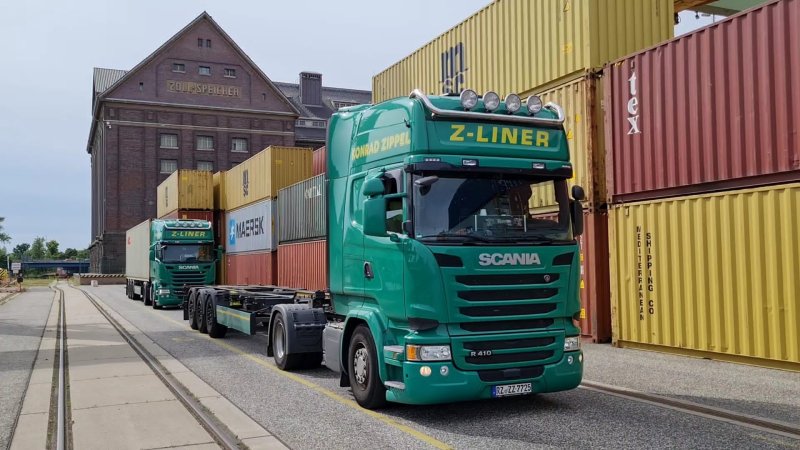
For intermodal transport, the Dutch company has begun renewing its entire range of container trailers. The new CC20, designed to carry 20-foot containers, is the clearest example of this strategy. Compared with traditional solutions, the chassis has been lightened to recover kilograms for payload while also helping to reduce fuel consumption. D-Tec has not yet disclosed the tare weight figures for the new model, but will make them available at the German trade fair.
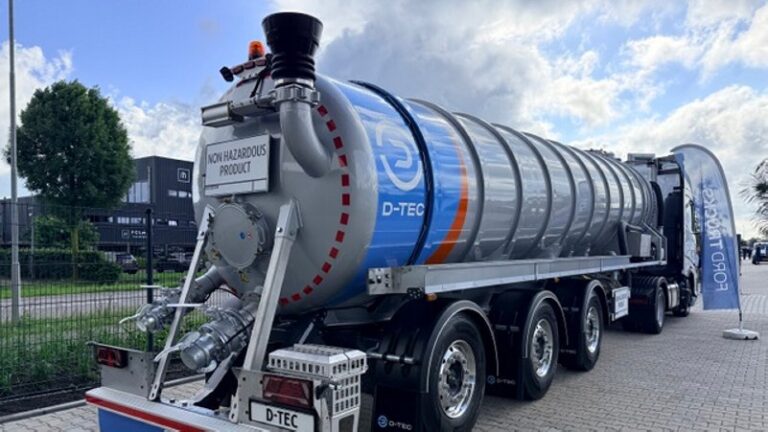
Another key new product in Hanover will be a vacuum tank semi-trailer with a steering axle, designed for the biogas sector. The vehicle has been developed to meet the needs of collecting organic waste destined for anaerobic digestion plants, a growing sector that requires vehicles capable of operating in urban settings with limited manoeuvring space. The steering axle configuration improves the semi-trailer’s manoeuvrability in the most demanding situations, widening the range of operating environments it can access. The vehicle’s integrated vacuum suction system is designed for collecting and transporting liquid food by-products, but the range of materials it can handle also includes industrial sludge, agricultural residues and bentonite. Operational versatility is central to D-Tec’s proposal, with a vehicle designed to work with several types of material throughout the year, ensuring higher utilisation rates and, in turn, a better return on investment for operators.
Major updates also concern the CC40, one of the established container chassis in the range. The introduction of automated production processes and a design review have made it possible to optimise the balance between low weight, construction simplicity and operational flexibility. A new extendable version from 40 to 45 feet stands out, allowing operators to adapt the chassis to different types of container without modifying the base vehicle, while retaining the compactness needed for day-to-day operations in the shorter configuration.
Alongside weight reduction, the Dutch manufacturer is focusing part of its design work on extending the structural life of its most widely used models. The objective is to prolong the operating life of its semi-trailers while reducing maintenance costs throughout their service life, with a total cost of ownership approach that goes beyond the initial purchase and considers the vehicle’s entire period of use.
Massimiliano Barberis