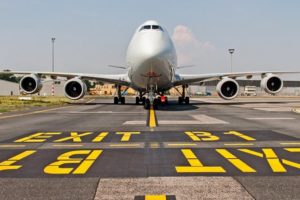








China is not merely responding to the spiral of tariffs initiated by Donald Trump with countermeasures of its own, but is also implementing targeted actions against specific US multinationals. On 15 April 2025, Beijing escalated tensions by ordering its domestic airlines to halt all deliveries of Boeing aircraft. The move hits one of the pillars of the American aerospace industry and could reshape the global balance of aircraft manufacturing, with knock-on effects for supply chains, investments and diplomatic relations.
The decision, disclosed by sources close to the National Development and Reform Commission, was formalised through an official directive with immediate impact. Available data indicates that Boeing delivered eighteen aircraft to nine Chinese carriers between January and April 2025, but further shipments—such as those scheduled for China Southern Airlines, Air China and Xiamen Airlines—are now frozen.
The original plan foresaw dozens of 737 Max aircraft being delivered over the coming years. Between 2025 and 2027, China Southern was expecting 81 units, China Eastern 53, and Air China 45. The freeze not only hinders the expansion of Chinese fleets but also significantly damages the American manufacturer’s growth outlook. The measure was accompanied by another government directive halting the purchase of US-made aerospace components and equipment, striking a broader blow to the entire American industrial ecosystem operating in China and deepening the financial impact on the sector.
For Boeing, the crisis in China represents a severe setback, as the Chinese market is expected to account for roughly one-fifth of global aircraft demand over the next twenty years. In 2018, around 25 per cent of Boeing’s output was destined for China. However, no major new orders from the Asian giant have been recorded for several years. Boeing shares dropped sharply in pre-market trading on 15 April, falling 3.72 per cent, and later lost up to 2.3 per cent on Wall Street, erasing earlier gains. In addition to financial losses, the freeze has further tarnished the company's reputation, which was already under strain due to various technical and regulatory issues.
Chinese airlines, meanwhile, are being forced to rethink their operational strategies. By the end of 2023, Boeing had accumulated around 140 737 Max 8 aircraft in its hangars, 85 of which were intended for Chinese carriers. Deliveries had only resumed in January 2025 following a prolonged suspension after the fatal crashes in 2018 and 2019. With the new freeze in place, maintenance and operational costs for existing fleets are set to rise significantly, potentially prompting some airlines to seek state support.
This shift may play to the advantage of Europe’s Airbus, which already holds a strong position in the Chinese market. Simultaneously, Beijing could use this opportunity to accelerate the growth of its domestic aerospace industry, centring on its national manufacturer Comac, the Commercial Aircraft Corporation of China. The company is ramping up production of its flagship civil aircraft, the C919, aiming to strengthen its global presence and compete directly with both Airbus and Boeing. According to deputy general manager Shen Bo and various industry sources, Comac plans to produce between 30 and 50 C919 aircraft in 2025, with some reports suggesting this target could rise to 75 units. This aligns with a broader growth strategy aiming for an annual output of 150 aircraft by 2028–2029.
The Comac C919, a single-aisle jet, entered service in May 2023 and has already carried over one million passengers. By December 2024, sixteen units were in operation, and twenty-seven more are expected to be delivered in 2025. The main Chinese carriers, Air China, China Eastern Airlines and China Southern Airlines, have each ordered at least one hundred C919s, with the goal of operating fleets of this size by 2031.
Comac is seeking to break the Airbus-Boeing duopoly in the single-aisle segment on a global scale, but it faces several challenges. Production capacity remains limited compared to western rivals, who manufacture dozens of jets per month, and global supply chain dependencies, reliance on western components and geopolitical tensions pose serious obstacles. Moreover, the aircraft must clear the critical hurdle of international certification. The European Union Aviation Safety Agency has been reviewing the C919 since 2019, and test flights in Europe are expected to begin in 2025.
Comac is also eyeing the long-haul, twin-aisle segment with the development of the C929, which is currently in the design and supplier selection phase. This model is set to compete with the Airbus A330neo and the Boeing 787 Dreamliner. The project initially began as a joint venture with Russia’s United Aircraft Corporation, but since 2023, due to sanctions imposed on Russia over the war in Ukraine, development has continued independently. First deliveries are planned for 2029 in three different capacity configurations. Comac is also exploring the cargo sector, with the development of a freighter version of the C919.