










In the second week of 2026, covering the period from 5 to 11 January, the global air cargo market recorded a sharp rebound in volumes after the usual year-end slowdown. According to weekly data and analysis from WorldAcd Market Data, worldwide tonnages increased by 26% compared with the previous week, marking a recovery similar to that seen at the start of 2025, but with chargeable weight levels around 5% higher than in the same period a year earlier. This rebound follows two consecutive steep declines at the end of 2025, of -22% and -19% week on week. Despite the growth recorded in the second week of 2026, global volumes remain around 20% below mid-December levels. The increase in tonnages affected all major origin regions, with the exception of Africa.
On the capacity side, the reduction in dedicated freighter services observed at the end of last year, following fourth-quarter peaks, has been partially absorbed. In the second week of 2026, freighter aircraft capacity increased by more than 15% week on week, although total air cargo capacity remains around 7% below mid-December levels, reflecting only a partial return of supply.
Average global rates showed a slight decline. In the second week of 2026, the worldwide average price fell by 2% week on week to USD 2.46 per kilo. This level is around 10% lower than the mid-December average but remains slightly higher, by around 1%, than the market average of USD 2.43 per kilo recorded in the same period of 2025.
The year-on-year growth in global volumes, amounting to 5% in the second week of 2026, needs to be interpreted with caution. According to WorldAcd, 2025 got off to a relatively slow start, with average annual tonnage growth of 2% in January and February, before closing the year with an average increase of 4% overall. As a result, the first signs of growth in 2026 should be assessed against a relatively moderate comparison base.
From a geographical perspective, the year-on-year increase in tonnages in the second week of 2026 was led in percentage terms by Middle East and South Asia origins, referred to as Mesa, with a 16% rise, followed by Asia Pacific at +8% and North America at +7%. In absolute terms, the most significant increase remains that of flows originating from Asia Pacific. The 8% year-on-year growth from this region is in line with the average annual increase recorded throughout 2025 for the same origins.
An analysis of the main markets from Asia Pacific shows the continuation of trends already observed last year. In the second week of 2026, volumes from Asia Pacific to the United States grew by 10% year on year, driven mainly by traffic originating from South East Asia, while flows from China and Hong Kong to the United States remained broadly stable compared with the previous year.
Towards Europe, again in the second week of 2026, tonnages from Asia Pacific increased by 15% year on year. Growth was driven in particular by China, Hong Kong, Taiwan and Thailand. WorldAcd notes, however, that this high rate is influenced by a weak start recorded at the beginning of 2025 on the same routes. In January last year, volumes from China and Hong Kong to Europe grew by just 3% year on year, while those from South East Asia fell by 17%, resulting in a slight overall decline in Asia Pacific–Europe flows in the early weeks of 2025.
The Mesa market appears particularly dynamic. Over the whole of 2025, volumes originating from this area were broadly in line with those of 2024, but significant increases were recorded in the last two months of the year, amounting to 13% in November and 11% in December year on year. The 16% growth observed in the second week of 2026 is therefore consistent with this trend and was strongly supported by flows departing from Dubai. Mesa–United States volumes increased by 10% year on year, thanks to growth in traffic from Dubai, India and Bangladesh, while Mesa–Europe flows recorded a 16% increase, with the same origins acting as the main contributors.
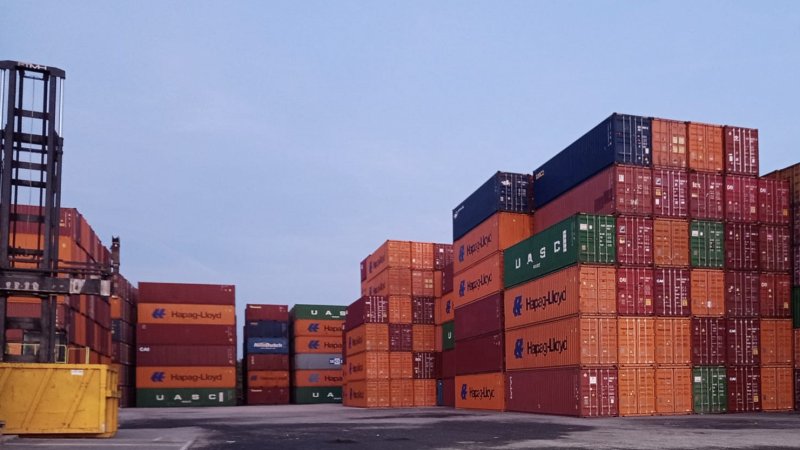
In the wider macro-logistics context, WorldAcd reports that some container shipping lines are gradually resuming services through the Red Sea and the Suez Canal. Among them, Maersk announced a limited resumption of operations during the week. However, maritime volumes on this route remain more than half below levels seen before the start of attacks on vessels, which occurred more than two years ago. The partial return of maritime capacity could also have an impact on air transport, which has benefited over the past two years from increased volumes originating from the region. At the same time, the most recent tensions between the United States and Iran highlight persistent geopolitical instability, which according to WorldAcd’s analysis could limit or slow a full return to supply chain patterns seen prior to 2023.
As for the spot market, in the second week of 2026 average global spot rates fell by 1% week on week, to USD 2.62 per kilo. The decline occurred despite week-on-week increases of 6% in spot rates originating from North America and Africa. Spot rates from Asia Pacific, by contrast, recorded a 5% week-on-week decrease. On a year-on-year basis, global spot rates are down 4% compared with the same period of 2025, mainly due to reductions from Mesa (-21%), Asia Pacific (-6%) and Europe (-4%) origins, partially offset by a 12% increase in spot rates originating from Africa.