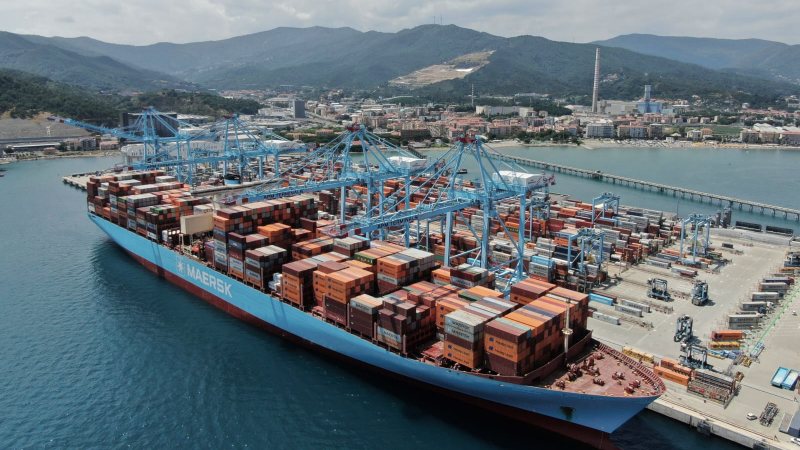











Of the eight container shipping routes covered by Drewry’s World Container Index on 22 October 2026, Shanghai–Genoa recorded the largest weekly increase in average spot rates, up 5% to $4,152 per 40-foot container. The composite index rose 2% to $4,585, its second consecutive weekly increase and highest level in 15 weeks, supported by both the Asia–Europe trade and transpacific routes.
On services to northern Europe, Shanghai–Rotterdam climbed 3% to $3,632. The recovery in Asia–Europe rates had begun a week earlier, following 13 consecutive weeks of declines, with Genoa up 7% and Rotterdam 6%. In that assessment, Drewry had reported carriers’ plans to introduce FAK rates of between $4,500 and $4,800 per 40-foot container from 19 October, while questioning whether those levels could be sustained given the increase in available capacity. To support freight rates, shipping lines are now cancelling sailings: Drewry’s Container Capacity Insight reports eight blank sailings on Asia–Europe routes for next week, compared with two this week. According to the consultancy, reduced capacity, together with surcharges, could lead to a modest rise in rates. Meanwhile, congestion at major Asian ports has eased: in Shanghai, average vessel waiting times fell from 97 hours in week 38 to 38 hours in week 42.
On the transpacific, Shanghai–Los Angeles rates rose 2% to $8,007, while Shanghai–New York edged up 1% to $10,166. According to Drewry, a reduction in supply could support a modest increase in rates next week, despite growth in effective capacity. US import demand is helping to support rates, leading Drewry to forecast stable prices over the next seven days. Across east–west trades as a whole, the British consultancy describes an uncertain market, with developments dependent on demand, capacity adjustments and regional security. Security risks and attacks on vessels continue to affect shipping into the Persian Gulf, where only two container ships entered in week 42, compared with five the previous week. Over the same period, transits through the Suez Canal increased from 54 to 55.
M.G.