









- The Russian ro-ro vessel Lady Mariia, formerly Stella-Maria and included in the US Ofac sanctions list over links to the company Mg-Flot, was hit by drones in the Mediterranean after leaving Oran. Videos from 6 September show a fire on board.
- The attack forms part of a campaign already reported in the Mediterranean against Russian assets: the tanker Qendil, hit in December 2025 according to Sbu sources, and the gas carrier Arctic Metagaz, still afloat and anchored off Benghazi. An unconfirmed Rfi investigation points to a Ukrainian military presence in Libya.
- In the Black Sea area, Russia says it struck the vessel Mavka in Chornomorsk and a loading facility in Izmail, on the Danube, between 6 and 7 September. Ukrainian authorities have confirmed damage in the Izmail district. The attacks are squeezing Ukrainian grain exports and, by July, the loss of one third of Black Sea port capacity was estimated.
The war between Russia and Ukraine is continuing in September 2026 in the Mediterranean and the Black Sea, with reciprocal attacks on cargo ships and port infrastructure. On 6 September, videos were released showing the Russian ro-ro vessel Lady Mariia, previously named Stella-Maria, with a fire on board. Initial information indicates that the vessel was hit by drones in the Mediterranean after sailing from the Algerian port of Oran, but the footage does not establish with certainty the position, the time of the attack, the extent of the damage or who carried out the operation, although the target suggests the attack may have originated from Ukraine.
The vessel is identified by Imo number 9220641 and is a 126.88-metre ro-ro unit with a gross tonnage of 8,831 tonnes, flying the Russian flag. It has appeared on the Ofac sanctions lists (Office of Foreign Assets Control of the US Treasury) since 2022, due to its association with the Russian company Mg-Flot, formerly Transmorflot, and Ukrainian military intelligence, the Gur, places it within Moscow’s military logistics network and links it to traffic between Novorossiysk and Tartus and the transport of weapons from Syria to Russia. The dissident Russian journalist Alexander Nevzorov has spoken of 12 drones hitting the vessel, part of a group launched from Libya. According to the same source, the ship was carrying a cargo of Iranian weapons and armoured vehicles bound for Syria. However, neither claim has been independently verified.
There are other significant precedents for attacks in the Mediterranean which have never been claimed but have been attributed to Ukraine by several sources against vessels linked to Russia. On 19 December 2025, the tanker Qendil was hit in international waters and Reuters, citing a source from the Ukrainian Security Service, the Sbu, reported that aerial drones had severely damaged the vessel. The second case concerns the gas carrier Arctic Metagaz, Imo 9243148, which was hit on 3 March 2026 between Libya and Malta. Ukrainian responsibility and the use of a Magura V5 naval drone emerged from an Rfi investigation. According to the last known position, the vessel is anchored about 18 nautical miles north-north-east of Benghazi, where it was secured at the end of April after drifting for almost two months, a situation confirmed by Sentinel-1 satellite images from 30 April.
At the end of May, a Russian investigation committee inspected the Arctic Metagaz in Libya using drones, underwater vehicles and the tug Icdas 1, finding that the control systems had been destroyed and that two of the four gas tanks were damaged. It interpreted the damage as a possible sign of an external explosion. These attacks bring the issue of a Ukrainian military presence in Libya back into focus. Rfi reported on the matter in an investigation based on two anonymous Libyan sources, according to whom more than 200 Ukrainian officers and technicians are operating at at least three sites in western Libya, with possible launch points for aerial and naval drones in the Misrata and Mellitah areas.
Further east, on the front closest to the Russia-Ukraine war in the Black Sea, the main pressure is coming from Russia. Its Ministry of Defence said it had struck, between the evening of Sunday 6 September and the morning of Monday 7 September, the bulk carrier Mavka in the port of Chornomorsk and a handling facility in the Danube port of Izmail, as well as a patrol boat escorting vessels carrying military cargo. Moscow claims the Mavka was carrying military equipment and that the Izmail complex was being used to unload Western military supplies. Ukrainian official sources reported fires and material damage in the Izmail district on 7 September, but did not identify the port terminal.
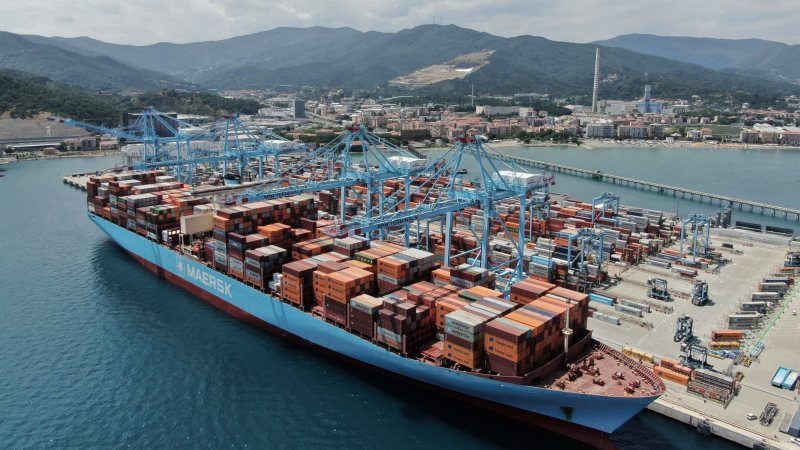
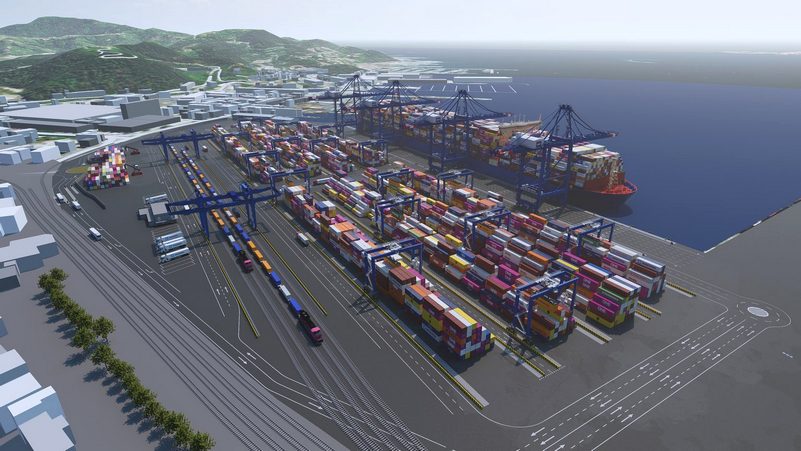
Chornomorsk is one of the three large Ukrainian deep-sea ports in the Odessa area, alongside Odessa itself and Pivdennyi, and is highly important for grain, vegetable oils and bulk cargo, while Izmail is a river port on the Danube which, together with Reni, provides an alternative outlet when the maritime ports reduce capacity. The two port systems, however, are not interchangeable. In addition to military attacks, the Danube ports are being affected by low water levels on the Danube, which have reduced barge capacity by up to 60%. In 2025, Ukraine’s Black Sea ports handled 73.3 million tonnes and its Danube ports just 8.9 million tonnes, according to an OSW analysis.
This latest Russian attack is part of continued pressure on Ukraine’s export infrastructure. In the preceding days, there were attacks on the ports of Odessa and Chornomorsk and on the Orlivka crossing, on the Romanian border, where drones suspended operations for several hours on 6 September. The consequences are particularly visible across the grain logistics chain: in July, the Ukrainian farmers’ association estimated that the attacks had removed about one third of the grain export capacity of the Black Sea ports, reducing it to about four million tonnes a month, while Kernel suspended operations at Chornomorsk and four of the 13 large grain terminals had halted purchases. The situation has global consequences.