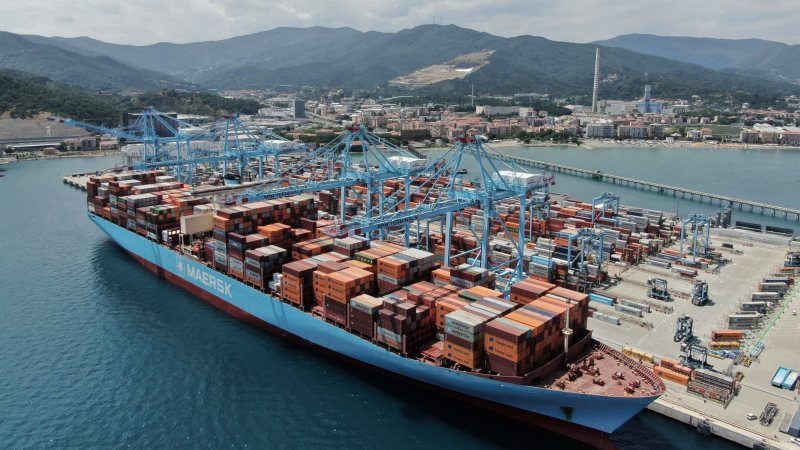









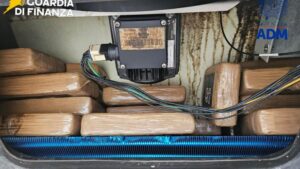
Fifty-three kilograms of pure cocaine, divided into 45 blocks and hidden in the engine compartment of a container carrying fruit: this was the seizure reported by Guardia di Finanza on 7 September 2026 at the port of Livorno. The drugs were hidden in a container from Peru and had an estimated street value of around €20 million. The shipment was identified during import controls carried out by Guardia di Finanza officers and customs officials. The container was selected for a detailed inspection, which led to the discovery of the cocaine in a technical compartment.
The operation took place just a few days after another seizure at the same port, where on 24 August 2026 Guardia di Finanza officers and customs officials discovered 65 kilograms of cocaine in a refrigerated container carrying bananas from Ecuador. In that case, the drugs were packed in 57 blocks and hidden in a compartment created near the unit’s refrigeration system. The two operations led to the seizure of 118 kilograms of cocaine in 102 blocks, with an estimated retail value of around €40 million. In both cases, the cocaine was being transported as part of fruit and vegetable shipments from South America, and the hiding place was a technical section of the container, namely the refrigeration unit.
The choice of perishable cargoes and refrigerated containers fits a pattern familiar to investigators, as it combines high-turnover flows, shorter operating times and technical structures that can be exploited to create hiding places. The August case, however, showed a higher level of preparation, as the compartment where the 57 blocks had been placed was shielded with lead plates, while the drugs were wrapped in aluminium, with the aim of making radiographic scanning of the container more difficult. The anomalies were nevertheless detected through checks using scanners and drug-sniffing dogs.