





The Northern Sea Route, the Arctic corridor managed by Russia through the state nuclear agency Rosatom, is heading for a new traffic record in 2026. The company aims to exceed the threshold of 40 million tonnes of freight carried for the first time, after handling 37.02 million tonnes in the previous record year, 2025. Rosatom chief executive Aleksej Likhachev has already attributed growth of 14-15% in the first months of 2026 compared with the same period the previous year, with more than 15 million tonnes by the end of May.
But what cargo moves along this route? Most of the tonnage comes from Russian energy exports. In 2025, liquefied natural gas accounted for 58% of volumes, mainly linked to the Siberian Yamal LNG plant, with a smaller contribution from Arctic LNG 2 because of international sanctions and the availability of ice-class vessels. Last year, LNG production fell by 2.7%, partly because of scheduled maintenance at Yamal LNG. Crude oil, largely from Gazprom Neft’s Arctic production and, in particular, the Novoportovskoye field on the Yamal Peninsula, accounted for 21%. Gas condensate and refined petroleum products remain smaller categories: the former reached 1.55 million tonnes, up 17%, while the latter totalled 1.27 million tonnes.
General cargo – supplies for Arctic settlements, metals and semi-finished products, including Nornickel cargoes, industrial equipment and project cargo – contributed around 3.91 million tonnes. Dry bulk remains marginal and volatile: coal fell to about 413,000 tonnes, while mineral concentrates stopped at 365,000 tonnes, inflated by a single shipment of 330,000 tonnes of iron concentrate from Murmansk to China. Container transit, the most strategically significant segment, still accounts for a very small share of the route’s total tonnage.
Only part of this volume, however, concerns transport between Asia and Europe, excluding shipments with either origin or destination in Russia. In 2025, it reached about 3.2 million tonnes, spread across 103 voyages by 88 vessels, according to data from Centre for High North Logistics, CHNL. Container ship transits alone totalled 15, up from 11 in 2024 but still a niche activity.
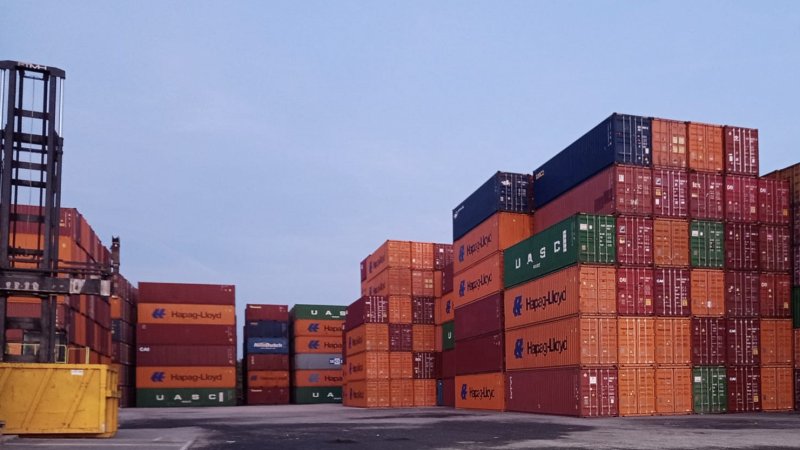
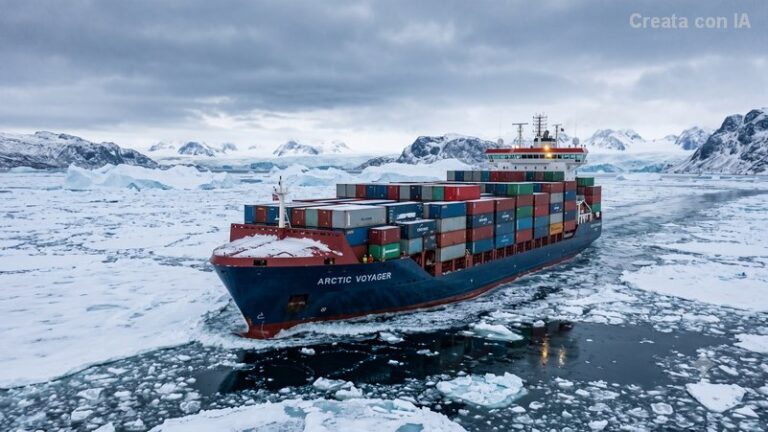
Yet containers appear to stand out in 2026. Rosatom has authorised seven Chinese container ships to transit towards Europe and has presented the initiative as the first regular programme, rather than merely an experimental one, for container transport along the Arctic route. The Chinese company Sea Legend moved first, launching the China-Europe Arctic Express: eight weekly departures between mid-August and early October, from Ningbo-Zhoushan to Felixstowe and other North European ports, with a declared transit time of around 20-22 days for the Ningbo-Felixstowe leg. On 15 August, the Dubai Tower sailed from Ningbo as the first vessel in the service, which is expected to use seven container ships with capacities ranging from about 1,500 to 4,890 TEU. South Korea has also launched a trial with the container ship PanStar Acro, which departed Busan on 22 August and is bound, via the Northern Sea Route, for Felixstowe, Rotterdam and Gdansk.
For some China-Northern Europe connections, the distance is reduced by 30-40% compared with Suez, with journey times in some cases falling towards three weeks. However, the viable window for conventional container ships remains concentrated between August and October, while ice, weather and changing conditions continue to limit the ability to guarantee scheduled services. Seasonal constraints are compounded by operational and political ones. Russian authorisations are required, along with ice-class vessels or adequate escorts, icebreaker assistance in many conditions and more expensive insurance cover, while the port and rescue network remains less extensive than on traditional routes. Russia’s management of the route through Rosatom also exposes shippers, insurers and European ports to regulatory and reputational risk linked to dependence on Russian permits and infrastructure.
We are still far from a genuine alternative to the southern routes. Coface estimates that only 3.5% of current traffic between East Asia, Northern Europe and North America could realistically shift to Arctic routes. Even moving from 37.02 million tonnes in 2025 to more than 40 million tonnes would require about three million additional tonnes, an increase of around 8%. Independent analyses by Kommersant and Euromaidan Press indicate that this contribution should come mainly from more regular shipments of liquefied natural gas and oil, while there appear to be no additional factors linked to container services that would be sufficient on their own to exceed the 2025 level.
Antonio Illariuzzi