




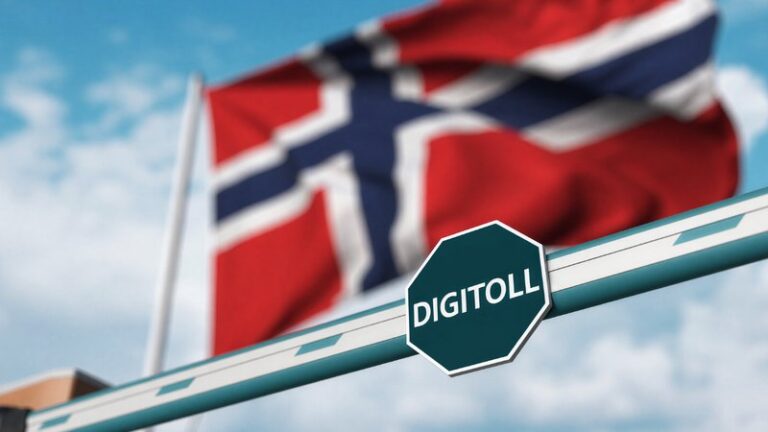
On 15 September 2026, Norway will change the management of imports through the entry into force of the first phase of Digitoll, the new digital customs system introduced by Tolletaten, the Norwegian Customs Authority. The obligations will not apply only to Norwegian importers, but will also involve exporting companies in the European Union and other European countries that move goods into Norway. Customs Support Group (Csg), an independent operator specialising in customs clearance and international trade solutions, says many companies are still underestimating the scale of the change and the limited time left to prepare.
The new regime will be introduced in two phases. On 15 September 2026, the digital submission of notification and disclosure data relating to the transport operation and the goods will become mandatory before, or at the latest when, the border is crossed. On 1 March 2027, the second phase will begin, when the customs declaration will have to be submitted no later than the crossing of the Norwegian border. The current direct transport regime, which allows goods to be delivered to the consignee and the declaration to be completed within the following 10 days, will be abolished. The information required for customs purposes will therefore have to be available much earlier than under current practice, requiring closer coordination between exporters, importers, transport operators and customs representatives.
"Digitoll does not only concern Norwegian importers. Exporters and logistics companies across Europe will also have to adapt established processes and ensure that the necessary information is available within the required timeframe," explains Knut Espen Johansen, Managing Director of Customs Support Group Norway, adding that "in some respects, Digitoll represents a kind of mini-Brexit for Norway: fundamental cross-border trade processes are changing within a relatively short period of time".
Digitoll also changes the allocation of responsibilities along the supply chain. Transport companies become legally responsible for the digital communication to the Norwegian Customs Authority of data relating to the vehicle, the driver, the place and expected time of the border crossing, and the references of the consignments being transported. Responsibility for the customs declaration remains with the importer or owner of the goods. Several parties must therefore exchange complete and accurate datasets within tighter timeframes.
Information on the adoption of the system shows how much work remains to be done: by mid-2026, according to Csg, only 25-30% of daily road transport operations bound for Norway were registered through Digitoll, with even lower rates for maritime, air and rail transport. The main critical issue concerns foreign hauliers, which handle a significant share of shipments bound for Norway. "Many Norwegian freight forwarders and customs operators are already prepared. The greatest challenge concerns foreign hauliers, which handle a significant share of shipments bound for Norway," says Kristoffer Eriksen, Senior Customs Consultant at Customs Support Group Norway. "Knowledge of Digitoll within these companies is still relatively limited: this is where we see the greatest need for updating."
Norway is important for European exports: in 2025, European Union companies exported goods worth around €64bn to the Scandinavian country, a figure confirmed by Eurostat, which places Norway seventh among extra-EU destination markets for EU exports. Norwegian imports from Italy alone, according to data reported by Csg, reached around €3.5bn in the same year. The Norwegian case is part of a broader trend that John Wegman, CEO of Customs Support Group, sees in a growing number of European countries: customs clearance is shifting from an activity carried out downstream in the logistics process to an information requirement that must increasingly be managed upstream. "Companies involved in cross-border trade must therefore focus not only on their own customs processes, but increasingly also on data flows along the entire supply chain," Wegman added.