






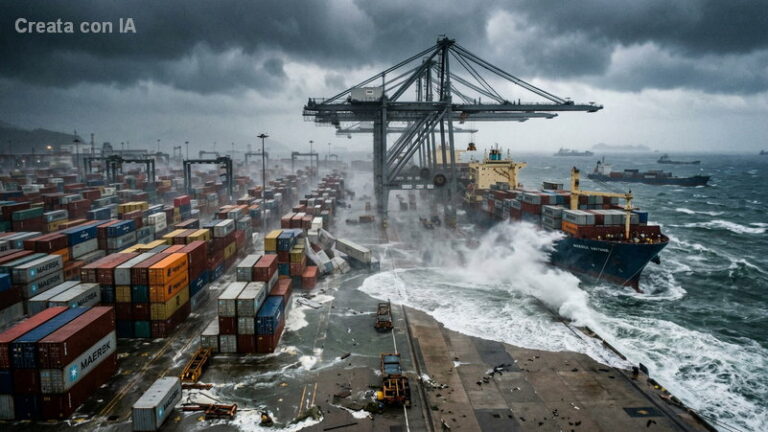
Typhoon Bavi swept across the East China Sea between 10 and 12 July 2026, following a path up the coast that hit Taiwan’s and eastern China’s main port hubs in succession. Classified as a high-intensity typhoon, it brought sustained winds of more than 130 km/h, along with torrential rain and violent storm surges, striking first the Taiwan Strait and then the Yangtze River Delta. The ports of Kaohsiung and Taipei, followed by the Chinese terminals of Ningbo-Zhoushan and Shanghai, closed preventively and consecutively for between 24 and 48 hours, depending on the area. Together, these four ports handle more than 30% of global container traffic.
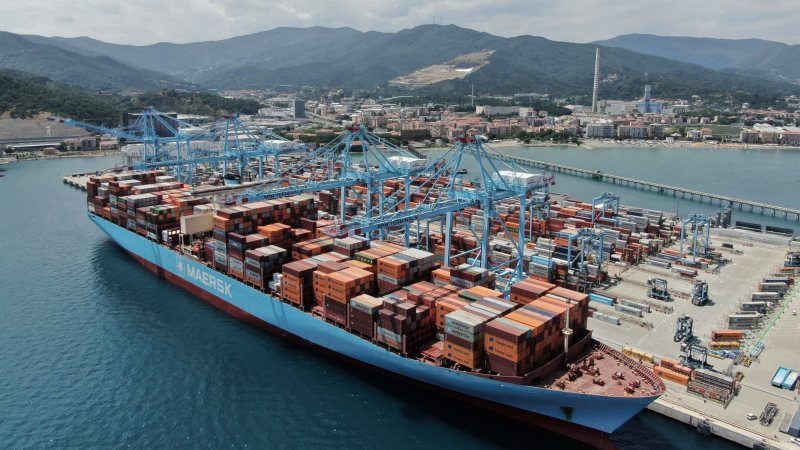
The halt in port operations triggered a domino effect on international routes. Ships stuck at berth were unable to complete unloading operations and joined vessels already weeks behind schedule because of diversions from the Middle East, creating an anchorage bottleneck that forced dozens of container ships of more than 15,000 TEU to wait several days for a berth.
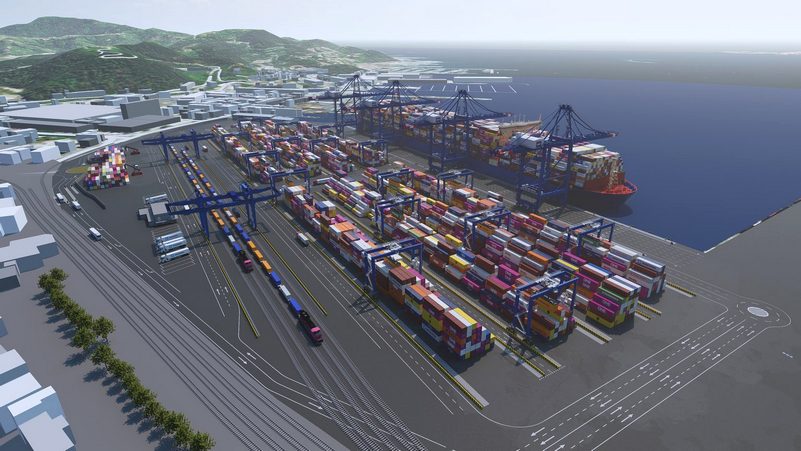
The biggest problem, however, is not berth capacity but space in storage yards. During the shutdown, inland factories continued to send containers to the ports by road and rail, filling available space with export cargo that could not be loaded. Yard density therefore approached the critical threshold of 85-90%, a level above which internal container handling slows, further extending ships’ dwell times in port. The shutdown also interrupted the return flow of empty containers that ships discharge in Asia to be refilled. A 48-hour stoppage is enough to create an equipment shortage in Chinese industrial districts over the next two weeks, making it harder for shippers to secure standard 40-foot containers ahead of the peak shipping season.
The impact is also spreading to South-east Asia. Ships leaving Shanghai or Ningbo are adding further delays to their schedules and, in the coming weeks, will arrive late and in greater numbers at subsequent transhipment ports. The slowdown in demand for vessel capacity recorded in recent weeks had given carriers some room for manoeuvre, but the typhoon’s impact has largely absorbed that margin. In Singapore and Port Klang, Malaysia, terminals have already activated emergency storage areas to absorb the simultaneous arrival of delayed vessel strings.
Antonio Illariuzzi