






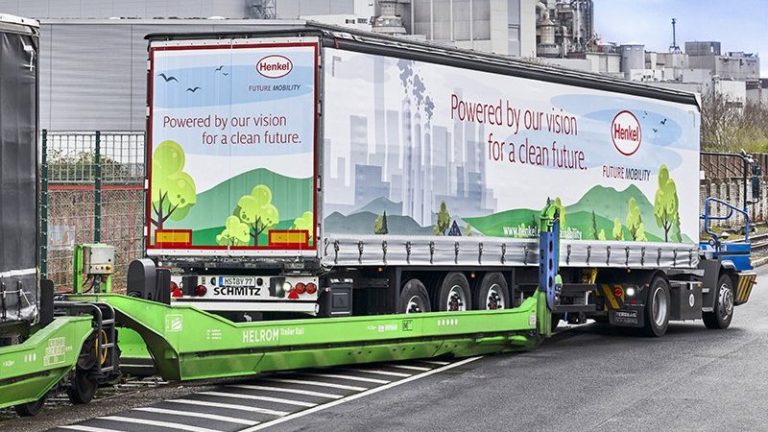
At the end of May 2026, Helrom filed for insolvency for the second time in less than a year, this time with a definitive outcome: the company’s liquidation. The trains had already been at a standstill for at least a week when employees were informed that operations were no longer economically sustainable. Patents, wagons and other assets will pass to the bankruptcy trustee, who will have to sell them to third parties or dispose of them; at present, there are no confirmed buyers. The crisis has also reached Italy, where the German company had launched a number of international services.
The most immediate impact is being felt in Trento, where Helrom Italy operated at the Interbrennero terminal with 16 employees, according to Filt Cgil (Italian Federation of Transport Workers of the Italian General Confederation of Labour). The union said the company had informed staff that it could no longer bear labour costs and had asked them to return company property and documents, although it had not yet proceeded with immediate dismissals. The union said employees had been asked to consider voluntary resignations or mutually agreed terminations, as Italian law imposes procedural constraints that slow down collective redundancies. Filt Cgil described the situation as "serious and unacceptable". The workers currently remain formally available for duty, but activity at the terminal is essentially at a standstill. Filt Cgil has called for talks involving the company, Provincia di Trento (Province of Trento), Interbrennero and the competent institutional bodies, stressing that the repercussions affect not only the 16 workers but also the local economy and logistics investments already made in the area.
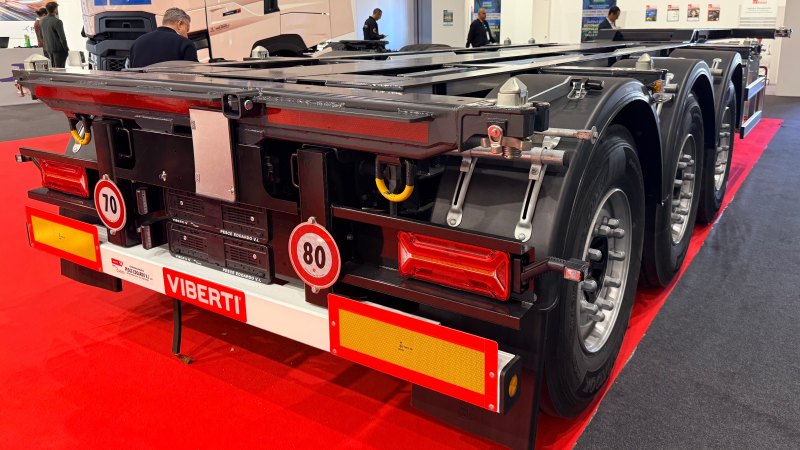
The operational standstill has also created an infrastructure problem: Filt said three tracks at the Interbrennero terminal are occupied by unused and unmoved Helrom wagons. These are Trailer Rail articulated wagons, Helrom’s distinctive product, designed to load standard road semi-trailers horizontally without the need for cranes, pocket terminals or swap bodies, thanks to side-swinging pockets on each train set. The technology, which required years of development and tens of millions of euros in investment, is now immobilised on sidings while the trustee seeks a solution. In the meantime, Interbrennero’s infrastructure is losing available capacity at a node considered strategic for combined road-rail traffic along the Brenner corridor.
In Italy, Helrom’s perimeter also includes Helrom Italia Srl, legally based in Milan, with around nine employees according to publicly available data, active in rail freight transport and in managing commercial relations with Italian customers for international services. The liquidation of the German parent company raises questions over the future of the Italian subsidiary, which have not yet been clarified in specific official statements. The closure of the parent company also makes the continuity of contractual relationships uncertain for freight forwarders that used Helrom Italia for services to and from Germany, Austria and Hungary.
On the Brenner corridor, Helrom launched the Regensburg-Verona service in 2025, with four weekly departures in each direction, presenting it as a rail alternative on a route congested by restrictions on heavy goods traffic and infrastructure works, including those on the Lueg bridge along the A13 motorway in Tyrol. The network also included services from Düsseldorf to Vienna, Budapest, Verona and Trento. With the liquidation, Verona Quadrante Europa loses an operator specialised in a niche but high-value-added segment - non-craneable semi-trailers - in a context where competition from other intermodal operators and from purely road-based transport remains intense.