







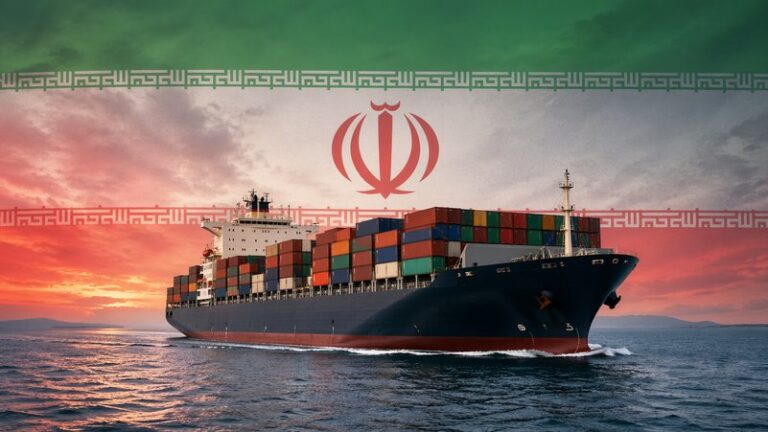
- The agreement between the United States and Iran provides for the reopening of the Strait of Hormuz from Friday 19 June 2026, with the naval blockade to be removed within 30 days. The memorandum of understanding also includes the suspension of sanctions on Iranian oil and the release of 24 billion dollars in frozen assets. The parties will have 60 days to define the final terms.
- Shipowners and operators are reacting cautiously. The main Japanese shipping companies, among the first to comment, say the resumption of transits will depend on the details of the agreement. Bimco is calling for credible guarantees from both sides and notes that mine clearance remains a fundamental unresolved issue.
- Almost 300 laden vessels are stationed in the waters of the Persian Gulf waiting to transit, with a similar number of empty vessels on the Gulf of Oman side. According to Kpler, a further 250 units are in the Persian Gulf ready to load. Managing a sudden surge in traffic through a corridor just two miles wide in each direction, however, creates a risk of collision.
The agreement between the United States and Iran on the Strait of Hormuz, confirmed by both sides on 15 June 2026, marks a turning point, but not the end of the crisis. That is the view of several transport and logistics analysts in the hours following the announcement. The agreement, which is expected to be signed on Friday 19 June, provides for the complete removal of the naval blockade within 30 days and, according to statements by Donald Trump, an effective reopening from the date of signature. However, it is only a partial agreement: the parties will have 60 days to define the final details. Beyond the issue of transit through the Strait, the known elements of the text include the suspension of sanctions on Iranian oil exports, the conclusion of a final nuclear agreement within the 60-day period, the release of 24 billion dollars, about 21.8 billion euros, in frozen Iranian assets, and the cessation of Israeli military operations in Lebanon. It should be made clear, however, that neither Washington nor Tehran has published the full version of the memorandum.
The financial market response was immediate: news of the agreement pushed Brent crude futures down by almost 5%. But those directly involved in the maritime transport of crude oil and liquefied natural gas are maintaining a wait-and-see stance. "From the bridge and the engine room where we are, the situation looks very different from what newspaper headlines may suggest", Angad Banga, chief executive of the maritime conglomerate The Caravel Group, owner of Fleet Management Limited, one of the world’s largest fleet management companies, told Bloomberg. Banga has several crews blocked in the Persian Gulf: "We have already seen positive signs in the past, and I believe that ultimately what matters is how solid the agreement is".
The main Japanese shipping companies, among the first to comment publicly on the agreement, have also adopted a cautious approach. Mitsui Osk Lines stressed that close coordination with governments and insurance companies will be essential before ships can be sent through the Strait, while Nippon Yusen said the normalisation of traffic depends on what is actually established in the agreement.
"It should also be remembered that the Strait must be cleared of any mines before ordinary navigation can resume", container shipping analyst Lars Jensen said on LinkedIn. AIS data processed by Vesselfinder at 06:00 on the morning of 15 June showed no significant increase in ships heading towards the transit route after the announcement of the agreement. In the following hours, the only exception observed was the LNG carrier Disha, reported to be entering the eastern arm of Hormuz towards the Gulf of Oman, according to Bloomberg.
Bimco, the world’s largest shipowners’ organisation by number of direct members, has called for the key details of the agreement to be clarified before navigation can be considered safe: "Credible guarantees must be provided by both sides of the conflict before traffic can return to pre-crisis levels", said Jakob Larsen, the organisation’s head of security, adding that mine clearance remains a critical issue and that the high number of ships blocked in the Gulf makes careful coordination of departures necessary. A guidance document published last month by Bimco, Intertanko and the International Chamber of Shipping also warns that, in heavy traffic conditions, the risks of collision and grounding increase significantly and recommends not relying on AIS for vessel positioning, because of electronic interference that has complicated tracking in the area over the past month.
The number of ships waiting makes the pressure built up over months of blockade tangible. According to Muyu Xu, senior crude oil analyst at Kpler, almost 300 laden vessels are in the Persian Gulf waiting to cross the Strait as soon as conditions allow, while a similar number of empty units are waiting on the Gulf of Oman side, ready to return to the loading terminals. A further 250 ships are sailing in the Persian Gulf, ready to take on cargoes for possible outbound voyages. The actual number could prove even higher as vessels that had switched off their transponders resume transmissions.
The Strait of Hormuz is a physical as well as a political bottleneck: just 39 kilometres wide at its narrowest point, with navigation lanes of only three kilometres in each direction, a sudden influx of concentrated traffic could create high collision risks. Managing this congestion will be one of the main challenges even once security issues have been resolved. "Safety is the absolute priority for all ships and companies operating in this area", said Brett Erickson, managing principal at Obsidian Risk Advisors. "Masters know this. Crews know this. A single oversight, a single attack or a single political decision can call everything back into question and put people’s lives at risk again". On the commercial front, Iran’s semi-official Fars news agency reported that transits will be free for 60 days, after which Tehran will begin applying fees for security, navigation, environmental protection and insurance cover services. The future management of "navigation services" in the Strait will be determined jointly by Iran and Oman.
Jensen outlines a scenario for container shipping based on a gradual recovery. Provided the agreement holds and the Strait is safe to use, container carriers could begin progressively restoring calls at Persian Gulf ports, with possible dedicated additional sailings in an initial phase to clear the backlog built up during the crisis. Spot rates to the region, currently very high, more than offset any insurance premiums still in force, although they will fall quickly once flows resume. According to Jensen, a return to full pre-crisis normality will take two or three months: not only to reorganise vessel rotations, but also to normalise return flows of empty containers and to manage the demand for cargo space compressed during the months of closure, which could generate a concentrated wave of shipments and related terminal bottlenecks.
According to Jensen, however, the most important issue for container shipping at global level is another one: when and whether the reopening of Hormuz will also lead to the resumption of Red Sea transits through the Suez Canal. Spot rates on the Asia-Europe trade have risen in recent weeks, driven by full ships. A return to the Suez route would sharply reduce sailing distances and release additional capacity for carriers. Hypothetically, if carriers were to restore return routes from Europe to Asia in the next few hours, ships routed via Suez would start arriving in Asia three or four weeks later, increasing available capacity and most likely ending the current period of strength in peak demand.
M.L.