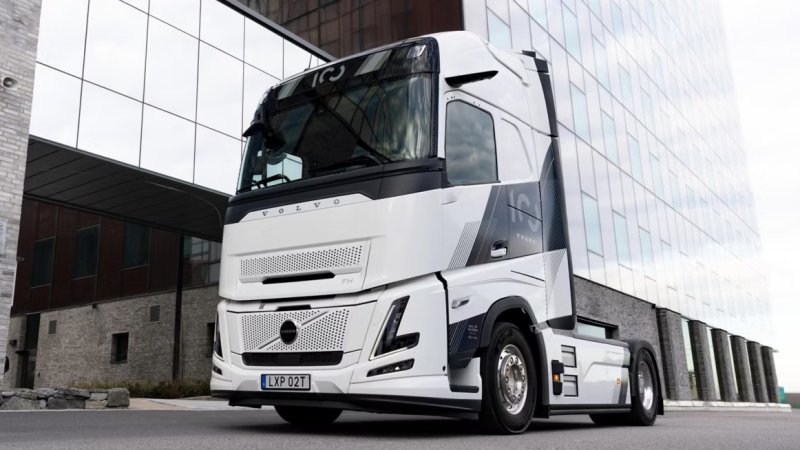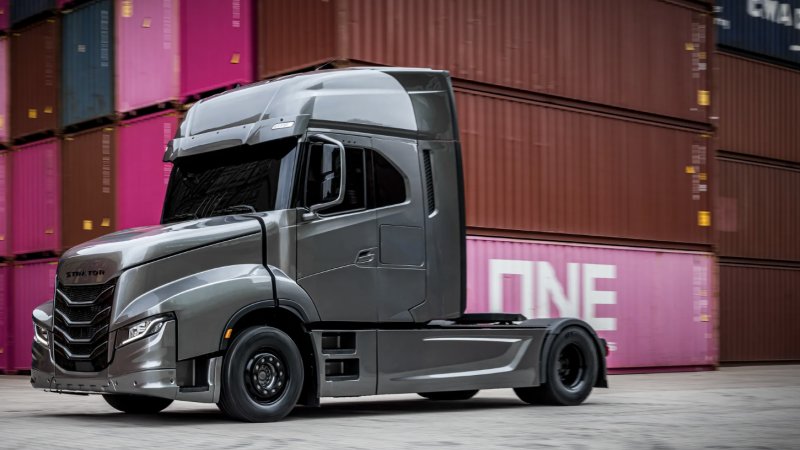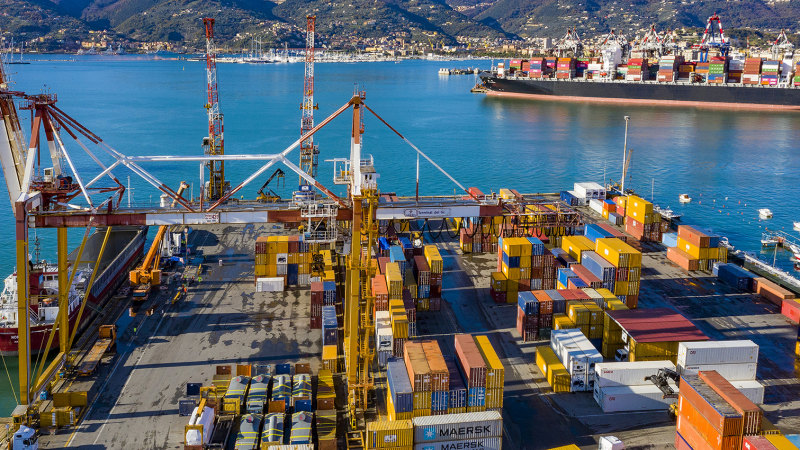




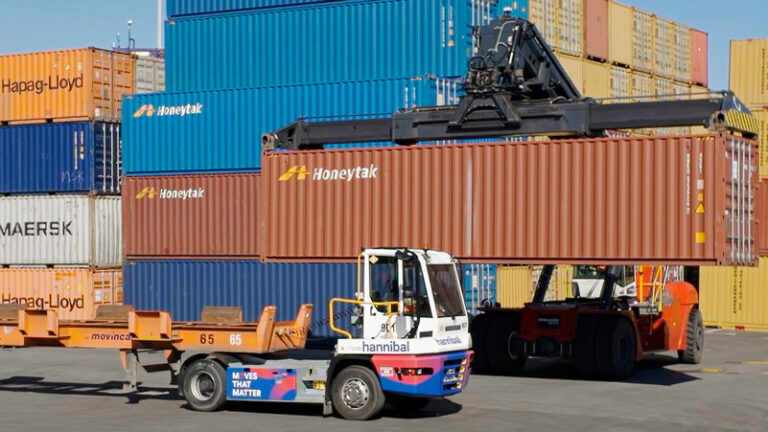
Contship introduced its first electric port tractor into quay operations at La Spezia Container Terminal in May 2025, adding a new measure to the terminal’s technological innovation plan. The vehicle will be used by Hannibal for internal shuttle operations, with the aim of launching an operational assessment of the gradual electrification of the quay tractor fleet. The project targets direct emissions generated by port activities, classified as Scope 1, and forms part of Contship’s decarbonisation pathway. The choice of an electric tractor reflects a typical operating condition in container terminals: vehicles work on defined routes, close to charging stations, and frequently stop, brake and manoeuvre.
In this context, regenerative braking makes it possible to recover part of the energy during deceleration, while electric traction helps reduce consumption in repeated container handling operations. This unit will also test the effectiveness of the technology in the terminal’s normal working conditions. Contship notes that electrification can also affect the operating environment on the quay. Lower noise levels and reduced vibration improve working conditions for operators and may help make daily shuttle activities more consistent, especially when vehicles operate close to cranes, yards and container transfer areas.
The investment was co-financed under the Green Ports PNRR project, through a tender promoted and managed by the Autorità di Sistema Portuale del Mar Ligure Orientale (Port System Authority of the Eastern Ligurian Sea). The initiative is part of the Green Ports programme: renewable energy and energy efficiency measures in ports, supported by the European Union with Next Generation EU resources to reduce carbon dioxide emissions and improve air quality in port cities. Denise Sofia, Contship’s ESG manager, referred to the Moves that Matter strategy, launched in 2025, which sets measurable targets for decarbonising the Group’s activities in line with SBTi standards. According to the company, the initiative highlights the role of public-private cooperation in developing measures designed to cut emissions.