







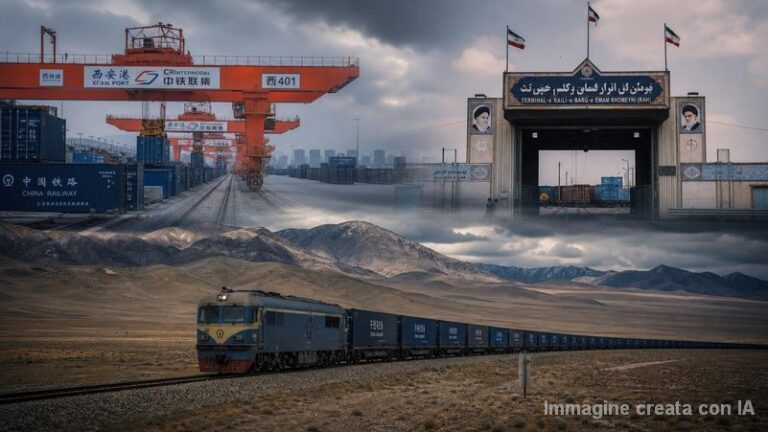
Since the United States imposed a naval blockade on Iran on 13 April 2026, Tehran has made greater use of rail to keep a trade corridor with China open. According to people familiar with the shipments cited by Bloomberg, the number of freight trains linking Xi’an, in central China, to Tehran has risen from about one a week before the conflict to one every three or four days. The route runs through Kazakhstan and Turkmenistan and is currently one of the few alternative channels still available for Iranian imports.
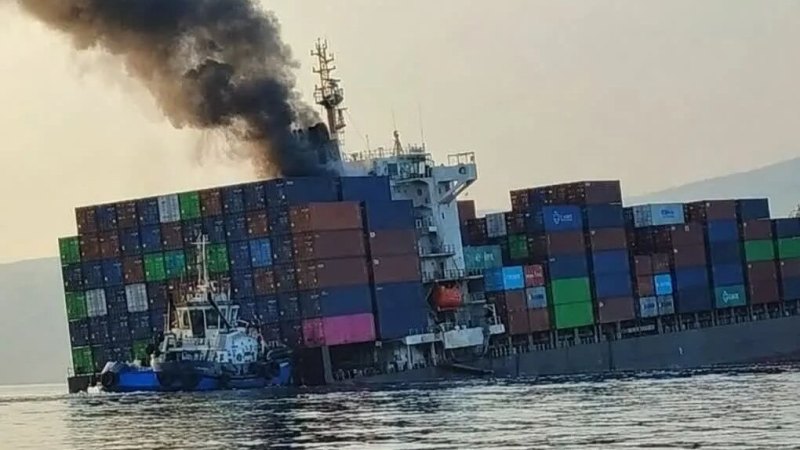
The cost of this transport has inevitably surged. According to the same sources, rates for shipping a standard 40-foot container along the route have reached $7,000, about €6,300, an increase of roughly 40% compared with normal levels. Each train leaving Xi’an carries about 50 containers, a capacity that is incomparable with that of an ocean-going container ship. The rail corridor therefore covers only a marginal share of the volumes that would normally move by sea. According to Kambiz Etemadi, head of the container committee at the National Association of Iranian Shipowners, cited by the semi-official Fars agency, Iran can shift no more than 40% of its usual maritime traffic to overland routes.
In its article of 8 May 2026, Bloomberg reports that flows are currently unbalanced and almost entirely directed towards Iran. The trains carry industrial and consumer goods, including components for the automotive industry, generators and electronics. The Iranian authorities have indicated that, at a later stage, the use of rail routes to export products such as petrochemicals and fuels will be assessed. Altan Dursun, general manager of Silkroad-Avrasya Multimodal Logistics, a Turkish agency specialising in freight rail bookings with China, said these trains previously did not run at all in some weeks, whereas they are now fully booked for the whole of May. Planning is already under way to increase capacity in June.
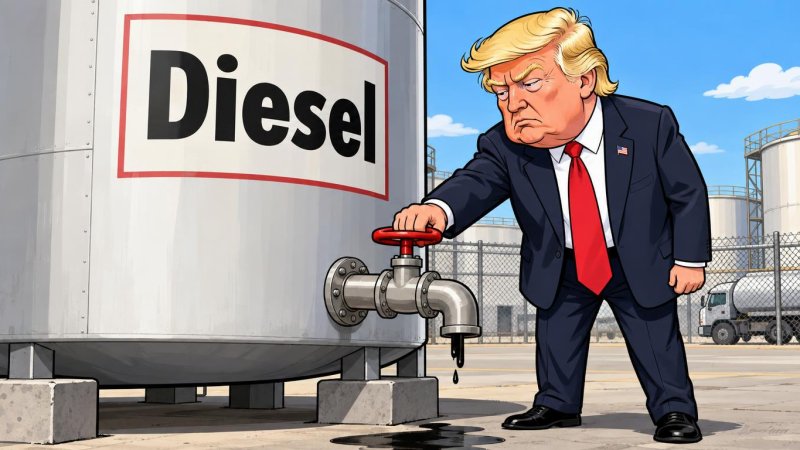
The rail corridor with China is part of a broader logistics strategy that Tehran has pursued for years: building alternative routes capable of reducing its exposure to Western pressure. Last October, Iran exported diesel by rail to Afghanistan for the first time, using the 225-kilometre Khaf-Herat line, which connects Iran’s north-eastern province of Khorasan-e Razavi with the Afghan city of Herat. In February last year, China inaugurated a direct freight rail link to Hairatan, in northern Afghanistan, and in the following months Uzbekistan and Afghanistan announced plans to extend the line to Herat, about 130 kilometres from the Iranian border. Iran has also committed to investing billions of dollars in a north-south corridor linking it to Russia.
In addition to the railway with China, other overland corridors are also seeing rising demand. Demand for road transport from Türkiye is increasing, with most new loads consisting of food products and sunflower oil, while to the east Iran’s ambassador to Pakistan has met the Railway Minister to discuss projects aimed at increasing freight volumes between the two countries. The acceleration in overland traffic, however, also increases Tehran’s dependence on China, which buys almost all Iranian oil and was already the country’s main trading partner before the conflict. In recent days, China has hosted Iranian Foreign Minister Abbas Araghchi and called for the Strait of Hormuz to be reopened "as soon as possible".
P.R.