






- The closure of the Strait of Hormuz and attacks in the Persian Gulf are diverting significant shares of global container capacity towards alternative ports in India, Oman and Sri Lanka. Arrival delays at Mundra could reach 49 days, while departure delays at Nhava Sheva have risen by 118%.
- The port of Salalah in Oman was closed following drone attacks on 11 March, depriving the northern Indian Ocean transhipment network of a key hub. More than 30,000 containers are stranded along India’s west coast, prompting direct intervention by the Indian regulator to contain surcharges applied by carriers.
- Globally, the most critical congestion clusters are concentrated in East and West Africa, with average vessel waiting times of between 17 and 22 days at Beira and Conakry, and in major Asian hubs such as Shanghai and Busan, which are subject to temporary closures due to adverse weather conditions.
Port congestion in container shipping is taking on a new shape in 2026, increasingly less attributable to a uniform global bottleneck and more dependent on localised geopolitical shocks that ripple along international routes. The crisis in the Middle East, with military tensions in Iran and the Persian Gulf, represents the most significant disruptive factor in recent months, capable of reshaping established logistics patterns and generating sudden congestion in ports previously peripheral to major trade flows.
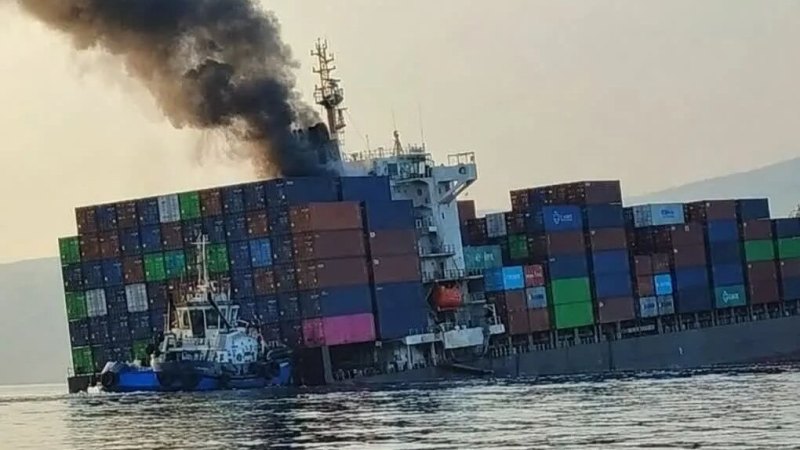
According to Alphaliner analysis, more than 10% of global liner capacity is directly affected by route deviations imposed by the crisis in the Strait of Hormuz. Container lines are extensively rescheduling their services, shifting growing portions of their fleets away from Persian Gulf ports and redirecting them to alternative gateways in India, Oman and Sri Lanka. The result is extraordinary pressure on gateways such as Mundra, Jawaharlal Nehru Port (Jnpa, also known as Nhava Sheva) and Kandla on India’s west coast, which are handling volumes well above their normal absorption capacity.
Data collected by visibility platform project44 quantify the scale of the disruption: arrival delays at Mundra could reach 49 days, while at JNPA departure delays have increased by 118% compared with pre-crisis levels. Across India’s west coast, more than 30,000 containers are estimated to be awaiting routing, according to Business Standard. The situation has required direct intervention by the Indian maritime regulator, which has launched a review of surcharges applied by ocean carriers, deemed in some cases disproportionate to actual operating conditions. Deendayal Port at Kandla recorded the arrival of 22 vessels in just 72 hours, including services rerouted from the Gulf, and is preparing additional storage areas to prevent operational paralysis.
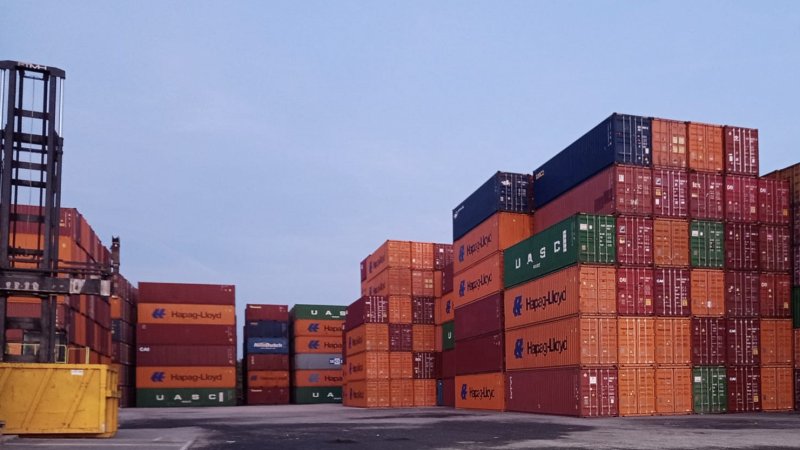
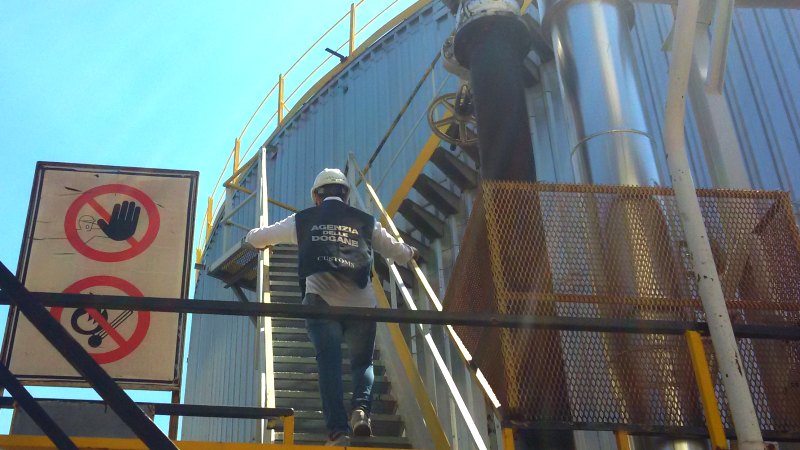
On the customs front, India has introduced emergency measures to manage shipments that failed to reach their intended Gulf destinations. The Central Board of Indirect Taxes and Customs (Cbic) has issued a circular simplifying, for a period of 15 days, the handling of returned or stranded export containers, allowing exporters to move goods back to their warehouses through a procedure known as "Back to Town". Jawaharlal Nehru Custom House, which serves the country’s largest container gateway, has acknowledged a significant backlog of export shipments at terminals, customs depots and container yards, directly linked to booking suspensions by shipping lines and the closure of key Gulf ports. In practice, some container storage facilities have temporarily taken on the characteristics of a functional dead end for exports on certain routes, pending the reopening of Gulf-bound services.
A further disruptive factor is the closure of the port of Salalah in Oman following drone attacks on 11 March. Until then, Salalah had been a cornerstone of transhipment in the northern Indian Ocean, a critical hub for flows between Asia, the Middle East and East Africa. Its unavailability has forced carriers to suspend calls and redesign transhipment chains across the region, pushing additional volumes towards Indian ports and worsening congestion already beyond critical levels. Transit times along the Gulf–India–Asia corridor have lengthened, in some cases adding to delays already accumulated at transhipment ports.
However, congestion is not limited to India and the Gulf. Issues are also emerging in East and West Africa, where ports such as Beira and Conakry are reporting average vessel waiting times of between 17 and 22 days. In this region, infrastructural fragility — including recurring crane failures, adverse weather and high yard density — amplifies the impact of global shocks, turning temporary disruptions into prolonged delays. Significant pressure is also reported at Tema in Ghana and Maputo in Mozambique, where the risk of cargo rollovers is considered high by international operators.
Among major Asian hubs, Shanghai is experiencing the highest average waiting times, estimated at around two days with peaks of up to five, due to bunching, adverse weather and recent closures. In Busan, a closure of around nine hours between 2 and 3 March due to strong winds caused delays that propagated along subsequent schedules, confirming how even short disruptions can have cascading effects on an already strained network. In China, the risk of micro-closures or restrictions on berth operations due to wind gusts of force 8 to 9 on the Beaufort scale is flagged by operators as an additional source of uncertainty, with potential impacts on transhipment connections.
The combination of port congestion, temporary closures and large-scale rerouting is producing effects that go well beyond longer transit times. Effective fleet capacity is reduced — despite nominal overcapacity — as vessels spend more time waiting, out of position or deployed on longer routes. Ensuring the availability of empty equipment in the right place at the right time becomes more difficult, with direct consequences for container rotation cycles.
On the cost side, structurally weak base freight rates, according to S&P Global projections for 2026, are being offset by congestion surcharges, war risk premiums and emergency intermodal costs. These are compounded by indirect costs for shippers, particularly demurrage and detention charges on containers held at ports or customs depots due to the blockage of Gulf destinations.
Outlook analyses for 2026 indicate that, despite downward pressure on freight rates driven by weak demand and expanding capacity, volatility generated by congestion and disruptions is creating highly differentiated pricing across routes. Shippers face a scenario in which base rates are favourable but operational risk remains significant. This asymmetry is driving multi-supplier strategies, a mix of long-term contracts and spot rates, and increased scrutiny of contractual clauses covering transit times, port selection and surcharge allocation. For carriers, congestion at key ports and the closure of hubs such as Salalah offer opportunities to withdraw capacity and support rates on certain routes, but at the cost of rising operational complexity and deteriorating schedule reliability, as consistently measured by visibility platforms.
For logistics operators, the current environment highlights the need to strengthen real-time visibility tools and to establish pre-negotiated alternative routing plans. Equally important is the revision of transport contracts to explicitly address port congestion and port closures, with clear clauses on cost allocation, alternative capacity availability and the handling of extraordinary surcharges.
M.L.