






Array ( [0] => 8 [1] => 41 )

Podcast K44

Cronaca

  • Camionista spara a un collega con pistola scacciacani

    Camionista spara a un collega con pistola scacciacani

    Un camionista di 42 anni è stato denunciato dalla Polizia Stradale di Modena per minaccia aggravata dopo aver esploso un colpo con una pistola scacciacani contro un collega lungo l'A1, al culmine di una lite tra autotrasportatori nei pressi di Modena Nord.

Transpotalk

Normativa

Mare

  • Il tifone Dolphin ingolfa ancora il porto di Shanghai

    Il tifone Dolphin ingolfa ancora il porto di Shanghai

    Dieci giorni dopo il passaggio del ciclone Dolphin i terminal di Yangshan registrano attese fino a dieci giorni prima dell'ormeggio con oltre trenta navi in coda. Nel Nord Asia restano bloccati più di 2,4 milioni di teu di capacità.

Autotrasporto

  • Camion fermi allo Stretto di Messina sono un disagio cronico

    Camion fermi allo Stretto di Messina sono un disagio cronico

    La Lega Autisti Autotrasportatori Indipendenti Siciliani Nazionale denuncia attese fino a sei ore per l'imbarco a Tremestieri e al Porto Storico di Messina durante l'esodo estivo. Non è un caso isolato: il problema si trascina da anni, tra proteste, esposti e promesse rimaste in gran parte sulla carta.

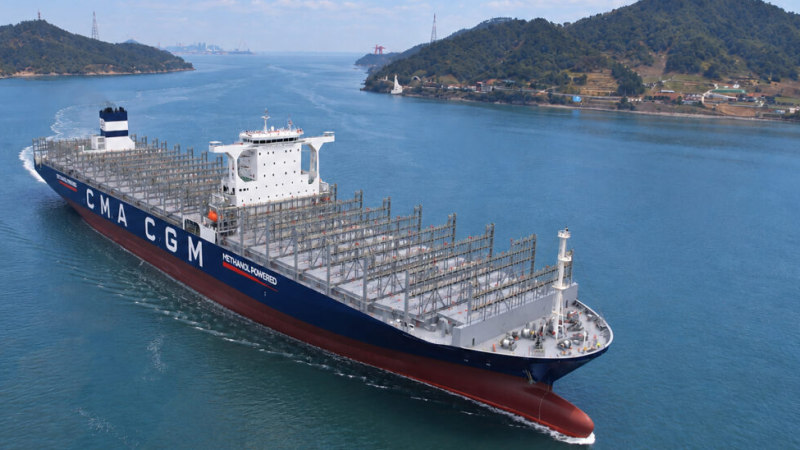
    Boomerang effect of tariff truce on maritime shipping

    The unexpected truce in the trade dispute between the United States and China, initiated by Trump, is having a significant impact on the container shipping market. The US government has decided to temporarily lower tariffs on imports from China for a ninety-day period, aiming to revive trade flows following the tariff hikes announced on 9 April. This move, though temporary, has triggered an immediate reaction from market players, with visible effects on demand, freight rates, and shipping capacity.

    According to the analysis by Xeneta, the reduction in tariffs has led to a sharp increase in shipping demand from China to the United States. With an average transit time of around 22 days between Chinese and US ports, many importers are rushing to ship their goods to make the most of the available window. The result is an early spike in demand, already evident at the end of the second quarter, which risks further congesting a trade corridor already under strain.

    Adding to the complexity of the situation is the state of supply. Shipping lines had recently reduced capacity on US-bound routes, reallocating part of their tonnage to Far East–Europe connections. This adjustment, carried out through slower sailing speeds and the cancellation of scheduled voyages, resulted in a 17% drop in available capacity—equivalent to around 265,000 teu on a four-week average from 20 April—and an 86% increase in so-called blanked sailings, which totalled 89,100 teu.

    This ongoing supply squeeze, combined with the surge in demand driven by the tariff suspension, is exerting clear upward pressure on freight rates. Xeneta's data shows a clear picture of recent developments in maritime transport costs along the China–US route. From 1 January to 12 May, spot rates fell by 56% to the US west coast and by 48% to the east coast. However, a first sign of price recovery was already recorded on 1 April, with an 18% rise for the west coast and 12% for the east, coinciding with the announcement of tougher tariffs.

    Now, with the temporary suspension in effect, the market is bracing for a new phase of price tension. The anticipated increase in volumes over the coming weeks, in a context of still limited supply, is expected to support freight rates at least until mid-summer. However, Xeneta's analysis suggests this is a short-lived phenomenon. Once the suspension period ends, demand could weaken again, also due to the continued imposition of a residual 30% tariff that will still weigh heavily on low-margin goods.

    In the absence of new restrictions or further supply cuts by shipping companies, freight rates are expected to resume the downward trend seen in the first quarter of 2025. Moreover, the current episode confirms and reinforces the ongoing shift among manufacturers and distributors towards diversifying their supply chains, increasingly turning to Southeast Asian countries or adopting near-shoring strategies such as relocating production closer to the US, notably in Mexico.

    For industry players, the coming weeks are especially delicate. With ship space at saturation, volatile rates, and regulatory uncertainty, there is a need for strong planning and responsiveness. According to Xeneta, effective booking management, flexible contracting, and careful monitoring of voyage cancellations will be critical factors in navigating a turbulent yet likely short-lived phase.


    © TrasportoEuropa - Riproduzione riservata - Foto di repertorio
    Segnalazioni, informazioni, comunicati, nonché rettifiche o precisazioni sugli articoli pubblicati vanno inviate a: redazione@trasportoeuropa.it


      Puoi commentare questo articolo nella pagina Facebook di TrasportoEuropa

      bottone newsletter piccolo Vuoi rimanere aggiornato sulle ultime novità sul trasporto e la logistica e non perderti neanche una notizia di TrasportoEuropa? Iscriviti alla nostra Newsletter con l'elenco ed i link di tutti gli articoli pubblicati nei giorni precedenti l'invio. Gratuita e NO SPAM!


    CONTENUTI SPONSORIZZATI


Videocast K44

Aereo

  • Rallenta la crescita a luglio 2026 dei noli aerei

    Rallenta la crescita a luglio 2026 dei noli aerei

    I noli spot del trasporto aereo delle merci sono saliti del 28% su base annua a luglio, a 3,12 dollari per kg, ma il ritmo di crescita rallenta per il secondo mese consecutivo. Secondo Xeneta il mercato affronta una seconda metà del 2026 più debole, con pochi segnali di stagione …

Ferrovia

  • FS Logistix avvia la sperimentazione dell’Hvo

    FS Logistix avvia la sperimentazione dell’Hvo

    Il biocarburante Hvo alimenta due locomotive in prova in Mercitalia Rail, i locomotori di manovra di Santo Stefano Magra e Valdellora e ventuno veicoli industriali Euro VI. Nel 2025 ne sono stati consumati 19mila litri, con circa 40 tonnellate di anidride carbonica evitate rispetto al gasolio fossile.

Persone

  • L’autotrasporto perde Maurizio Longo

    L’autotrasporto perde Maurizio Longo

    Dopo una lunga malattia, il 11 agosto 2026 è morto Maurizio Longo, segretario generale di Trasportounito, associazione dell’autotrasporto di cui è stato anche tra i fondatori dopo anni di lavoro nella Fita Cna.
Un Volvo FH speciale per i cent’anni della Casa svedese

TECNICA

Un Volvo FH speciale per i cent’anni della Casa svedese
previous arrow
next arrow
Si allarga il perimetro del ciberattacco a Ceva Logistics

LOGISTICA

Si allarga il perimetro del ciberattacco a Ceva Logistics
previous arrow
next arrow
Perché il gasolio corre mentre il greggio frena

ENERGIE

Perché il gasolio corre mentre il greggio frena
previous arrow
next arrow
Un agente IA di Trimble dedicato alla logistica

SERVIZI

Un agente IA di Trimble dedicato alla logistica
previous arrow
next arrow