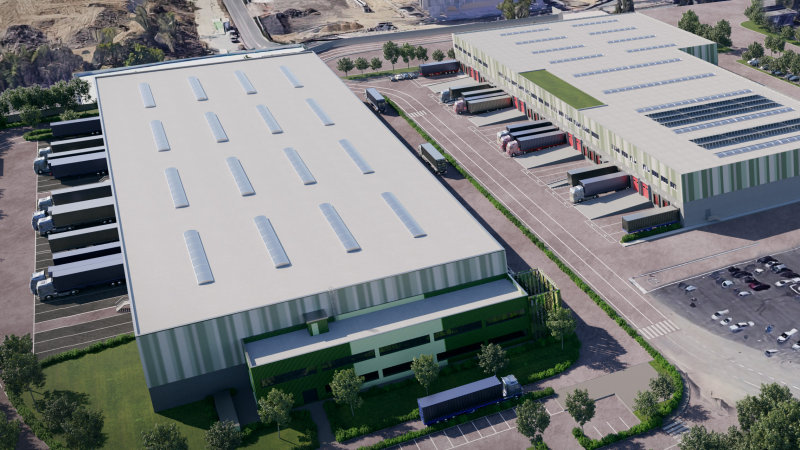








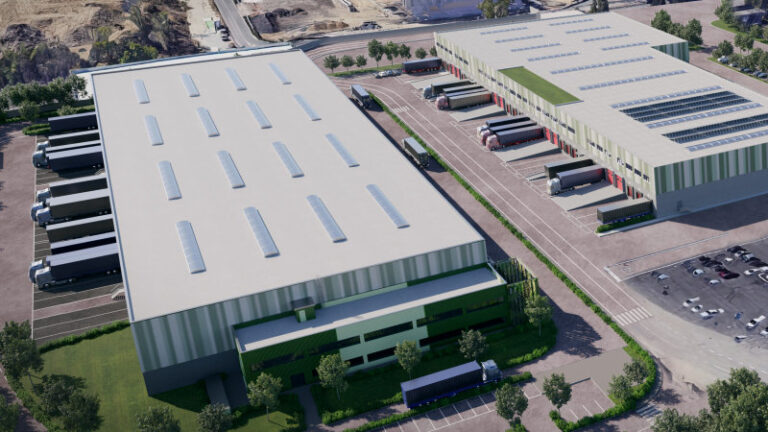
Prologis has started construction of Milano DC5 (Logistica L3), an 11,800-square-metre temperature-controlled logistics facility within the Milan Food Market, Italy's largest wholesale food market. Completion is expected by the fourth quarter of 2026. The land has been granted under a surface rights agreement by Sogemi, a company partly owned by Milan City Council that manages the Milan Food Market and the city's neighbourhood markets. Prologis was awarded the site through a public tender. The development forms part of the modernisation of Milan's food infrastructure, within a market complex that has undergone extensive redevelopment in recent years.
The building will be divided into six units, featuring a cross-dock configuration and a flexible layout designed for food operators, urban distribution companies and small and medium-sized enterprises. Prologis plans to install high-efficiency energy systems, while the roof will be prepared for photovoltaic panels, in line with its ESG commitments. The site will be approximately 6 kilometres from the city centre, 2 kilometres from Linate Airport and 1 kilometre from the ring road. Prologis points out that the project will bring an already developed urban site back into use without taking up undeveloped land. Sabine Hutter, Vice President of Capital Deployment at Prologis Italy, describes Milan as "one of Europe's most complex, constrained markets, characterised by high barriers to entry" and identifies the combination of efficiency, proximity and flexibility as the platform's distinguishing features.
Milano DC5 follows Milano DC3 (Logistica L2), which achieved strong leasing results and had already regenerated a previously developed urban site within the market. According to Prologis, demand remains strong and consistent among food operators, last-mile distribution companies and small and medium-sized enterprises, while available logistics space is extremely limited and land is in particularly short supply. The company believes that the facility's location within the market makes existing wholesalers and distributors the natural prospective tenants for the new units.