






From 1 January 2026, the IMO’s regulatory framework has taken a clear new direction, sending an explicit message: navigational safety is now being redefined to structurally include the wellbeing and dignity of people on board. The reform package, adopted by the Maritime Safety Committee during MSC 107 in 2023 and MSC 108 in 2024, updates conventions and codes that directly affect shipowners, logistics operators, terminals, training bodies, classification societies and national administrations. The work was also developed with contributions from the International Labour Organization through the joint ILO–IMO tripartite group, with the aim of aligning maritime instruments with the evolving framework of labour protection.
The most significant cultural and organisational shift is the introduction, within the STCW Code, of mandatory content in basic safety training courses related to personal safety and social responsibilities. Under the resolution adopted at MSC 108, training programmes must cover the recognition of violence, sexual harassment, bullying and sexual assault, an understanding of their impact on safety and health, analysis of the factors that enable such incidents, prevention strategies and response measures, including secure, accessible reporting procedures with safeguards against retaliation and breaches of confidentiality. As designed, this approach moves the focus away from purely disciplinary reactions towards the preventive management of human risk, with direct consequences for operational safety, watchkeeping performance and quality of life on board.
IMO Secretary-General Arsenio Dominguez has linked these measures to both ethical and industrial imperatives, arguing that a respectful working environment is a practical condition for the sector’s sustainability and its ability to retain skills. The scale of the issues addressed is also supported by evidence cited in scientific and institutional contexts, pointing to a scenario in which a significant proportion of seafarers are exposed to workplace violence, with impacts on mental health, crew cohesion and error management, while women are more exposed to discrimination and harassment. For operators, the challenge goes beyond updating training programmes to translating the requirements into internal procedures, credible reporting channels and coherent leadership practices, because the rules only influence behaviour on board if they are underpinned by verifiable corporate processes.
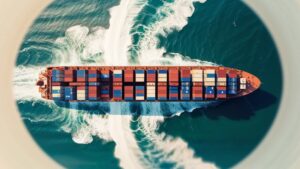
Alongside the human dimension, the 2026 package introduces obligations that directly affect the logistics chain, particularly container transport. Amendments to SOLAS and MARPOL make it mandatory worldwide to promptly report the loss of containers at sea, as well as the sighting of drifting containers. The master must inform nearby vessels and the nearest coastal State and, via the flag State, ensure notification to the IMO. Required information includes the ship’s identity, coordinates, date and time in UTC, the number and type of containers and the presence of dangerous goods with UN numbers. A progressive reporting mechanism is provided for, allowing for an initial report even if incomplete, followed by updates up to a final report after a thorough inspection; if the ship is unable to report, the obligation falls on the company. The IMO has also approved a standard reporting format through a circular of the Carriage of Cargoes and Containers Sub-Committee, pending the introduction of a dedicated module within the GISIS system.
For shipowners, shippers and supply chain managers, the result is increased regulatory traceability of cargo-related incidents, with implications for emergency management, communications with customers and authorities, and insurance profiles. Over time, the availability of a standardised model should also enable a more comparable data set to assess the frequency and dynamics of such events, supporting risk analyses by route, seasonality and metocean conditions, while the quality of information available in the first hours remains critical.
On board safety and maintenance, the introduction of the new SOLAS II-1/3-13 regulation establishes mandatory requirements for the design, construction, operation, inspection, testing and maintenance of lifting appliances and winches, including loose gear. For new installations from 1 January 2026, certification prior to entry into service is required, covering plan approval, material verification, manufacturing inspections and on-board load testing. For equipment installed before the entry into force, load testing and a thorough examination are required by the first renewal survey after 1 January 2026, together with permanent marking of the Safe Working Load and supporting documentation. A minimum five-year interval for load testing is also set, with earlier testing required following significant repairs or modifications. The IMO technical guidelines referenced in the material provide detailed criteria and practices, creating an operational benchmark for classification societies and auditors.
The amendments also address fire prevention and fuel quality. On the one hand, documentary requirements prior to bunkering are strengthened, including a signed declaration from the supplier confirming compliance with the SOLAS flashpoint requirement and indicating the test method used, as well as specific information to be included in the bunker delivery note. On the other hand, regarding substances used in firefighting systems, the use or storage of extinguishing agents containing PFOS in concentrations above 10 mg/kg is prohibited. The rule applies to new ships from keel laying on 1 January 2026, while existing ships must comply by the first survey after that date. For technical management and procurement, this entails mapping installed systems, analysing product data sheets and planning replacements in line with survey windows and the availability of alternative solutions.
For passenger ships with vehicle spaces, special category and ro-ro vessels, the amendments introduce a substantial strengthening of detection, alarm and visual monitoring systems, requiring smoke and heat detectors with specific coverage criteria and a CCTV system capable of immediate playback and retention of recordings for at least seven days. Application is immediate for newbuildings from 1 January 2026, while existing ships are given a window until the first survey after 1 January 2028. Here, the impact falls on system design, operational continuity and integration with patrol and response procedures.
In commercial shipping related to containers and dry bulk, amendments to SOLAS V/19 require new container ships and bulk carriers above 3,000 gross tonnage, built from 1 January 2026, to be fitted with an electronic inclinometer or equivalent systems to determine, display and record roll motion, with data also recorded in the voyage data recorder. The measure is aimed at operational stability and the availability of objective data in the event of heavy weather and incidents, with potential implications for post-event analysis and risk management practices.
The 2026 package also affects ships using gas or low-flashpoint fuels, updating the IGF Code on aspects such as design, hazardous areas, fire protection, bunkering procedures and redundancy, while the IGC Code is amended to accept cryogenic materials such as high-manganese steel. Although these are more specialist areas, the operational implication lies in adapting design criteria and compliance verification during newbuildings or conversions, with knock-on effects on technical dialogue between owners, shipyards and classification societies.
For dangerous goods, the mandatory entry into force on 1 January 2026 of the consolidated IMDG Code incorporating Amendment 42-24 updates the dangerous goods list with more than 60 revisions, introduces eleven new UN numbers for emerging materials such as sodium-ion batteries and lithium-powered vehicles, updates packing instructions and special provisions, and strengthens documentation requirements, including the indication of primary and subsidiary hazards in stowage plans. The reclassification of certain entries, including tighter constraints on specific lithium battery configurations, affects documentation preparation, stowage, cargo acceptance and the training of shore and shipboard personnel, with a direct impact on terminals and freight forwarders operating mixed cargo-passenger routes.
In terms of implementation, the global reach of the amendments depends not only on the applicability of the conventions but also on enforcement by flag States and port State control activity. In the United Kingdom, according to the material, the Maritime and Coastguard Agency has indicated the automatic application of the STCW updates through the national regulatory framework and has instructed training providers to integrate the requirements into courses delivered from 1 January 2026, while maintaining the validity of existing certificates.
Within the European Union, EMSA supports Member States and the Commission in update activities and technical submissions to IMO committees, including preparatory work on the STCW review ahead of the Human Element, Training and Watchkeeping Sub-Committee meetings scheduled for 2026.
Mara Gambetta