






The Strait of Hormuz is once again at the centre of military activity between the United States and Iran after almost a month of relative truce. On 30 August 2026, US Central Command announced the destruction of two Pasdaran launchers on Larak Island, in the eastern part of the Strait, saying that forces from the Islamic Revolutionary Guard Corps were preparing to launch rockets loaded with naval mines. The action, described by Washington as “limited and precise”, was intended to neutralise an imminent threat to international shipping and is the first declared operation against Iranian forces since the end of July.
Tehran responded on two levels. Politically, President Masoud Pezeshkian said Iran does not seek war but will provide a “decisive” response to any aggression. Militarily, overnight between 30 and 31 August, Iranian forces launched missiles at US bases in Jordan, with the Jordanian army confirming that it had intercepted eight of them. According to sources that are difficult to verify, the attack also hit Al Minhad Air Base in the United Arab Emirates. The IRGC also described as “absolutely false” the claim that the Larak launchers posed an imminent threat.
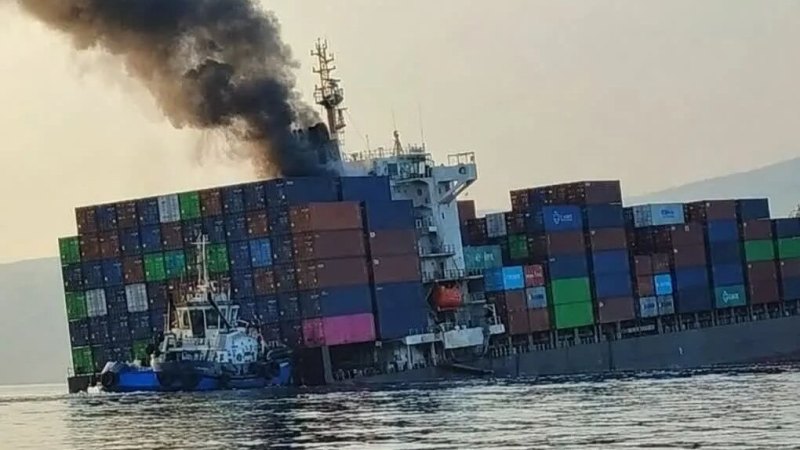
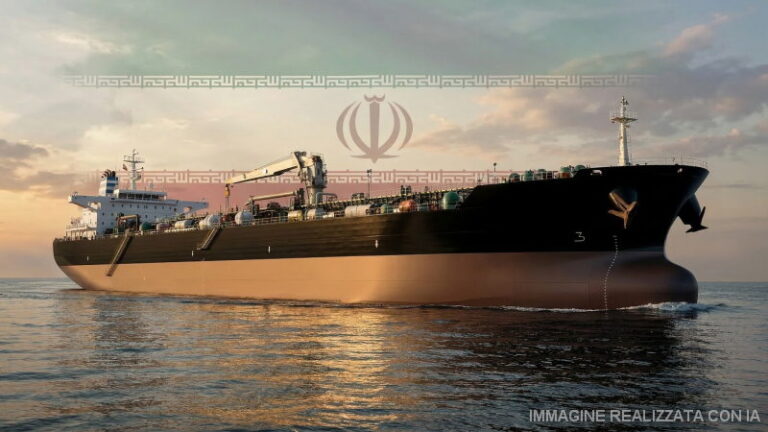
Iran’s campaign against cargo vessels also appears to be continuing. On the morning of 30 August, before the attack on Larak, UK Maritime Trade Operations had already issued warning 122-26, reporting that a tanker had been hit by an unidentified projectile at 20.35 UTC on 29 August while sailing towards the Persian Gulf around 12 nautical miles north of Khasab, Oman. According to the notice, which does not name the vessel, there were no casualties or environmental impacts. This is the third incident or attack involving ships recorded by UKMTO in the Strait area in a week. Harder to assess is the other report released by the IRGC on 31 August: the Pasdaran Navy said a supertanker had tried to pass through the southern sector of the Strait along an “unauthorised route” and had struck two mines before catching fire. The statement, carried by the semi-official Tasnim agency, does not identify the ship or its flag. At present, there is no independent confirmation from maritime authorities, shipowners or Western agencies.
In any case, commercial navigation through Hormuz remains severely limited. Kpler data indicate an average of five daily transits visible through tracking systems over the weekend, compared with around 130 a day before the start of the conflict. However, the figure is affected by the possible switching off of AIS transponders by some vessels, which reduces the publicly visible data set. This does not change the broader picture, as shipowners, charterers and insurers are managing risk exposure with extreme caution. On 29 August, fourteen transits were detected, including a VLCC carrying around two million barrels of Qatari crude that had sailed with its AIS switched off. Two LPG carriers travelled in opposite directions: one towards India, also sailing without AIS, and the other leaving the Gulf along the Iranian route.
The report of the tanker hit by a mine, if verified, and these transit figures contradict recent statements by US President Trump, according to which the Strait had been cleared of mines and navigation was open thanks to Navy escort. However, he cited only twenty-four transits, while Tehran says the Strait is closed and that any vessel must coordinate with Iran in order to cross it. Iran’s deputy foreign minister, Kazem Gharibabadi, linked the possible activation of an agreement already outlined with Oman to alleged US commitments that had not been honoured under the memorandum of understanding signed in mid-June.
Another source contradicts the narrative of free transit through Hormuz: the International Maritime Organization (IMO), according to which up to 400 vessels and around 6,000 seafarers have still not been able to leave the Gulf safely. Goldman Sachs estimates that oil exports from the Persian Gulf stand at 15-16 million barrels a day, still well below the 22-24 million barrels a day recorded before the crisis.
Meanwhile, the energy market reacted quickly to the military escalation of 30-31 August. On Monday, Brent rose above $90 a barrel, up around 2.8-2.9% on the previous session and crossing that threshold for the first time in almost two weeks. ING also noted the extension of Russia’s ban on diesel exports, now prolonged until the end of September 2026. The combination of reduced flows from the Gulf and constraints on Russian refined product supply is keeping pressure on European procurement as well.
M.L.