







On 27 January 2026, when presenting its fourth-quarter 2025 results, UPS announced its intention to reduce up to 30,000 operational positions in the United States during 2026, affecting delivery, sorting and warehouse activities. The group plans to manage the exits through natural attrition and a second voluntary severance programme aimed at full-time drivers, in order to limit forced redundancies and align the workforce reduction with the ongoing network reorganisation. The measure is part of the “Network reconfiguration and efficiency reimagined” programme and is intended to generate USD 3 billion in savings in 2026 (around EUR 2.8 billion) through capacity reductions, automation and the reallocation of volumes towards higher-margin segments.
Management has identified 2026 as the year of implementation, with an acceleration expected in the first half and a key milestone in June 2026, when the so-called “Amazon glide down” is scheduled for completion. This refers to the planned and gradual reduction of activities carried out for the e-commerce giant, a long-standing UPS customer in the United States. The downsizing reflects the fact that Amazon volumes are very high but low-margin, weighing on the overall profitability of the network. By progressively reducing these flows, UPS can free up capacity in hubs, sorting centres and delivery operations, reallocating it to customers and segments considered more profitable, such as business-to-business shipments, small and medium-sized enterprises and the healthcare sector.
The job cuts planned for 2026 add to a substantial reduction already carried out in the previous two years. In 2024 UPS eliminated 12,000 positions, while in 2025 announced and implemented cuts amounted to 48,000 jobs, bringing the total to around 90,000 reductions over the 2024–2026 period. This corresponds to 18% of the total workforce and represents the largest workforce reduction in the company’s history. The profile of the exits has changed year by year: in 2025 the downsizing also affected non-operational staff and management levels. In 2026, by contrast, the focus is on operational roles, with the aim of realigning shifts, working hours and on-site presence with declining volumes.
Consistent with this approach, the reorganisation also involves the closure and consolidation of facilities. Reuters reports that 24 sites will close in the first half of 2026, with additional buildings under review for the second half of the year. The operational logic is to consolidate flows into more modern and more easily automated facilities, shifting volumes from smaller or less efficient sites to nodes with greater capacity and technology, in order to reduce fixed costs and improve network utilisation. In this context, UPS is working to redeploy as many employees as possible, a process that in practice may involve shift changes and transfers to other locations.
A sensitive aspect of the downsizing concerns drivers, among whom the Teamsters union is particularly strong and has led several, at times highly confrontational, disputes with UPS. For this reason, the multinational is keen to prioritise voluntary exits. A first voluntary severance programme for drivers launched in 2025 provides a reference point for what may happen in 2026. It could be structured around a financial incentive linked to length of service, with USD 1,800 per year of service (around EUR 1,700) and a guaranteed minimum, while preserving accrued pension and healthcare rights. For 2026, the company has so far confirmed its intention to propose a second programme, but without providing details on timing, amounts or the target group, which will depend on turnover dynamics and the need to reach the maximum reduction indicated.
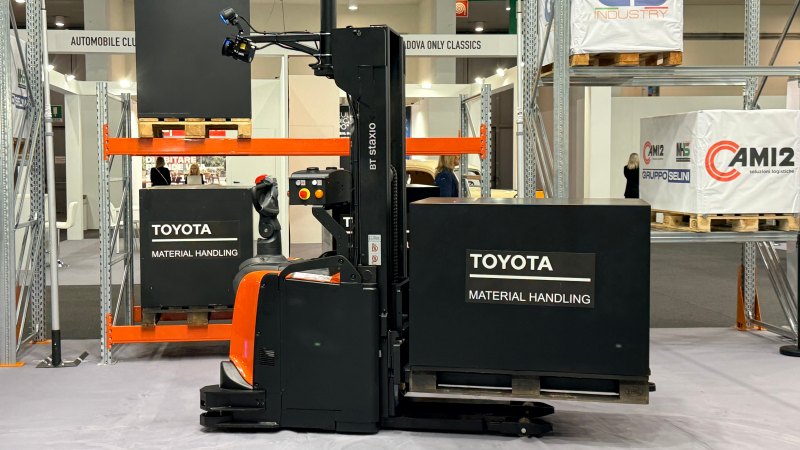
Alongside the “Amazon glide down” and the rationalisation of the physical network, automation is the other key lever underpinning the restructuring. UPS has planned long-term investments, including a USD 120 million project (around EUR 110 million) for around 400 robots dedicated to vehicle unloading, with installations set to begin in the second half of 2026. The impact of these technologies is twofold: reducing labour requirements for repetitive and physically demanding tasks, and increasing the regularity of processing times, making cost per parcel more predictable as the network is scaled down.
The combination of job cuts, closures and automation is expected to deliver the targeted USD 3 billion in savings, through a reduction in operational positions, fewer working hours, facility consolidation and the redesign of flows. At the same time, the multinational aims to reposition its customer portfolio and the segments it serves, reducing exposure to volumes that compress margins and reallocating capacity towards higher-value shipments.
All this takes place against the backdrop of a 2025 marked by declining revenues but still solid margins. It can be described as a transition year, with a strong focus on cost containment and network reorganisation. In terms of annual figures, the group closed 2025 with revenues of USD 88.7 billion (around EUR 81.6 billion), down from USD 91.1 billion in 2024 (around EUR 83.8 billion), a year-on-year decline of 2.6%. Operating profit (GAAP) amounted to USD 7.9 billion (around EUR 7.3 billion), while adjusted operating profit was USD 8.7 billion (around EUR 8 billion).
From an operational perspective, around two-thirds of revenues in 2025 were generated by shipments within the United States, where average daily volumes declined by 8.6% over the year. This result is unsurprising given the planned scaling-back of Amazon-related activity. At the same time, average revenue per shipment increased by 7.1%, while the adjusted operating margin for the first three quarters remained around 7%, exceeding 10% during the Christmas peak period. The restructuring did, however, entail temporary costs: cost per package rose to over 10% in the middle quarters of the year, affected by the so-called “lag effect”, whereby fixed costs for facilities and staff declined more slowly than outgoing volumes.
The trajectory of the International segment was different, accounting for just over one fifth of total revenues. In the first three quarters of 2025, UPS recorded volume growth of between 4% and 7%, accompanied by higher revenues and an improving revenue per shipment. Margins, however, came under progressive pressure due to changes in trade lanes and a customer shift towards lower-cost services. In the fourth quarter, uncertainty linked to trade and tariff policies triggered a sharp drop in imports into the United States, particularly from Canada, Mexico and China. The downsizing of high-margin routes was partially offset by growth in Asia–Europe and intra-Asia traffic, which is structurally less profitable. Only in the final months of the year did the segment show signs of recovery, closing the fourth quarter with an adjusted operating margin rising again to 18%.
2025 marked a turning point for Supply Chain Solutions, which was radically downsized following the sale of Coyote Logistics in 2024. The exit from full truckload transport weighed on revenues, which fell at a double-digit rate year on year, but allowed for a significant improvement in profitability in some quarters and a sharper strategic focus. The segment’s real strength remains healthcare logistics, which generated USD 11.2 billion in revenues over the full year, with growth of around 5–6% and more than 1.6 million square metres of dedicated space globally. This is an area the group considers strategic due to high barriers to entry and stable demand.
M.L.