






- Between 30 and 31 March 2026, the Persian Gulf entered a critical phase with direct attacks on commercial vessels. A Kuwaiti tanker was struck in the port of Dubai, while a container ship linked to Israel was targeted with ballistic missiles.
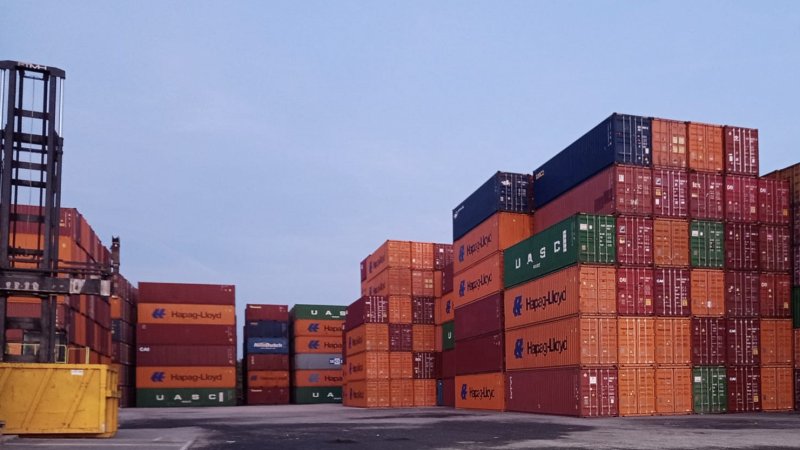
- According to Bimco, more than 130 container ships are stranded in the Gulf, equivalent to 1.5% of global capacity, with 3% of container volumes immobilised. Major shipping lines have suspended services, while alternative ports are seeing traffic diversions.
- The effects are spreading to energy markets and operating costs. Insurance premiums are rising and transit times are lengthening due to global rerouting. Crew safety is emerging as a critical factor in a scenario comparable to an active war zone.
On 30 and 31 March 2026, two attacks on cargo vessels were recorded in the Persian Gulf amid mounting tension and uncertainty over potential US military moves, as Washington concentrates forces in the region. Iran’s Islamic Revolutionary Guard Corps appears to be intensifying operations against civilian shipping, directly targeting tankers and container ships in transit or at anchor between the Persian Gulf, the Strait of Hormuz and the Gulf of Oman.
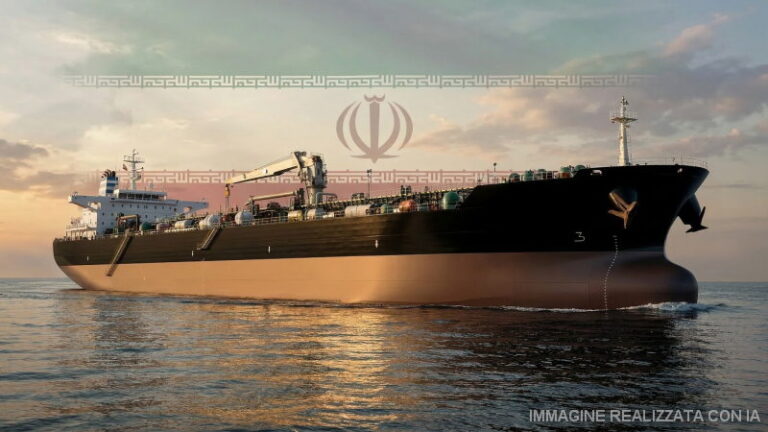
It has been confirmed that the Kuwaiti tanker Al-Salmi, a Very Large Crude Carrier loaded with around two million barrels of crude oil, was hit by a drone while anchored off the port of Dubai. The attack caused a fire on board visible from a great distance. According to Kuwait Petroleum Corporation, all 24 crew members were evacuated without casualties, while UAE authorities intervened to contain the blaze and prevent a spill. The incident marks a critical escalation: a major port hub such as Dubai has been directly involved in a military action against a commercial vessel.
The nature of the attack and the choice of target point to a deliberate strategy. Striking a fully laden tanker in one of the world’s leading logistics hubs sends a clear signal that no Gulf port can be considered safe. Kuwait Petroleum Corporation has attributed the attack to Iran, while several international sources link it to retaliation for raids carried out hours earlier by the United States and Israel in Iran’s Isfahan province.
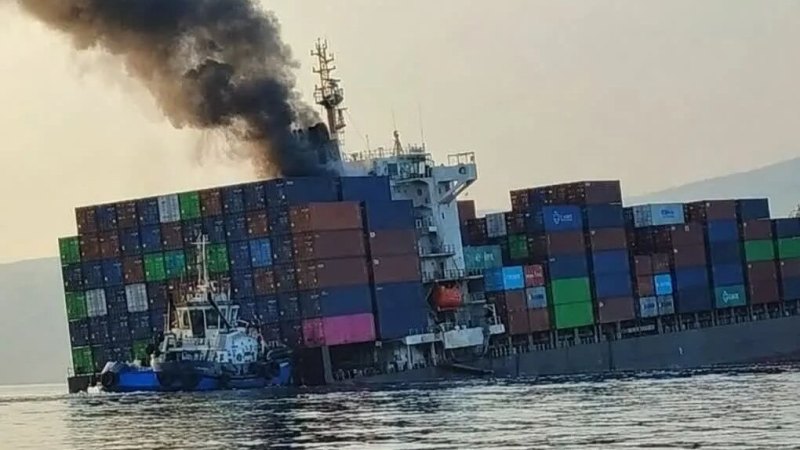
The following day, 31 March, the crisis escalated further with an attack on the container ship Express Halfong. Iran’s Islamic Revolutionary Guard Corps officially claimed responsibility, stating it had used ballistic missiles against a vessel associated with Israel. According to the IRGC, this was the 88th wave of attacks since the start of the conflict. However, there has been no independent confirmation of the incident outside Iran. If verified, the use of ballistic missiles against a commercial ship would represent a significant shift in operational capability, increasing range, precision and lethality, and extending risk to any vessel with direct or indirect links to countries involved in the conflict.
These incidents form part of a sequence of attacks that began on 1 March, when several vessels, including tankers and cargo ships, were struck off the coast of the United Arab Emirates using drones and other systems, resulting in at least one seafarer fatality. In the following days, further attacks targeted US tankers and US-flagged vessels, including the Stena Imperative, which was damaged near Bahrain. According to maritime intelligence sources, the campaign appears structured and sustained, with targets selected based on geopolitical affiliation.
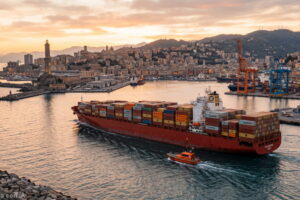
The most immediate operational impact concerns the closure of the Strait of Hormuz. According to Bimco’s Container Shipping Market Overview & Outlook, container ship transits have effectively been halted since late February. More than 130 vessels of this type are currently stationary in the Gulf, representing 1.5% of global capacity, while 3% of global container volumes cannot be moved. The impact extends to 5% of global vessel demand and, indirectly, to nearly 10% of the world fleet when accounting for diversions, suspensions and redeployments. Major shipping lines have suspended services to Gulf ports or reorganised routes to avoid transiting Hormuz. This has led to prolonged stays for vessels already in the area and congestion at regional ports. At the same time, alternative hubs such as Yanbu on the Red Sea are experiencing increased diverted traffic.
Economic pressure is building along three main lines. The first concerns energy markets: attacks on tankers, particularly those on 5 March and 30–31 March, are fuelling concerns over supply continuity. Given that around 20–21% of global oil flows through Hormuz, any disruption or perceived risk translates into price volatility, as noted by analysts cited by Bloomberg. The second concerns insurance. War risk premiums have been widely reintroduced and have reached levels comparable to those seen during the Iran–Iraq war in the 1980s, directly affecting shipowners’ operating costs and, in turn, freight rates and global logistics costs.
The third concerns maritime routes. The Gulf crisis compounds the situation in the Red Sea, where Houthi attacks between 2023 and 2025 had already reduced the viability of the Suez Canal. At the end of March, Yemeni forces announced their intention to resume attacks against Israel, raising the possibility of renewed strikes on passing vessels. The combined effect is forcing many Europe–Asia routes to divert via the Cape of Good Hope, extending transit times by 10–14 days, according to Bimco analysis. This increase is affecting fleet planning, container utilisation and inventory management across supply chains.
At the same time, pressure on crew safety is intensifying. At least one seafarer has been killed in the early days of the conflict, and dozens of crews remain on board vessels stranded in the Gulf with no clear operational outlook. The International Maritime Organization (IMO) estimates that around 20,000 seafarers are effectively “trapped” in the Gulf. Organisations such as UANI and international maritime agencies continue to issue operational guidance to support shipowners’ decision-making in a high-risk environment.
The international response remains fragmented. The United States continues military operations in Iran, while signals reported by Bloomberg suggest possible uncertainty over further escalation. The United Arab Emirates is managing operational disruptions in its ports without taking a clear political stance, while Kuwait, through Kuwait Petroleum Corporation, has openly blamed Iran for the attack on the Al-Salmi.
M.L.