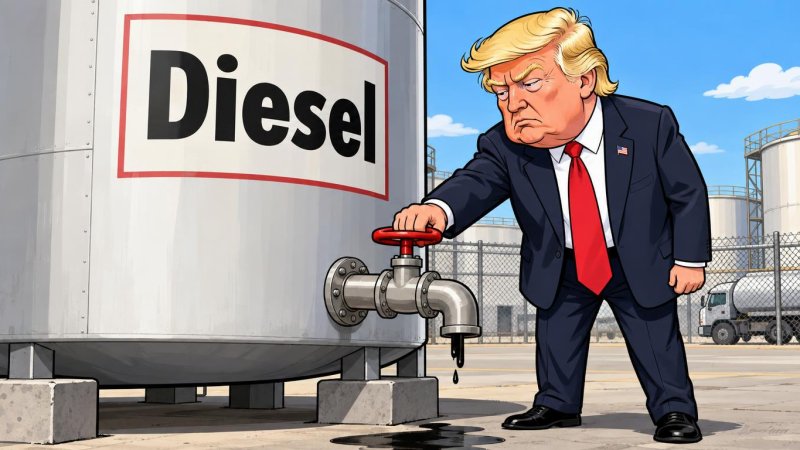









It's not just an increase in tariffs to 125% on Chinese imports. From 2 May 2025, the United States will also shut one of the most advantageous gateways to global trade. With an executive order signed on 2 April, President Donald Trump has decreed the end of the simplified customs treatment for low-value shipments from China and Hong Kong. This marks the abolition of the so-called de minimis exemption, which for years allowed millions of parcels containing clothing, accessories, electronics and other consumer goods to enter the country without duties and without customs procedures. The exemption will be replaced by a flat-rate duty: 30% of the parcel’s value, or 25 dollars per item, whichever is higher. From 1 June, the minimum duty will rise to 50 dollars per item.
The measure does not come as a surprise. As early as February, the Trump administration attempted an initial rollout of the policy, which was suspended after just a few days due to the unpreparedness of the Customs Agency and the US Postal Service. But now, with a collection system ready, the clampdown is set to go into effect. The White House has also announced that other countries may soon be affected by the end of the de minimis rule, once the necessary operational adjustments have been completed.
To understand the impact of this decision, it is worth recalling what the de minimis exemption actually is. It is a threshold – set in the United States at 800 dollars – below which imported goods are not subject to customs duties and require no specific declarations. This exemption threshold was introduced in 1938 to simplify bureaucracy and has gradually increased over time: from just one dollar in the decades after World War Two, to the sharp rise in 2016 when the Obama administration raised it from 200 to the current 800 dollars.
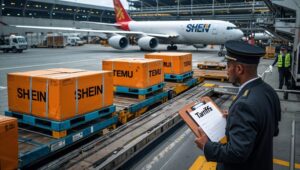
In recent years, particularly during the Covid-19 pandemic, the exemption fuelled a boom in Chinese e-commerce directed at the US market. Digital giants such as Shein, Temu and AliExpress built their success by exploiting this fast track, which relied on a streamlined logistics model: direct shipping from factory to end customer, no intermediaries, no duties, no inspections, and above all, highly competitive costs. According to estimates, in 2024 more than four million parcels entered the United States each day via this mechanism. That adds up to over one billion shipments annually, with an officially declared value of around 23 billion dollars, though some independent analyses suggest the real figure could exceed 40 billion.
The end of the exemption risks triggering a chain reaction. Online platforms, currently based on a high-volume, low-margin model, will be forced to radically rethink their strategies. Some are already moving part of their inventory directly to the United States, while others are considering shifting from air freight – fast but expensive – to sea transport, which is slower but more sustainable in terms of cost. Prices for American consumers are set to rise, not least because many goods will now be subject to multiple layers of taxation: pre-2016 tariffs, those introduced during the 2018 trade war with China, and now the new duties resulting from the end of the de minimis rule. A study by Yale University estimates that US households could spend an additional 136 to 163 dollars per year, with the greatest impact on low-income families, who are also the most price-sensitive and most loyal to these platforms.
Global logistics, too, is bracing for change. Air freight – particularly cargo on transpacific routes – may take a significant hit. Analysts predict a 60% drop in demand linked to Chinese e-commerce. Fewer parcels mean fewer flights and falling freight rates. This could spell trouble for air carriers, but potentially an opportunity for some established players such as international express delivery multinationals, which offer advanced customs management services and may see the added complexity as a competitive advantage.
The decision is not based solely on economic motives. The White House has also justified the measure as a way to increase customs checks, combat the importation of drugs like fentanyl – often hidden in de minimis parcels – and halt shipments from areas implicated in human rights violations. In essence, this is a policy that combines trade protectionism and national security, reshaping the balance of global commerce.
Although the direct impact on US GDP will be marginal – de minimis shipments account for only a small fraction of the 5.3 trillion dollars in annual imports – the systemic consequences could be far more profound. The model of global e-commerce, built on low marginal costs and uncontrolled flows of small parcels, is now entering a new phase marked by duties, traceability, compliance, and the restructuring of supply chains.