




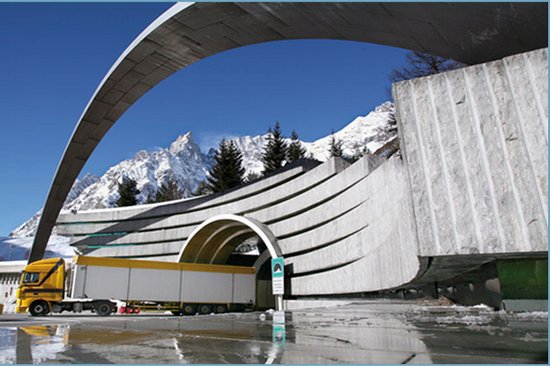
On 16 July 1965, the presidents of the Italian Republic, Giuseppe Saragat, and of the French Republic, Charles de Gaulle, cut the ribbon of the Mont Blanc tunnel, which at the time became the longest road tunnel in the world. It was also seen as a symbol of European cooperation, just twenty years after the end of the Second World War. Three days later, at 6.00 am, the tunnel was opened to traffic, drastically cutting travel times between Courmayeur in the Aosta Valley and Chamonix in Haute-Savoie. It was a revolution for international transport, but also for the local communities, making it possible to cross from one side of Mont Blanc to the other in just twelve minutes.
It took three years to dig beneath the base of Europe’s highest mountain and to build the road infrastructure. Work started on the Italian side on 8 January 1959, entrusted to the Società italiana per Condotte d'Acqua of Rome, and on the French side on 30 May 1959. Thousands of workers bored through 11.6 kilometres of rock at an entrance altitude of 1,381 metres on the Italian side. The numbers behind the project reflect its scale: 771,240 bolts were used for consolidation, 300 tonnes of steel to support the vault, 60,000 tonnes of cement and 5,000 cubic metres of metal reinforcements.
The works also became an undeclared competition between the two national teams. Initially, the French gained a certain lead, prompting the Italian workers to push themselves to the limit to make up the difference, fuelled by a sense of national pride. There were also accidents, the most serious occurring on 5 April 1962 when two avalanches struck the temporary huts of the Italian workers, killing three people.
On 14 August 1962, with a controlled explosion, the final diaphragm of rock separating the two drilling fronts was broken and the Italian and French workers met halfway through the tunnel. It was a triumph of engineering precision: the offset between the two road axes was less than 13 centimetres. But that was not the end of the job. It took another three years to equip the gallery, transforming the bare rock tunnel into a two-way road infrastructure, passable day and night, in all seasons.
The inauguration on 16 July 1965 marked the realisation of an idea conceived shortly after the war. In May 1946, entrepreneur and count Dino Lora Totino had symbolically launched the drilling works on the Italian side, in an act of audacity and vision. The attempt came to a quick halt due to a lack of funds, but the dream endured. The first real step towards making it happen came in Paris on 14 March 1953, with the signing of the Convention between Italy and France for the construction of the Mont Blanc tunnel.
[caption id="attachment_71437" align="alignnone" width="800"]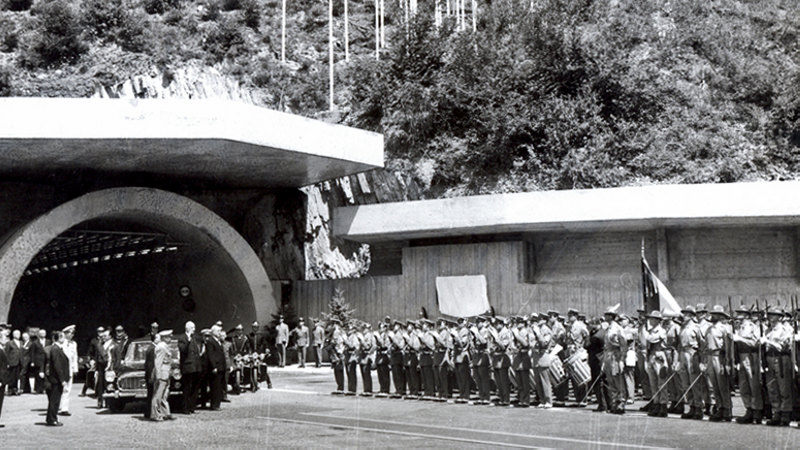 Inaugurazione Monte Bianco - Archivio Palazzo Chigi
This international agreement, later ratified by Italy with Law 846 of 1 August 1954, established the legal and financial framework for the joint construction and management of the tunnel. The convention created a binational governance structure: responsibility for construction and operations was given to two concessionary companies, one on each side. These were Sitmb (Società Italiana per il Traforo del Monte Bianco) for the Italian side and Atmb (Autoroutes et Tunnel du Mont Blanc) for the French side. An Intergovernmental Commission was set up to oversee the entire project, ensuring compliance with agreements and coordination between the parties. This architecture, based on a clear separation of operational responsibilities, was the engine of the project, but in 1999 it also proved to be one of its critical weaknesses during the tragedy that struck that year.
After 34 years of trouble-free operation, the myth of the tunnel’s invulnerability was shattered at 10.46 am on 24 March 1999. A lorry carrying margarine and flour entered the tunnel from the French side and, a few minutes later, while about halfway through, it caught fire. The blaze, probably caused by a mechanical fault, spread quickly and violently, fuelled by the tunnel’s chimney effect, pushing internal temperatures beyond a thousand degrees and filling the tunnel with thick, black, highly toxic smoke. Later analysis revealed that the combustion of polyurethane used in the truck’s insulated body released cyanide.
The first alarm was raised at 10.51, but emergency response efforts immediately showed their limitations. The tunnel was closed too late and without coordination, so rescue teams from both sides encountered an impenetrable wall of smoke and unbearable heat, forcing them to stop far from the heart of the fire. The struggle against the flames lasted 53 hours and ended only in the afternoon of 26 March. The final toll was 39 deaths, most of whom did not die from burns but from asphyxiation, trapped in their vehicles and suffocated by the toxic smoke that filled the tunnel in just minutes.
The trial was held in Bonneville, Haute-Savoie, as the fire had occurred on French soil. It concluded on 27 July 2005 with a verdict that went beyond individual blame, exposing a complete system failure. The court ruled that the disaster could have been avoided. Thirteen people were convicted, including senior managers of the operating companies and safety officials on both sides of the tunnel. The lorry driver was also convicted, but received a light sentence that was later pardoned.
Yet the matter did not end with the trial. The investigation revealed systemic and structural failings that had turned an accident into a massacre: the split management between two companies, one Italian and one French, with differing safety procedures and cultures, had prevented a unified and effective response; the ventilation systems not only failed to extract smoke but in some cases may have fuelled the fire; there was no separate evacuation tunnel and the emergency shelters were little more than unpressurised alcoves that became death traps. Moreover, the tunnel’s historically low accident rate had fostered overconfidence in the system, leading to an underestimation of the catastrophic risk posed by a low-probability, high-impact event.
The tunnel remained closed to traffic for three years, during which it underwent not just repairs but a complete and radical overhaul, both structurally and organisationally. It reopened on 9 March 2002 as an entirely new infrastructure. The most important innovation was organisational: the two concessionary companies, Sitmb and Atmb, were brought together under a single management structure, the Geie-Tmb (European Economic Interest Grouping - Mont Blanc Tunnel). This decision overcame the fragmentation of responsibilities, identified as one of the main causes of the disaster, creating a unified chain of command and harmonised operating procedures.
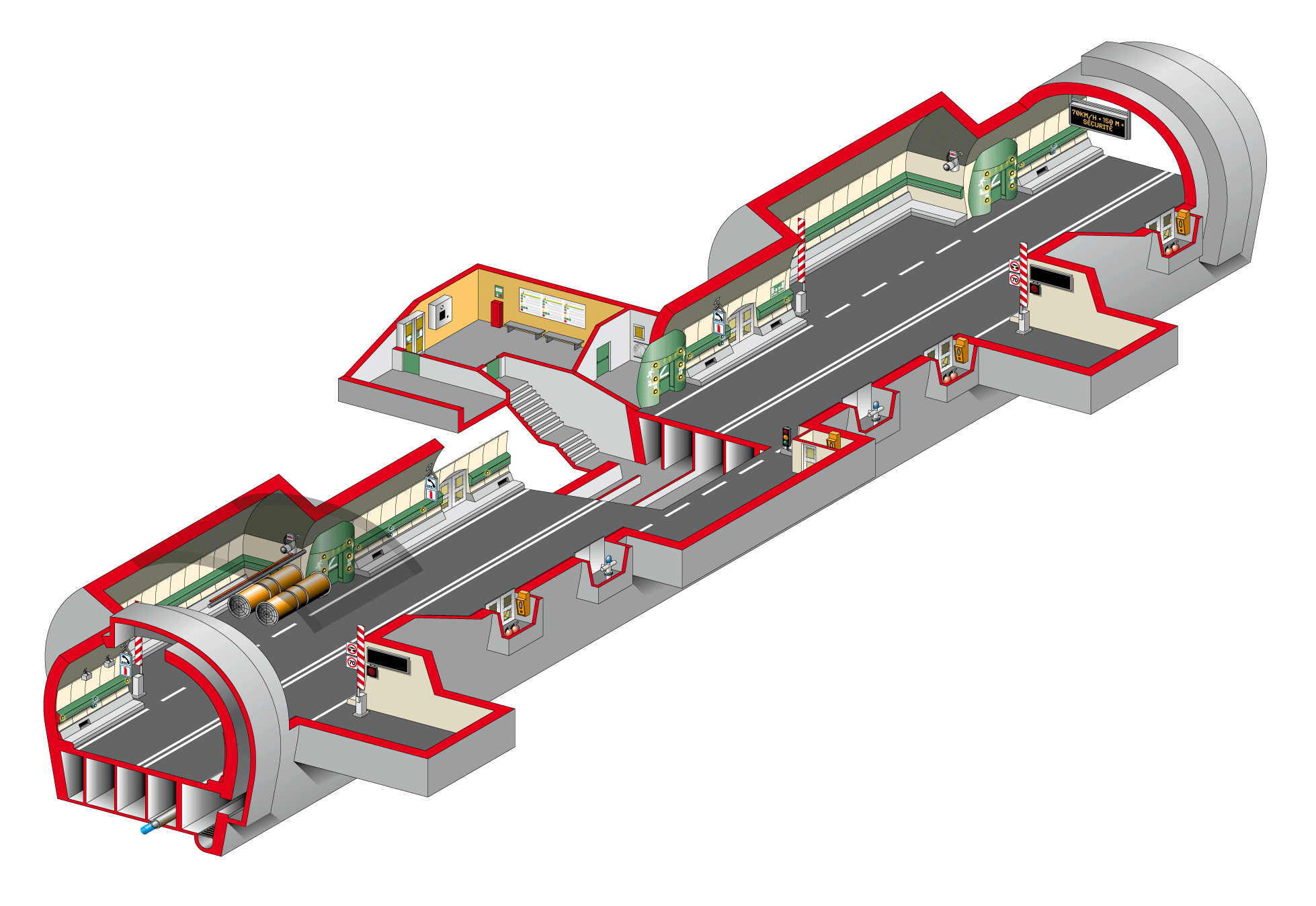
Structurally, a fully independent and pressurised rescue tunnel was built beneath the road deck to allow safe evacuation in emergencies. Along the route, 37 safety shelters were installed, one every 300 metres, connected directly to the evacuation tunnel and supplied with clean air under positive pressure to prevent smoke ingress. A permanent fire brigade base was established in the centre of the tunnel, equipped with specialist vehicles and ready to intervene within seconds. A fire detection system was installed, consisting of a thermal cable running the length of the tunnel, smoke opacity sensors and 120 CCTV cameras. All systems are monitored and coordinated by a single control centre.
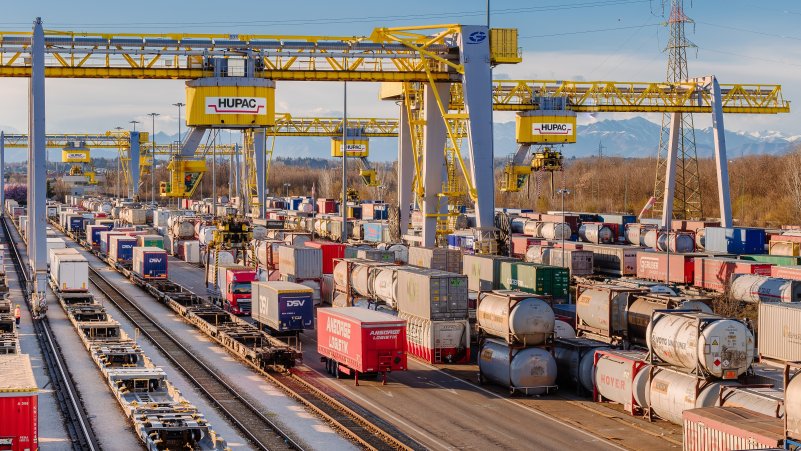
The renovated tunnel also brought in new, stricter traffic regulations: a mandatory minimum distance of 150 metres between vehicles, constantly monitored by cameras, lower speed limits and a ban on the transit of industrial vehicles carrying hazardous goods. Since then, the Mont Blanc tunnel has regained its position as one of the main Alpine crossings, ranking sixth for heavy goods traffic. In 2023, 572,000 industrial vehicles and coaches passed through the tunnel, accounting for 34% of total traffic.
The year 2023 is significant as it preceded the start of extraordinary maintenance works that led to a 15-week closure of the tunnel and which will continue in the coming years. On 1 September 2025, another complete closure is planned, lasting fifteen weeks until 12 December. The renovation plan aims to ensure the tunnel’s durability and resilience for at least another fifty years and focuses on two main areas: restoring the vault and the road deck. After the initial pilot phase (2024–2025), a second phase is scheduled from 2027 to 2038 and a third from 2043 to 2050.
Still unresolved is the issue of building a second tunnel, as was done in the nearby Fréjus tunnel, which would allow for the separation of traffic flows and thus greater safety. The project is being pushed by the Italian government but faces opposition from the French government, which prefers to focus its investments on the new Turin–Lyon railway and its associated base tunnel.