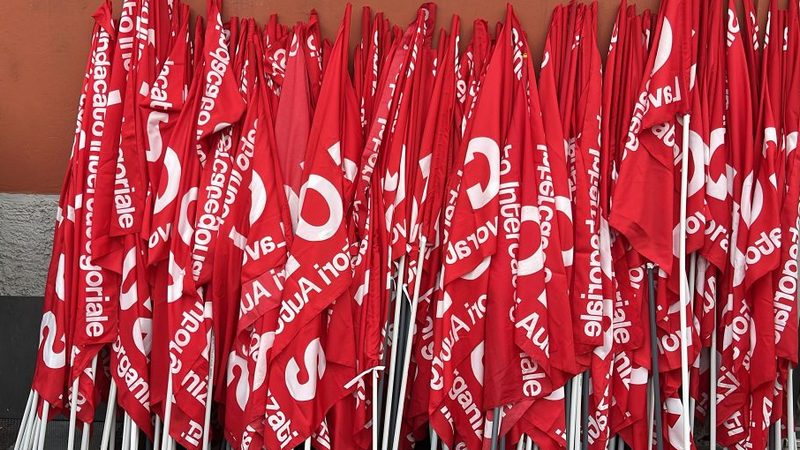








The day of mobilisation, called for Thursday 18 September, is shaping up to be the largest in France since the 2023 protests against pension reform. According to estimates reported in the French press, between 400,000 and 900,000 people are expected to take part, with direct repercussions on road, rail and port transport as well as on key logistics hubs. The protest is backed by all eight national trade union confederations, united in opposition to the draft 2026 budget, which they consider excessively restrictive. The demands include wage increases, protection of public services and opposition to rising social costs, issues that cut across all transport sectors.
In road haulage, the three main unions have called on truck drivers, warehouse workers and logistics staff to join a nationwide strike. They denounce frozen wages, the lack of an updated pay scale and the reduction of public holidays. Roadblocks and slow-moving “opérations escargots” are planned near motorway toll stations, especially along the A1, A3, A6 and the Paris ring road. Travel times on north–south corridors are expected to double, and there are fears of disruption to access routes to the Marché de Rungis, a vital hub for food supplies in the Île-de-France region. Perishable cargoes and just-in-time deliveries could be delayed by 12 to 24 hours, with knock-on congestion at inland terminals and e-commerce sorting centres.
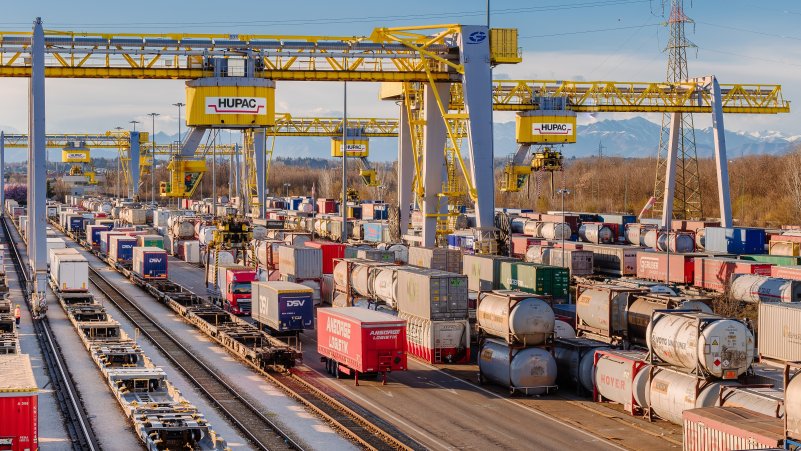
Rail transport is also expected to see high participation. Cgt-Cheminots, Unsa Ferroviaire, Sud-Rail and Cfdt-Cheminots, which together represent around 70% of SNCF staff, have filed a joint strike notice. Forecasts suggest that 90% of TGV services will be maintained, though with targeted cancellations mainly on east–west routes. For Intercités, one train in two will run, while regional Ter services will be reduced to three in five, with particularly severe impacts in Brittany and Nouvelle-Aquitaine. The Transilien and RER networks will be heavily affected, especially on lines D and E. Freight traffic will also slow due to the participation of drivers and yard staff, with repercussions on the Atlantic corridor and the Lyon–Marseille route. Backlogs and delays are expected at intermodal terminals in Valenton, Miramas and Woippy, weighing on the entire road–rail chain.
In the maritime sector, the Fédération Nationale des Ports et Docks has not called a fresh general strike following the more than 300 hours of stoppages recorded between January and March. However, local unrest continues in Marseille-Fos and Le Havre, driven by demands for recognition of arduous working conditions. Logistics operator Geodis has already warned customers of “isolated disruptions” around 18 September, advising them to bring forward export container loading to the 17th and to allow for a 48-hour buffer on arrivals. A return to coordinated terminal blockades, as seen in the past with pickets at Fos-sur-Mer, could result in ships queuing at anchorage and warehouse congestion in port hinterlands, prompting carriers to reroute via Antwerp and Rotterdam.
The impact on supply chains is compounded by the simultaneous strikes across different modes. With alternative options reduced, reliance on road transport is increasing just as it faces blockades. Widespread delays risk triggering a bullwhip effect in warehouses, with inflated orders and stockpiling peaks that could lead to pallet shortages in regional distribution centres. Special concern surrounds the Île-de-France and Auvergne-Rhône-Alpes corridors, where the risk of shortages extends to supermarkets and the pharmaceutical sector, already weakened by multiple plant closures.
Operational recommendations issued by operators and forwarders advise against scheduling deliveries on 18 and 19 September, encouraging early or delayed departures instead. Companies are also being urged to diversify routes via secondary Alpine crossings or short sea links to Spain and Italy, and to secure additional storage capacity in northern and eastern hubs to offset difficulties around Paris.