







The sale of 100% of Cargotor from PKP Cargo to PKP Polskie Linie Kolejowe represents one of the most significant steps in the reorganisation of the Polish rail system. The transaction involves the transfer of ownership of the Małaszewicze intermodal terminal operator, a central hub for rail freight flows between Asia and Europe, and is directly linked to the restructuring procedure launched by PKP Cargo in July 2024.
The agreement involves three companies within the state-owned rail group. PKP Cargo, Poland’s main rail freight operator and the second largest in the European Union, acts as the seller as part of a process aimed at restoring its financial health. PKP Polskie Linie Kolejowe, the national rail infrastructure manager, is the designated buyer. The asset being transferred is Cargotor, a company established in 2013 to comply with Polish regulations requiring the separation between infrastructure management and transport operations.
On 30 December 2025, the parties signed an investment agreement setting out the terms for the sale of Cargotor’s shares to PKP PLK for 28.8 million Polish zloty, equivalent to around €6.8 million. The agreement is valid until 30 June 2026 and provides for completion of the transaction by 31 March 2026, subject to any extension linked to the fulfilment of conditions precedent. These include authorisation from the court-appointed administrator overseeing the restructuring procedure, corporate approvals and clearance from the Polish competition authority, UOKiK.
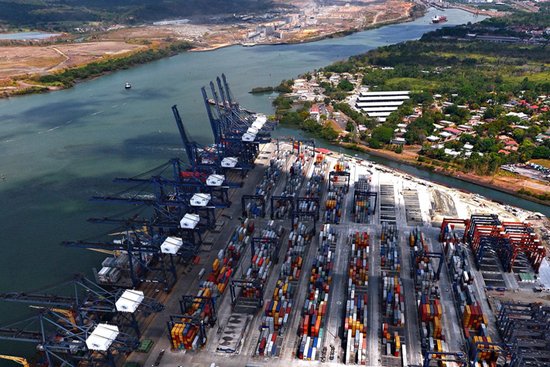
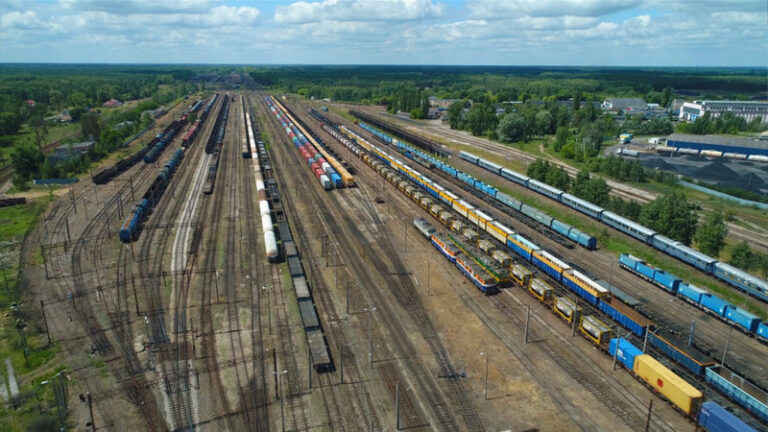
Cargotor manages around 180 kilometres of track in the Małaszewicze area, on Poland’s eastern border with Belarus, including the stations of Chotyłów, Małaszewicze, Kobylany and Bór, as well as several connected operational areas. The infrastructure specialises in transhipment between the European standard gauge of 1,435 millimetres and the 1,520 millimetre broad gauge used in former Soviet Union countries. This feature makes the terminal a mandatory passage point for rail traffic between China and the European Union, as it handles an estimated 85% to 90% of freight trains entering Europe from China.
The timing of the transaction is closely linked to PKP Cargo’s restructuring plan presented on 30 June 2025. The plan provides for the disposal of assets deemed non-essential to freight transport activities, with the aim of reducing debt and improving liquidity. In 2024, the company recorded a net loss of 2.41 billion Polish zloty, equivalent to around €562 million, on revenues of 4.46 billion zloty, down 18.8% year on year. Total debt reached almost 3 billion zloty, corresponding to approximately €678 million.
In this context, PKP Cargo has described the sale of Cargotor as a step functional to streamlining the group’s structure and refocusing on its core freight transport and logistics integration activities. The company underlined that direct management of rail infrastructure does not fall within its core value chain, while the sale allows it to generate immediate financial resources at a time of strong liquidity pressure.
From the buyer’s perspective, PKP PLK considers the transaction consistent with its statutory mandate to manage and develop the national rail infrastructure. The integration of Cargotor would make it possible to bring the management of a strategic infrastructure under a single public entity, improving investment coordination, operational safety and capacity planning. Having a single manager also removes regulatory ambiguities linked to the vertical separation between infrastructure managers and transport operators, required by European legislation to ensure fair and non-discriminatory access to the network.
The Małaszewicze area is at the centre of a broader infrastructure modernisation programme. Total planned investments in the region are estimated at between 3 and 4 billion Polish zloty, equivalent to around €700–930 million, and include rail capacity upgrades and new intermodal terminals. The aim is to increase the number of pairs of trains that can be handled daily on broad-gauge tracks from 14 to 55, strengthening the role of the Polish hub along East–West corridors.
The context, however, remains influenced by geopolitical dynamics. In the first half of 2025, westbound volumes recorded a contraction of 24.3%, attributed to the reorganisation of New Silk Road rail flows and the impact of sanctions linked to the conflict in Ukraine. Episodes such as the temporary closure of the Polish-Belarusian border in September 2025 highlighted the systemic criticality of the Małaszewicze hub for continental supply chains.
At the same time, PKP PLK is continuing a nationwide investment programme, also supported by European funds. In 2024 the company announced tenders worth 11.8 billion Polish zloty, equivalent to around €2.74 billion, while for 2025 infrastructure contracts of approximately €2.3 billion are planned. Poland has also secured €451.5 million from the Connecting Europe Facility 2024 programme for transport sector projects.
Antonio Illariuzzi