



Array ( [0] => 8 [1] => 10155 )

Podcast K44

Cronaca

  • Casello A14 di Riccione chiuso per autocisterna in fiamme

    Casello A14 di Riccione chiuso per autocisterna in fiamme

    Un'autocisterna carica di carburante si è ribaltata e ha preso fuoco nei pressi del casello A14 di Riccione nel primo pomeriggio del 18 giugno 2026, causando due feriti ma nessuna vittima accertata. Vigili del Fuoco da Rimini, Forlì e Pesaro sono intervenuti per spegnere l'incendio e gestire il traffico bloccato …

Transpotalk

Normativa

Mare

  • Noli container ai massimi da settembre 2024

    Noli container ai massimi da settembre 2024

    Il World Container Index di Drewry sui noli medi spot del trasporto marittimo di container sale del 5% nell’ultima settimana completa di giugno 2026, spinto dal transpacifico in piena tensione. Asia-Europa resta stabile ma con capacità limitata, mentre la tregua Usa-Iran allenta i rischi sullo Stretto di Hormuz senza eliminarli …

Autotrasporto

  • Caldo estremo, gli obblighi dell’azienda nell’autotrasporto

    Caldo estremo, gli obblighi dell’azienda nell’autotrasporto

    Le ondate di calore che colpiscono l'Europa riportano al centro il tema della sicurezza degli autisti in cabina: il quadro normativo UE sui riposi si intreccia con gli obblighi datoriali su valutazione dei rischi, dotazioni dei veicoli e organizzazione dei turni nelle condizioni climatiche estreme.

    Hormuz blockade revives road haulage to the Middle East

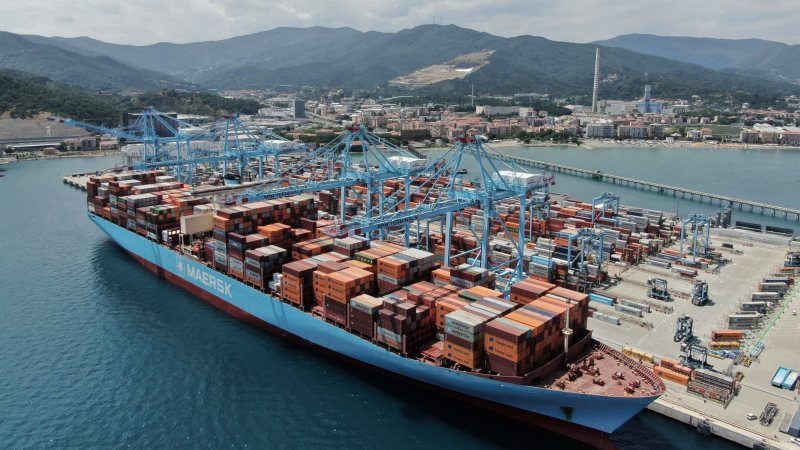
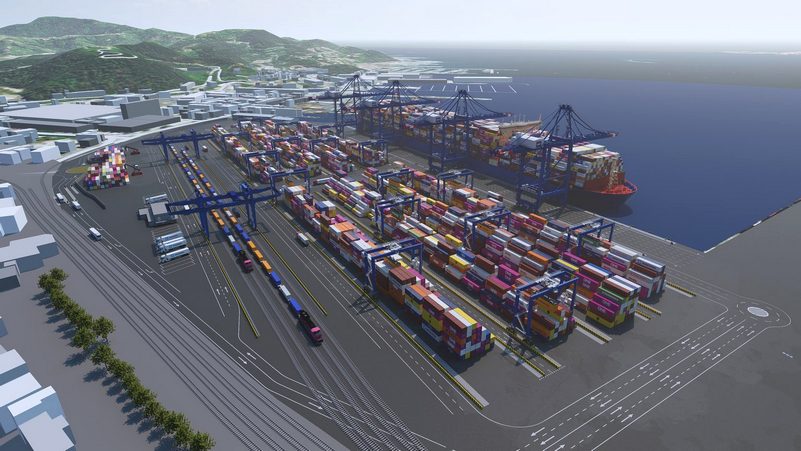
    Foto: Msc

    The 1970s were the golden age of road haulage between Europe and the Middle East, with thousands of articulated trucks carrying a wide range of goods – from consumer products to equipment for the oil industry – eastwards. At that time, maritime container transport was still a niche sector and ports in the Arabian area were unable to cope with the surge in demand for goods that followed the rise in oil prices which enriched Arab countries.

    Vehicles departed from several European countries, crossed the difficult roads of Yugoslavia and Bulgaria and reached Istanbul. Around six thousand tonnes per day crossed the then new Bosphorus road bridge from Europe to Asia. From there, the flow of trucks split into two main corridors: towards Iran, Iraq or Syria, depending on the final destination. It was a real epic, not only because of the distances involved: freezing winters and scorching summers, damaged or barely sketched-out roads, long waits at borders and criminal attacks severely tested the work of drivers.

    However, this period was relatively short-lived, as the context changed with the development of port infrastructure and maritime container transport, along with major geopolitical events, most notably the Islamic Revolution in Iran and the subsequent war with Iraq. These developments cut off a large part of the road arteries while maritime transport expanded. Yet the Iranian context is now triggering a revival of land traffic, although on a much smaller scale than during the golden age.

    The closure of the Strait of Hormuz is trapping thousands of containers in the Persian Gulf, reviving road transport both for direct links to Europe and for routes crossing the Arabian Peninsula to reach the Red Sea without passing through the Straits of Hormuz and Bab el-Mandeb. From there, containers can be reloaded onto ships bound for the Suez Canal. The reopening of road haulage corridors is also being facilitated by the stabilisation of Syria, which opens the route towards Turkey and therefore the Mediterranean. On the regulatory side, a key facilitator is the TIR regulation, adopted by many countries in the region and increasingly streamlined through digitalisation.

    Two corridors are now emerging. The first connects Iraq with Turkey and Jordan and has become particularly interesting since Baghdad joined the TIR system in June 2025. This allows transport from Poland to the United Arab Emirates or Saudi Arabia in around ten days, using combined road-sea transport while avoiding congested ports involved in the conflict.

    The reactivation of the TIR regime in Syria allows the country to be used for a second corridor linking Turkey with Jordan and the Gulf area. Ankara and Damascus recently signed a road transport agreement to reopen the historic Turkish–Middle Eastern corridor. The Turkish Minister of Trade announced that the corridor should be fully operational in 2026, with initial transits already under way towards Jordan and the Gulf. On the European side, flows connect with international transport backbones using the TEN-T motorway network and the Balkan gateways towards Turkey.

    Alongside these two north–south routes, a third transversal corridor runs through Saudi Arabia, linking the ports of Dammam and Jubail on the Persian Gulf with Jeddah on the Red Sea via Riyadh. From Jeddah, containers can be shipped towards the Suez Strait along a stretch of sea beyond the reach of Houthi attacks.

    Road routes are not without critical issues. The first is limited capacity compared with maritime transport, due to the restricted availability of heavy vehicles. Instability also persists, particularly in Iraq – which in recent hours has been turning into a conflict zone – and in Syria. Road haulage is also affected by rising costs, especially fuel prices, driven by the Iranian conflict itself. This factor inevitably increases road transport costs, making the mode suitable only for a limited range of high-value goods.

    These constraints have not prevented the development of new services or the strengthening of existing ones, often promoted by shipping companies themselves. On 3 March 2026, for example, MSC relaunched the Tiger and Phoenix multimodal services, which move containers from the Turkish ports of Mersin and Iskenderun respectively into Iraq (Zakho, Dohuk, Mosul, Erbil, Sulaymaniyah and Baghdad). The future of this transport mode nevertheless remains uncertain, as it depends on the duration and outcome of the conflict currently inflaming the entire Gulf region.

    Michele Latorre

    © TrasportoEuropa - Riproduzione riservata - Foto di repertorio
    Segnalazioni, informazioni, comunicati, nonché rettifiche o precisazioni sugli articoli pubblicati vanno inviate a: redazione@trasportoeuropa.it


      Puoi commentare questo articolo nella pagina Facebook di TrasportoEuropa
      bottone newsletter piccolo Vuoi rimanere aggiornato sulle ultime novità sul trasporto e la logistica e non perderti neanche una notizia di TrasportoEuropa? Iscriviti alla nostra Newsletter con l'elenco ed i link di tutti gli articoli pubblicati nei giorni precedenti l'invio. Gratuita e NO SPAM!


    CONTENUTI SPONSORIZZATI


Videocast K44

Aereo

  • Lufthansa Cargo avvia il nuovo hub merci a Francoforte

    Lufthansa Cargo avvia il nuovo hub merci a Francoforte

    Lufthansa Cargo avvia la prima fase del progetto LCCevo nell’aeroporto di Francoforte da 600 milioni di euro, che entro il 2030 trasformerà il Lufthansa Cargo Center nello scalo aereo merci più moderno d'Europa. In parallelo la compagnia lancia nuovi servizi digitali su WeChat per il mercato cinese.

Ferrovia

  • Ciberattacco a Trenitalia sui dati dei clienti

    Ciberattacco a Trenitalia sui dati dei clienti

    Trenitalia ha inviato il 26 giugno 2026 ai clienti una comunicazione che segnala un incidente di sicurezza informatica con accesso non autorizzato a dati personali legati ai titoli di viaggio. Esclusi dati di pagamento e credenziali di accesso; coinvolti anagrafica, contatti e informazioni di viaggio.

Persone

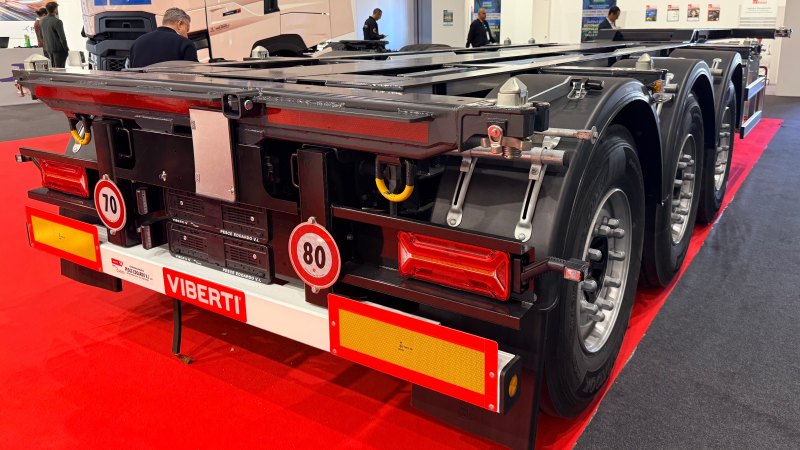
Schmitz Cargobull aggiorna il semirimorchio per container

TECNICA

Schmitz Cargobull aggiorna il semirimorchio per container
Renault Trucks estende l’autonomia dei suoi camion elettrici

TECNICA

Renault Trucks estende l’autonomia dei suoi camion elettrici
Alleanza Octopus-Catl su scambio batterie per camion elettrici

TECNICA

Alleanza Octopus-Catl su scambio batterie per camion elettrici
Il camion europeo si prepara alla crescita della Difesa

TECNICA

Il camion europeo si prepara alla crescita della Difesa
Still aggiorna quattro gamme di sollevatori e transpallet

TECNICA

Still aggiorna quattro gamme di sollevatori e transpallet
previous arrow
next arrow
La crisi dei chip e delle memorie colpisce la logistica

LOGISTICA

La crisi dei chip e delle memorie colpisce la logistica
La Cassazione conferma la qualifica di spedizioniere-vettore

LOGISTICA

La Cassazione conferma la qualifica di spedizioniere-vettore
L’interporto di Trieste chiude il 2025 con utili record

LOGISTICA

L’interporto di Trieste chiude il 2025 con utili record
El Niño 2026 minaccia anche la logistica

LOGISTICA

El Niño 2026 minaccia anche la logistica
Liguria ospite d’onore al China International Supply Chain Expo 2026

LOGISTICA

Liguria ospite d’onore al China International Supply Chain Expo 2026
previous arrow
next arrow
Gasolio agricolo sui camion, cinque arresti in Puglia

ENERGIE

Gasolio agricolo sui camion, cinque arresti in Puglia
Il Gnl cresce in Italia ma rallenta nell’autotrasporto

ENERGIE

Il Gnl cresce in Italia ma rallenta nell’autotrasporto
Fiap avverte che una causa sul cartello carburante è prematura

ENERGIE

Fiap avverte che una causa sul cartello carburante è prematura
Bruxelles approva il regime italiano da 23 miliardi per le rinnovabili

ENERGIE

Bruxelles approva il regime italiano da 23 miliardi per le rinnovabili
Operazione Red Gold contro frode nei carburanti in Abruzzo

ENERGIE

Operazione Red Gold contro frode nei carburanti in Abruzzo
previous arrow
next arrow
La logistica è tra le attività più colpite dai ciberattacchi nel 2025

SERVIZI

La logistica è tra le attività più colpite dai ciberattacchi nel 2025
Il rischio Dogana non è più solo amministrativo

SERVIZI

Il rischio Dogana non è più solo amministrativo
Sicurezza certificata da Tapa nella borsa carichi Trans.eu

SERVIZI

Sicurezza certificata da Tapa nella borsa carichi Trans.eu
Due attentati a Sicily by Car con fuoco e kalashnikov

SERVIZI

Due attentati a Sicily by Car con fuoco e kalashnikov
L’innovazione di Geotab punta su sicurezza e Pmi

SERVIZI

L’innovazione di Geotab punta su sicurezza e Pmi
Gaston Schul cresce nelle spedizioni genovesi con Parodi Forwarding

SERVIZI

Gaston Schul cresce nelle spedizioni genovesi con Parodi Forwarding
L’Italia è molto esposta nel cibercrimine nel trasporto e logistica

SERVIZI

L’Italia è molto esposta nel cibercrimine nel trasporto e logistica
Carta DKV per ricaricare il camion elettrico

SERVIZI

Carta DKV per ricaricare il camion elettrico
Video | Dkv al Transpotec oltre la carta carburante

SERVIZI

Video | Dkv al Transpotec oltre la carta carburante
Zucchetti presenta una logistica digitale integrata software e robot

SERVIZI

Zucchetti presenta una logistica digitale integrata software e robot
Golia360 punta sulla digitalizzazione per gli autisti

SERVIZI

Golia360 punta sulla digitalizzazione per gli autisti
Come la logistica può guadagnare dalle multe Antitrust

SERVIZI

Come la logistica può guadagnare dalle multe Antitrust
Tra Genova e Barcellona l’asse della formazione per la logistica

SERVIZI

Tra Genova e Barcellona l’asse della formazione per la logistica
Transporeon introduce la ricerca con l’intelligenza artificiale

SERVIZI

Transporeon introduce la ricerca con l’intelligenza artificiale
Nasce Synlog Alliance consorzio dati per la logistica

SERVIZI

Nasce Synlog Alliance consorzio dati per la logistica
previous arrow
next arrow