







On 14 April 2025, Bloomberg TV journalist Danny Lee interviewed DHL CEO Tobias Meyer about the current state of global logistics amid Trump’s unpredictable tariff policies. The most recent development at the time of the interview was a ninety-day postponement in the introduction of tariffs on certain electronic goods, which offered partial relief to many companies, particularly for goods already in transit. However, Meyer pointed out that the measure’s retroactive application from 5 April had created further complications, forcing companies to reprocess customs documentation that had already been completed. Uncertainty remains high, particularly because the US administration is assessing the impact of these goods from a national security perspective, in accordance with Section 232 of the federal code. This situation places DHL’s clients in a state of considerable instability.
Further complicating the picture, according to the German executive, is the growing fatigue among industrial decision-makers. Meyer spoke openly of a sense of weariness in the manufacturing and distribution sectors, where companies struggle to determine whether newly announced measures will remain in place or be revised days later. This atmosphere of volatility discourages strategic decisions and slows operations. A clear example emerged last February, when the de minimis threshold for imports into the United States was removed. Previously, shipments under 800 dollars were exempt from customs declarations and duties. The immediate consequence was a doubling of the number of customs procedures to be handled by US authorities, with serious operational repercussions.
In the meantime, many companies are attempting to reassess the location of their production and inventories to better shield themselves from future trade obstacles. But the lack of clarity surrounding US political intentions makes any evaluation difficult. In many cases, according to Meyer, the preferred approach is to wait and see, rather than making decisions that might soon become obsolete.
Faced with this instability, DHL has chosen to look beyond the United States and focus on sectors and regions showing more robust growth trends. A tangible example is the opening of a new pharmaceutical hub in Singapore, part of a broader corporate strategy aimed at 2030 and centred on investment in high-potential sectors such as life sciences and healthcare. For Meyer, this is a logical step, as 75 percent of global trade does not involve the United States but increasingly intense flows between Europe, Asia and other regions. The rise in Asian trade is a particular area of focus for DHL, which is dedicating attention and resources accordingly. Malaysia is also part of these plans, with a projected increase in staff to support growing demand.
Alongside pharmaceutical logistics, e-commerce represents another cornerstone of the group’s future. Currently, one third of DHL’s revenue is linked to e-commerce, and the company holds a leading position in the transport, storage and international distribution of pharmaceutical products. The energy transition, with the expansion of renewable energies and the need to move wind turbines, solar panels and components related to energy efficiency, is another growth avenue the company is actively pursuing.
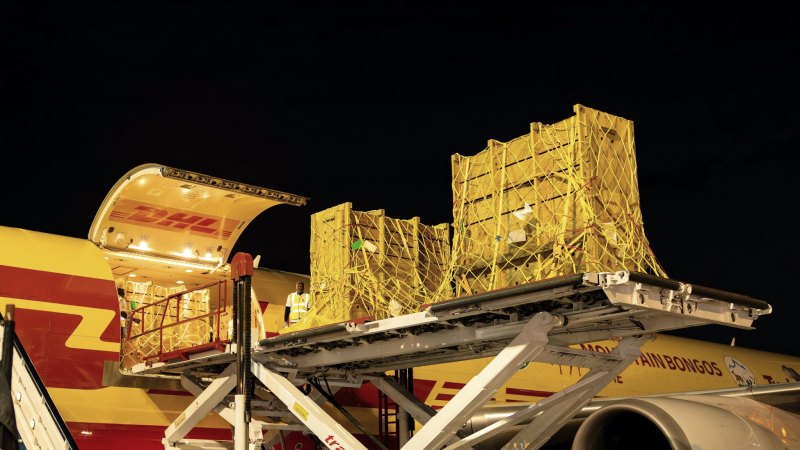 Foto: DHL
On the subject of tariffs, Meyer has no doubts: the burden will ultimately fall on consumers. If additional taxes are imposed on imported goods, someone will have to pay for them, and in the end it will be the final consumer who bears the cost. The issue, however, is broader: uncertainty and constant regulatory changes risk slowing or halting crucial investments, creating the real possibility of shortages in future markets. The resilience of the American consumer, thus far fairly robust, may not be sufficient if rising prices significantly affect sectors such as electronics or industrial goods.
Despite these challenges, Meyer concluded, DHL remains firm in its ambitions. The growth plan through to 2030, which foresees a 50 percent increase in revenue, remains intact. According to the CEO, the group enjoys a strong position in international markets not linked to the United States, where it holds more significant market shares. Even the domestic business in the US, which is very solid, is not expected to suffer major setbacks. Global demand, driven by structural trends such as the ageing of the Asian population, medical advances and the spread of e-commerce, will continue to support the development of advanced logistics, including cold chain logistics for pharmaceutical products.
In a context of severe turbulence, DHL appears to be opting for a pragmatic approach. The daily management of hubs, the reallocation of aircraft and the adjustment of operational capacities all demand a high degree of flexibility, but the company continues to take a medium- to long-term view. As Meyer himself stated, it is not a matter of “waking up every day in battle mode”, but of staying calm, tackling operational challenges and continuing to invest where structural trends point to growth.