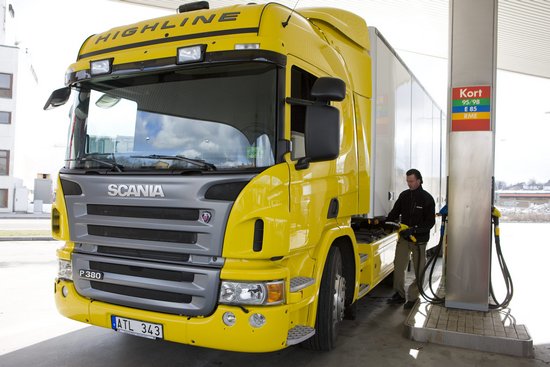




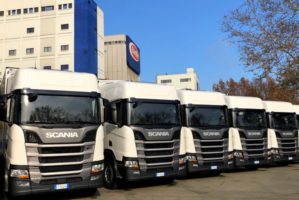

On 29 May 2025, Lithuanian transport giant Girteka announced it had signed a contract for two thousand commercial vehicles with Volvo Trucks. The deal represents a significant boost for the Swedish manufacturer, particularly at a time when the overall heavy vehicle market is in decline. European registrations of heavy-duty trucks fell by 16.6% in the first quarter of the year. Volvo will supply Girteka with its FH and FH Aero models, with delivery scheduled to be completed by the end of 2025. All vehicles will be integrated into Girteka’s internal digital system, allowing for proactive maintenance management and smoother operations. The purchase package includes financial support from Volvo Financial Services and Volvo Blue maintenance contracts.
In addition to renewing its fleet, Girteka is also digitising various aspects of road haulage. In April, it rolled out Payhawk, a system for managing driver expenses. This solution provides drivers with virtual and physical payment cards that are activated only for the duration of a single trip and can only be used for pre-approved expenses such as parking, overnight stays, selected tolls, vehicle washes, minor maintenance and unforeseen costs.
All transactions are recorded in real time through a mobile app. Receipts are uploaded directly by the driver and instantly verified by supervisors, enabling continuous and timely oversight. If necessary, drivers can request a spending limit increase directly via the app, often receiving approval within minutes. Thanks to the digitisation of expenses, Girteka’s operational, accounting and HR departments can eliminate most manual and paper-based reimbursement processes, leading to significant savings in time and resources. Real-time visibility of expenses provides greater financial control and a more agile response to unexpected events.
Girteka is also expanding its intermodal activities. In 2024, the use of intermodal solutions rose by 35% compared to the previous year, with more than 24,000 full truckloads transported via this method. The company also reported that intermodal transport helped it cut CO2 emissions by 23.6 million tonnes during the year.