




Array ( [0] => 8 [1] => 10155 )

Podcast K44

Cronaca

  • Casello A14 di Riccione chiuso per autocisterna in fiamme

    Casello A14 di Riccione chiuso per autocisterna in fiamme

    Un'autocisterna carica di carburante si è ribaltata e ha preso fuoco nei pressi del casello A14 di Riccione nel primo pomeriggio del 18 giugno 2026, causando due feriti ma nessuna vittima accertata. Vigili del Fuoco da Rimini, Forlì e Pesaro sono intervenuti per spegnere l'incendio e gestire il traffico bloccato …

Transpotalk

Normativa

Mare

  • Noli container ai massimi da settembre 2024

    Noli container ai massimi da settembre 2024

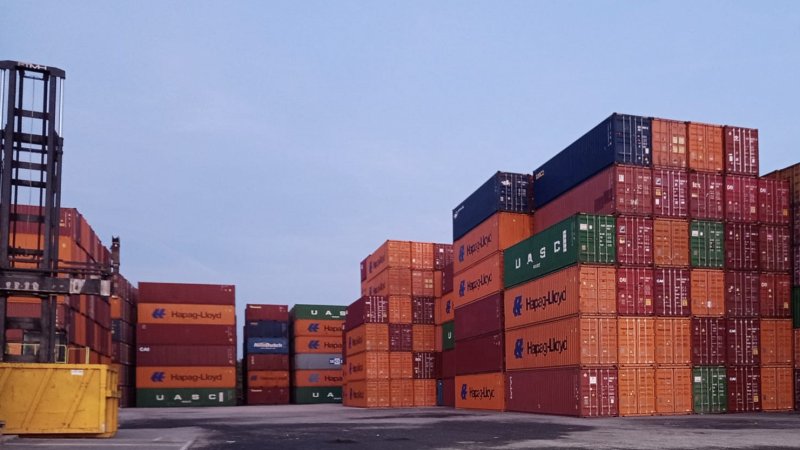
    Il World Container Index di Drewry sui noli medi spot del trasporto marittimo di container sale del 5% nell’ultima settimana completa di giugno 2026, spinto dal transpacifico in piena tensione. Asia-Europa resta stabile ma con capacità limitata, mentre la tregua Usa-Iran allenta i rischi sullo Stretto di Hormuz senza eliminarli …

Autotrasporto

  • Caldo estremo, gli obblighi dell’azienda nell’autotrasporto

    Caldo estremo, gli obblighi dell’azienda nell’autotrasporto

    Le ondate di calore che colpiscono l'Europa riportano al centro il tema della sicurezza degli autisti in cabina: il quadro normativo UE sui riposi si intreccia con gli obblighi datoriali su valutazione dei rischi, dotazioni dei veicoli e organizzazione dei turni nelle condizioni climatiche estreme.

    Germany should copy Italy to control truck drivers

    German public television channel Ard aired an investigation on its PlusMinus programme comparing controls on heavy goods vehicles in Italy and Germany, concluding that the Italian system is more effective. The report starts from a well-known fact: hundreds of trucks travel on German motorways driven by operators who do not meet legal requirements, hired through intermediary agencies operating in a grey area between social dumping and criminal activity. The key finding is the identification of Italy as a country that has developed an effective response to the problem.

    The mechanism described by the German journalists shows that in Germany the shortage of drivers has created space for a network of agencies, mainly based in Lithuania, recruiting drivers from Central Asia and Africa. Job offers circulate in Cyrillic script on classified portals targeting citizens of former Soviet republics. The cost of a driver hired through such intermediaries can fall to around €145 per day, including charges, compared with a minimum of more than €400 per day for a driver regularly employed in Germany with full insurance and social security coverage. This gap fuels unlawful competition that penalises both exploited workers and compliant hauliers.

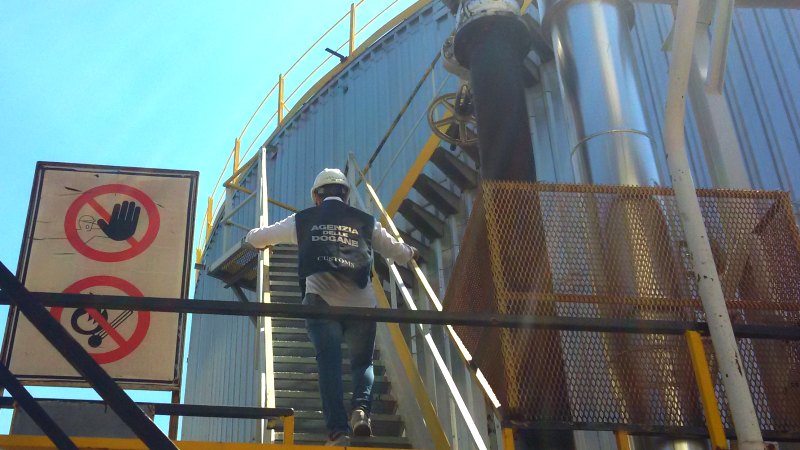
    From a regulatory perspective, EU rules require every driver working in another Member State to hold an A1 certificate, issued by the competent insurance body, confirming the applicable social security regime and identifying the employer. In Germany, however, there is no obligation to carry the document on board or present it during roadside checks, unlike in Belgium or Austria. Access to the European A1 certificate database is restricted to Zoll (Customs), which carries out roadside checks only sporadically and mainly for anti-drug or anti-smuggling purposes. The traffic police and the Bundesamt für Logistik und Mobilität (Balm), the federal authority responsible for inspections of commercial vehicles, do not have operational access to these data during routine checks.

    One emblematic case cited in the Ard investigation is the special traffic police unit in Nuremberg-Feucht, which operates mainly at night with a maximum of three vehicles dedicated to trucks. Officers in that unit report a steady increase in drivers from Kazakhstan, Kyrgyzstan, Nepal and Africa holding documents that would not allow them to drive in Europe. Over the years, they have seized hundreds of false passports, driving licences and work permits. However, penalties remain relatively limited and are not sufficient to deter companies from repeating the scheme.

    It is in this context that the PlusMinus report introduces a comparison with the Italian system, presenting it as concrete proof of what can be achieved with regulatory tools already available at European level. In Italy, in addition to the obligation for drivers to carry the A1 certificate in the cab, legislation requires hauliers to submit the certification digitally in advance for every foreign driver entering the country. This mechanism creates a database that can be consulted in real time: any police officer or inspection official can check via mobile phone or tablet whether a valid A1 exists for a specific driver, and identify the employer and the insurance body. Italian Authorities told German journalists that the system’s effectiveness lies in its ability to systematically cross-check employment data with tax and social security obligations.

    The most significant result concerns penalties. According to Ard journalists, the unlawful supply of labour or the use of drivers without adequate coverage is automatically linked to potential tax and social security evasion, paving the way for substantial fines against contracting logistics companies. In this regard, the report refers to investigations carried out in Italy, particularly by the Procura di Milano (Milan Public Prosecutor’s Office), involving major logistics multinationals and their clients, now well known to the Italian public.

    The comparison between the two systems highlights structural differences that go beyond individual rules. In Italy, the A1 certificate acts as the digital backbone of the entire control framework: advance data submission, widespread access to information for all enforcement bodies, and automatic links to tax and social security regulations create a chain of responsibility extending to large transport and e-commerce multinationals. In Germany, by contrast, registers are fragmented at Land level, there is no unified national reporting system, and traffic police operate largely in isolation from social security institutions. As a result, evidence gathered during roadside checks rarely leads to structured enforcement action.

    The Ard investigation concludes with an observation that reads as a call to action for German lawmakers: unless the regulatory framework changes, low-cost driver offers will continue to thrive, and German motorways will remain exposed to risks linked to poorly trained, exhausted or improperly documented drivers. The weakness of the system harms not only exploited workers but also compresses the margins of compliant hauliers through unlawful competition, while shifting onto road infrastructure the costs of safety that is not ensured upstream.

    M.L.

    © TrasportoEuropa - Riproduzione riservata - Foto di repertorio
    Segnalazioni, informazioni, comunicati, nonché rettifiche o precisazioni sugli articoli pubblicati vanno inviate a: redazione@trasportoeuropa.it


      Puoi commentare questo articolo nella pagina Facebook di TrasportoEuropa

      bottone newsletter piccolo Vuoi rimanere aggiornato sulle ultime novità sul trasporto e la logistica e non perderti neanche una notizia di TrasportoEuropa? Iscriviti alla nostra Newsletter con l'elenco ed i link di tutti gli articoli pubblicati nei giorni precedenti l'invio. Gratuita e NO SPAM!


    CONTENUTI SPONSORIZZATI


Videocast K44

Aereo

  • Lufthansa Cargo avvia il nuovo hub merci a Francoforte

    Lufthansa Cargo avvia il nuovo hub merci a Francoforte

    Lufthansa Cargo avvia la prima fase del progetto LCCevo nell’aeroporto di Francoforte da 600 milioni di euro, che entro il 2030 trasformerà il Lufthansa Cargo Center nello scalo aereo merci più moderno d'Europa. In parallelo la compagnia lancia nuovi servizi digitali su WeChat per il mercato cinese.

Ferrovia

  • Ciberattacco a Trenitalia sui dati dei clienti

    Ciberattacco a Trenitalia sui dati dei clienti

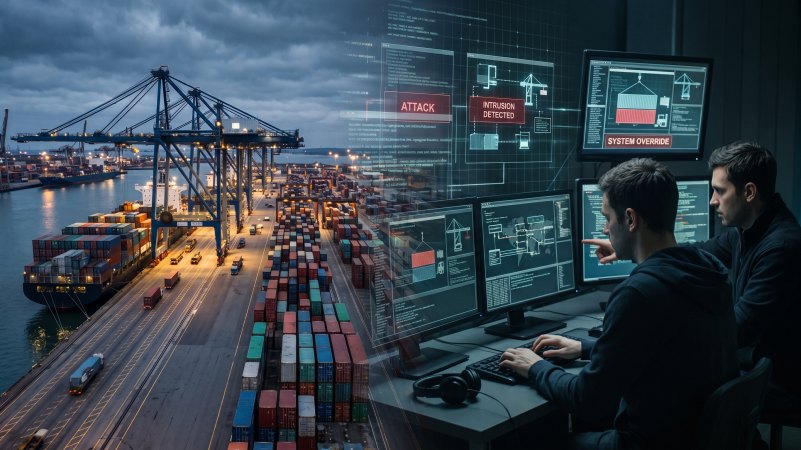
    Trenitalia ha inviato il 26 giugno 2026 ai clienti una comunicazione che segnala un incidente di sicurezza informatica con accesso non autorizzato a dati personali legati ai titoli di viaggio. Esclusi dati di pagamento e credenziali di accesso; coinvolti anagrafica, contatti e informazioni di viaggio.

Persone

Schmitz Cargobull aggiorna il semirimorchio per container

TECNICA

Schmitz Cargobull aggiorna il semirimorchio per container
Renault Trucks estende l’autonomia dei suoi camion elettrici

TECNICA

Renault Trucks estende l’autonomia dei suoi camion elettrici
Alleanza Octopus-Catl su scambio batterie per camion elettrici

TECNICA

Alleanza Octopus-Catl su scambio batterie per camion elettrici
Il camion europeo si prepara alla crescita della Difesa

TECNICA

Il camion europeo si prepara alla crescita della Difesa
Still aggiorna quattro gamme di sollevatori e transpallet

TECNICA

Still aggiorna quattro gamme di sollevatori e transpallet
previous arrow
next arrow
La crisi dei chip e delle memorie colpisce la logistica

LOGISTICA

La crisi dei chip e delle memorie colpisce la logistica
La Cassazione conferma la qualifica di spedizioniere-vettore

LOGISTICA

La Cassazione conferma la qualifica di spedizioniere-vettore
L’interporto di Trieste chiude il 2025 con utili record

LOGISTICA

L’interporto di Trieste chiude il 2025 con utili record
El Niño 2026 minaccia anche la logistica

LOGISTICA

El Niño 2026 minaccia anche la logistica
Liguria ospite d’onore al China International Supply Chain Expo 2026

LOGISTICA

Liguria ospite d’onore al China International Supply Chain Expo 2026
previous arrow
next arrow
Gasolio agricolo sui camion, cinque arresti in Puglia

ENERGIE

Gasolio agricolo sui camion, cinque arresti in Puglia
Il Gnl cresce in Italia ma rallenta nell’autotrasporto

ENERGIE

Il Gnl cresce in Italia ma rallenta nell’autotrasporto
Fiap avverte che una causa sul cartello carburante è prematura

ENERGIE

Fiap avverte che una causa sul cartello carburante è prematura
Bruxelles approva il regime italiano da 23 miliardi per le rinnovabili

ENERGIE

Bruxelles approva il regime italiano da 23 miliardi per le rinnovabili
Operazione Red Gold contro frode nei carburanti in Abruzzo

ENERGIE

Operazione Red Gold contro frode nei carburanti in Abruzzo
previous arrow
next arrow
La logistica è tra le attività più colpite dai ciberattacchi nel 2025

SERVIZI

La logistica è tra le attività più colpite dai ciberattacchi nel 2025
Il rischio Dogana non è più solo amministrativo

SERVIZI

Il rischio Dogana non è più solo amministrativo
Sicurezza certificata da Tapa nella borsa carichi Trans.eu

SERVIZI

Sicurezza certificata da Tapa nella borsa carichi Trans.eu
Due attentati a Sicily by Car con fuoco e kalashnikov

SERVIZI

Due attentati a Sicily by Car con fuoco e kalashnikov
L’innovazione di Geotab punta su sicurezza e Pmi

SERVIZI

L’innovazione di Geotab punta su sicurezza e Pmi
Gaston Schul cresce nelle spedizioni genovesi con Parodi Forwarding

SERVIZI

Gaston Schul cresce nelle spedizioni genovesi con Parodi Forwarding
L’Italia è molto esposta nel cibercrimine nel trasporto e logistica

SERVIZI

L’Italia è molto esposta nel cibercrimine nel trasporto e logistica
Carta DKV per ricaricare il camion elettrico

SERVIZI

Carta DKV per ricaricare il camion elettrico
Video | Dkv al Transpotec oltre la carta carburante

SERVIZI

Video | Dkv al Transpotec oltre la carta carburante
Zucchetti presenta una logistica digitale integrata software e robot

SERVIZI

Zucchetti presenta una logistica digitale integrata software e robot
Golia360 punta sulla digitalizzazione per gli autisti

SERVIZI

Golia360 punta sulla digitalizzazione per gli autisti
Come la logistica può guadagnare dalle multe Antitrust

SERVIZI

Come la logistica può guadagnare dalle multe Antitrust
Tra Genova e Barcellona l’asse della formazione per la logistica

SERVIZI

Tra Genova e Barcellona l’asse della formazione per la logistica
Transporeon introduce la ricerca con l’intelligenza artificiale

SERVIZI

Transporeon introduce la ricerca con l’intelligenza artificiale
Nasce Synlog Alliance consorzio dati per la logistica

SERVIZI

Nasce Synlog Alliance consorzio dati per la logistica
previous arrow
next arrow