





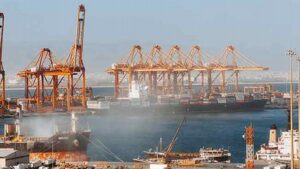
In the early hours of Saturday 28 March 2026, the port of Salalah in Oman was hit by a drone attack targeting the container terminal operated by APM Terminals, part of the Maersk group. According to Maersk, the incident caused explosions in the operational area, damage to a crane and injuries to a port worker. Authorities and the operator ordered the immediate evacuation of the site and the suspension of activities for at least 48 hours, pending safety checks and technical assessments of the infrastructure.
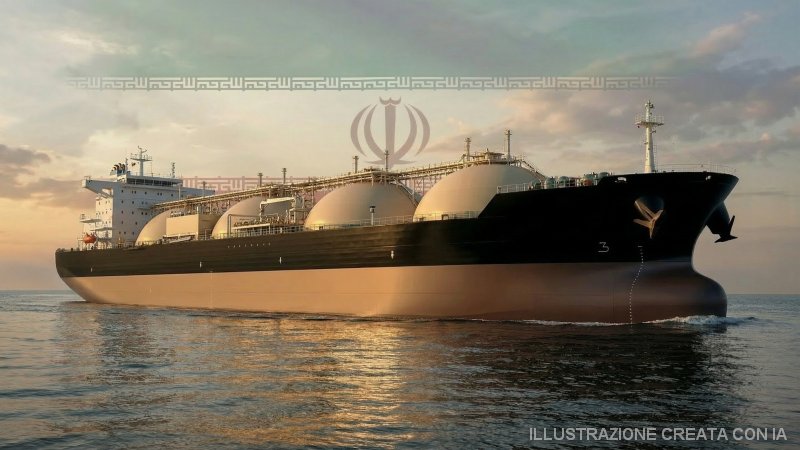
The nature of the attack indicates the use of two drones that struck the container terminal area. Omani authorities reported that the damage was limited to a single crane and confirmed that no ships or cargo were involved. Maersk also stated that none of the company’s vessels or goods were affected, and that all crews were secured safely. However, the operational impact was immediate: the terminal was closed and activities halted, affecting vessel rotations and transhipment operations. Among the ships in port at the time of the attack was the Hapag-Lloyd container vessel Lisbon Express, with a capacity of around 2,300 TEU, which was subsequently moved out of the port as a precaution. Hapag-Lloyd confirmed that neither the vessel nor its crew sustained damage, but noted that the port is temporarily out of service within its network, with potential repercussions for service schedules.
The incident comes amid growing instability in the region. Omani authorities condemned the attack as a violation of national security and have launched investigations to determine its origin and motives, noting that no group has officially claimed responsibility. At the same time, in the context of regional tensions, sources cited in reports point to references to military operations linked to Iran in the area, although there has been no direct claim of responsibility for the Salalah raid.
The port of Salalah plays a central role in the regional logistics system. Located on Oman’s southern coast, overlooking the Arabian Sea and outside the Strait of Hormuz, it is one of the Middle East’s main container hubs, handling more than three million TEU annually according to industry estimates. Its position makes it a strategic node for transhipment traffic along routes between Asia, the Gulf and East Africa, as well as an alternative gateway for flows destined for Gulf Cooperation Council countries via inland corridors.
This function as an “extra-Gulf” gateway amplifies the significance of the operational disruption. Even if limited to around 48 hours, as initially indicated by Maersk, the suspension affects the terminal’s logistics cycle and forces carriers to revise rotations and port calls. If prolonged, traffic could be redistributed to other regional hubs such as Jeddah, Jebel Ali or Duqm, with the risk of congestion and extended transit times.
From a supply chain perspective, the immediate impact appears contained if the shutdown remains short-lived, but repeated incidents of this kind introduce a structural risk factor. Analysts cited in the sources highlight how drone attacks, characterised by relatively low costs and difficulty of interception, can strike critical infrastructure with effects disproportionate to the means employed, putting pressure on the reliability of regional hubs.
The event is also likely to influence insurance and security considerations. Initial indications suggest a potential increase in war risk premiums for vessels and cargo bound for the area, particularly in the event of escalation or repeated attacks. At the same time, the need is emerging to strengthen port protection measures, especially against low-altitude aerial threats, and to enhance coordination between private operators and public authorities.