






Global container traffic hits record high
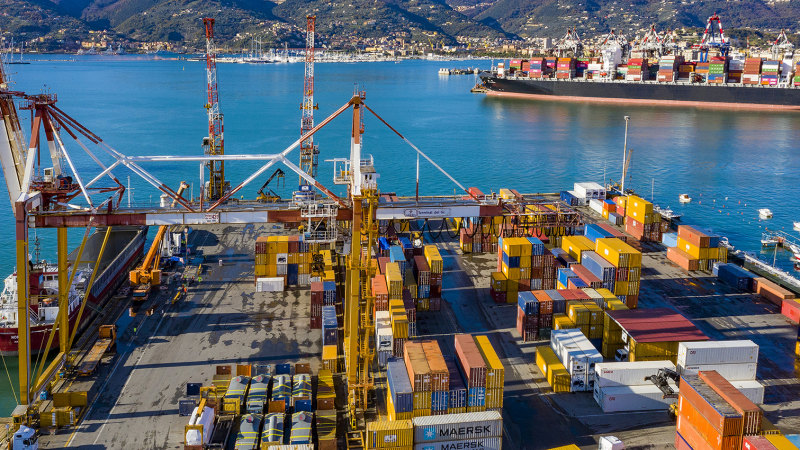
Global maritime container traffic reached a new monthly record in August 2026, with 17.46 million TEU transported, according to data from Container Trades Statistics (CTS). Volumes were 3.7% higher than in August 2025, 7.2% above the 2024 level and 12.9% higher than in 2023. Over the first eight months of the year, total volumes increased by 4.7% compared with the same period in 2025. The increase in traffic has been accompanied by rising freight rates. The CTS Global Price Index reached 117 points, its highest level since July 2024, up 44% year on year and approximately 50% compared with January 2026. However, volume growth varies considerably between regions. Between January and August, exports from the Far East increased by 8%, equivalent to around 6.3 million additional TEU, while North American imports rose by 2% and those of sub-Saharan Africa by 13%. By contrast, imports into the Indian Subcontinent and the Middle East fell by 5%, while exports declined by 10%. European exports remained broadly stable. According to CTS, pressure on freight rates is driven not only by demand but also by disruptions to shipping routes, which reduce effective available capacity and increase operating costs. Factors identified include higher fuel prices, tensions in the Gulf, restrictions affecting the Panama Canal and tariff uncertainty.
Eight Arctic sailings between China and Europe
Sea Legend Shipping has completed departures for the first season of its weekly container service between China and Europe via the Northeast Arctic Passage. According to Chinese newspaper Chao News, the final two vessels departed Ningbo-Zhoushan on 27 September, bringing the number of sailings launched in 2026 to eight. The service, inaugurated on 15 August following a trial voyage in 2025, handled more than 14,000 TEU of exports, mainly batteries, energy storage systems and other high-value products. However, the schedule encountered operational difficulties. Some voyages accumulated delays of between four and nine days, while the final departures were brought forward because of forecast ice conditions. The initiative forms part of China's strategy to diversify its trade connections with Europe. Nevertheless, the seasonal nature of Arctic navigation, limited vessel capacity and uncertainty over delivery times mean that, for now, the service remains a complementary alternative to traditional shipping routes.
Ethiopian orders ten Boeing freighters
Ethiopian Airlines signed an order with Boeing in Addis Ababa on 30 September 2026 for ten freighter aircraft, comprising eight next-generation 777-8Fs and two 777Fs. The agreement also includes purchase rights for a further eight 777-8Fs, potentially increasing the total to eighteen aircraft. Deliveries will take place in two phases. The two 777Fs are expected in 2027 and 2028, while the eight 777-8Fs will arrive between 2033 and 2035. Ethiopian will become the first African operator of the new 777-8F, which has a maximum payload capacity of 118 tonnes. The investment is intended to strengthen the airline's cargo network, which serves more than seventy international destinations and markets, consolidating Addis Ababa's role in connections between Africa, Europe, Asia and the Americas. The programme forms part of the airline's strategy to expand its cargo operations, which account for approximately 23% of its revenue, and complements investments in Ethiopia's logistics and airport infrastructure.
Maersk introduces VGM service at Milazzo
From 9 November 2026, Maersk will introduce a Verified Gross Mass (VGM) certification service for containers exported through the port of Milazzo. The service will allow customers to entrust the shipping company with managing the weight certification required before eligible containers can be loaded onto vessels. The charge will be €50 per container, regardless of equipment type or final destination, payable at origin. The service will remain available until further notice. For non-Spot bookings, the charge will be determined according to the price calculation date. For shipments not subject to Federal Maritime Commission (FMC) regulations, this will correspond to the scheduled departure of the first maritime leg shown in the booking confirmation. For FMC-regulated shipments, the reference date will be the latest scheduled container gate-in date at the terminal. For Spot bookings, the calculation will depend on the booking confirmation date or the estimated departure of the first vessel. Local surcharges and other ancillary charges may also apply.
Rosatom consolidates Russian logistics
Russian state-owned group Rosatom has taken full control of Delo Group, completing the acquisition of the remaining 51% stake from founder Sergei Shishkaryov on 7 October 2026, having previously held 49%. The value of the transaction has not been disclosed. The acquisition will allow Rosatom to integrate Delo's port, rail and maritime operations with those of Fesco, which it already controls. Delo operates a container fleet with capacity exceeding 220,000 TEU, approximately 40,000 railway flat wagons and a network of port and inland terminals. Its assets include the KSK grain terminal in Novorossiysk, on the Black Sea, which has an annual capacity of 10 million tonnes. The integration aims to coordinate intermodal transport, terminal management and shipping services, while strengthening connections with the Northern Sea Route, whose development is managed by Rosatom. The project runs alongside a planned joint venture with DP World, to which Rosatom is expected to contribute 92.4% of Fesco, while the UAE-based group would provide capital and international connections. This transaction remains subject to the necessary regulatory approvals.
China Merchants and Rina sign cooperation agreement
China Merchants Energy Shipping and Rina signed a memorandum of understanding in Naples on 12 October 2026 to develop cooperation in maritime safety, digitalisation and new technologies for shipping. The agreement expands the existing relationship between the two companies and establishes a framework for technical and operational cooperation. The areas covered include risk management, fleet safety, carbon emissions control and regulatory compliance. Particular attention will be paid to the use of artificial intelligence in shipping operations, with potential applications in predictive maintenance, energy efficiency and decision-making. The cooperation will also cover alternative fuels, intelligent navigation systems and automation technologies. The memorandum provides for joint research activities, knowledge sharing and technical studies aimed at improving vessel operations and addressing developments in maritime regulations and technology.
Turkish Cargo sets new freight record
Global GSA Group has set a new monthly record for air cargo handled on behalf of Turkish Cargo in the Netherlands, reaching 3,101 tonnes in August. This is the first time the company has exceeded three million kilograms handled in a single month, surpassing its previous record of 2,700 tonnes. The increase amounted to 401 tonnes, or 14.9% above the previous peak. The result was achieved through the cooperation between Global GSA Group and Turkish Cargo in the Dutch market, where the two organisations work together to develop freight traffic and provide customer services. The new volume establishes a benchmark for future operations and forms part of the continuing expansion of the commercial partnership, aimed at supporting Turkish Cargo's growth in the Netherlands.