








- Houthi militias have renewed their military offensive in western Yemen, striking government lines west of Taiz and in southern Hodeidah with missiles, drones and ground incursions. The aim is to cut the road to al-Makha and regain ground towards the Bab el-Mandeb Strait.
- This ground offensive comes alongside the naval blockade against Saudi Arabia declared by the Houthis on 20 July. Yemeni government forces have announced the capture of a Houthi base in Jawf, while a missile attack by the Houthis has put the Aramco refinery in Jizan out of action.
- Meanwhile, vessel traffic through Hormuz remains at its lowest levels after months of crisis linked to the US-Iran conflict. On 5 September, the US Navy struck three Iranian oil tankers, and Tehran claimed attacks on other US-linked units.
As the conflict between the United States and Iran in the Strait of Hormuz focuses on oil tankers, the nearby Bab el-Mandeb Strait, the gateway to the Red Sea and therefore to the Suez Canal, is seeing an intensification of fighting on land, after the Houthis reopened the western Yemeni front in the first week of September 2026 with coordinated artillery, drone and ballistic missile attacks against positions held by government forces west of Taiz and in the south of Hodeidah province. The offensive, the heaviest since the July collapse of the United Nations-brokered truce agreed in 2022, is intended to cut the road linking Taiz to the port of al-Makha (Mocha) and thereby gain ground towards the Bab el-Mandeb Strait.
The fiercest clashes took place on the Jabal Habashi heights and in the districts of al-Kadha and Maqbana, west of Taiz, as well as in the al-Barh area, south of Hodeidah. Government forces say they repelled most Houthi infiltrations and recaptured some positions lost in the early hours of the offensive, while medical sources linked to the Houthis reported dozens of militiamen killed, including three field commanders. According to international agencies, the overall death toll from fighting in recent days has exceeded 300, a figure that has not been verified by independent sources.
Government forces are also reported to have captured a Houthi base in the northern province of Jawf, while a missile and drone attack attributed to the movement has put the Aramco refinery in Jizan, on Saudi territory, out of action. The plant has a capacity of 400,000 barrels per day. A report by the United Nations Panel of Experts on Yemen noted greater cooperation between the Houthis and the Somali group al-Shabaab, involving exchanges of weapons, training and logistical support. The Houthi ground offensive is part of a wider strategy pursued by the Yemeni movement since 20 July, when it declared a naval blockade against Saudi Arabia.
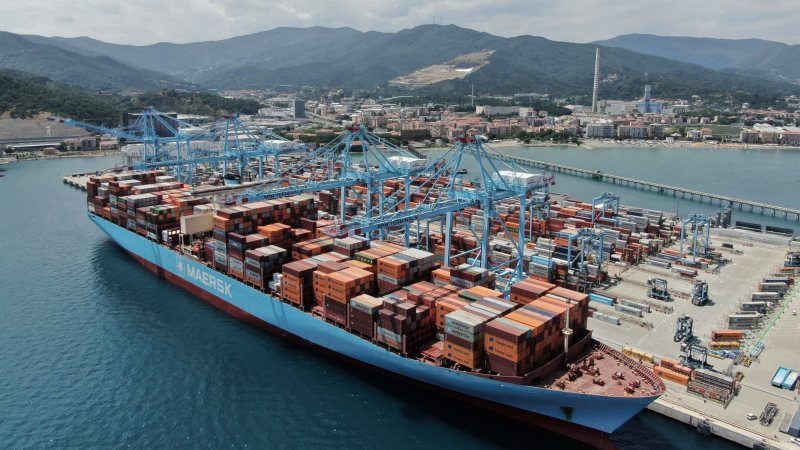
As the Yemeni front flares up again, in the Strait of Hormuz the confrontation between the United States and Iran continues, with reciprocal strikes on oil tankers and energy infrastructure. US forces struck three Iranian oil tankers, destroying one of them, the Kylo, while the Pasdaran claimed attacks against three other oil tankers and three US-linked vessels transiting the strait. As a result, merchant traffic remains reduced to a minimum. According to Lloyd's List Intelligence data, an average of around a dozen ships a day have transited over the past ten days.
M.L.