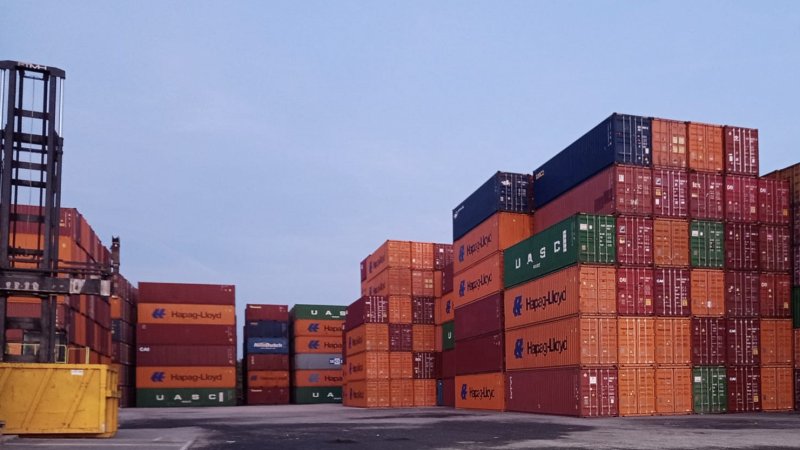





The global container ship orderbook is approaching 40% of the capacity of the fleet in service, a level that brings renewed attention to the risk of overcapacity in liner shipping. In March 2026, Bimco estimated the global orderbook at more than 1,350 ships totalling 11.8 million TEU, an all-time record and a 28% year-on-year increase compared with the end of 2025. More recent figures from Alphaliner, referring to the end of June 2026, point to 1,592 ships totalling 12.98 million TEU, equal to 38.3% of the cellular fleet currently in service.
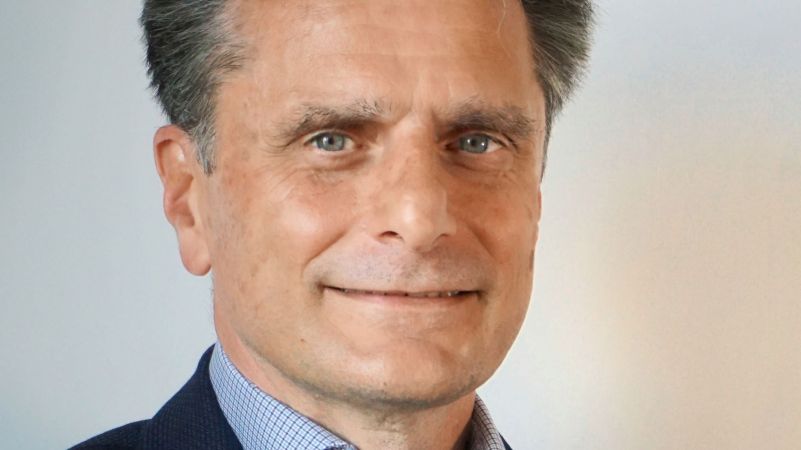
This figure coexists with an apparently opposite reality: today, it is difficult to find available slots, and several vessel segments have virtually disappeared from the spot market. But this is only apparent, and the explanation lies in the difference between nominal capacity and the capacity actually available. The diversion around Africa caused by the Red Sea crisis lengthens vessel rotations compared with the Suez route. As a result, with the same fleet and weekly service frequency, a longer route absorbs more ships and reduces the capacity available on the market. The return to Suez is slow and not definitive. For example, Maersk chief executive Vincent Clerc said that around one third of services normally routed through the canal had resumed operations, but that the company had opted for a gradual approach, because too many lines returning at the same time could cause ships to build up in European ports, worsening existing congestion.
According to Clerc, the bottlenecks are not confined to Asia. The Danish group reports problems in terminals and road haulage at ports such as Santos, Apapa, those in the United Kingdom and, more broadly, across Europe. Headhaul demand from Asia is currently growing at around 7% a year, a pace faster than the expansion of terminal and inland transport capacity. Clerc also noted that the composition of Asian exports is changing: growth is no longer being driven mainly by traditional consumer goods, but by industrial products linked to electrification, such as solar panels, wind turbines and cooling systems for data centres. These categories are less seasonal than consumer demand and may support more stable flows over time.
Clerc himself played down concerns over the orderbook, stressing that the resilience of demand has already surprised expectations several times: despite years of debate over deglobalisation and uncertainty over oil prices, volumes continue to grow. The executive nevertheless acknowledged that the scale of recent orders could reflect overly optimistic expectations for future growth in Asian exports.
The structural issue lies not so much in quantity as in the composition of orders, which remains skewed towards larger vessel segments. At the end of 2024, container ships of 8,000 TEU or more accounted for 92% of capacity on order, according to Bimco, and in March 2026 units of 12,000 TEU and above represented 65% of the TEU booked. This excess capacity in large vessels, mainly deployed on the Asia-Europe and transpacific ocean trades, creates a displacement risk: when the new mega-ships enter service, the tonnage they replace could be pushed into regional markets, increasing supply there as well.
Since July 2025, however, an opposite trend has emerged: 74% of new orders by number of ships have involved units below 6,500 TEU, compared with less than 30% in the previous 12 months, according to Alphaliner. This shift reflects the need to replace ageing feeder and regional tonnage, a requirement that has not yet been sufficiently covered by more recent orders. The overall size of the orderbook, however, remains shaped by the mega-orders placed in 2023 and 2024, whose impact on the fleet will only become visible as deliveries take place over the coming years.
More than half of the ships on order are also designed for the use of alternative fuels: Bimco notes that at the end of August 2025, 53% of the units in the orderbook, equal to 77% of the TEU booked, were prepared to use fuels other than traditional bunker fuel. This figure shows that shipowners and charterers are combining capacity growth with fleet renewal and compliance with environmental regulations. As for the active fleet, Alphaliner reported in April 2026 that total capacity stood at just under 34 million TEU, with the fully cellular component at 33.6 million TEU across more than 6,700 active ships.
Mara Gambetta