











- The European Commission presented its proposal to revise the ETS, the European Union’s main carbon pricing instrument, on 17 July 2026. The linear reduction factor would fall to 3.7% for 2031-2035 and to 1.7% between 2036 and 2040, a more gradual pace than the trajectory followed so far.
- Free allowances will depend on the publication of corporate decarbonisation plans and, for sectors covered by the CBAM such as steelmaking, their gradual phase-out will be postponed until 2038. Member states will also have to allocate at least 50% of ETS auction revenues to investment in industrial decarbonisation.
- The text will now be examined by the European Parliament and the Council of the EU.
The European Commission presented its legislative proposal on 17 July 2026 to revise the European Union emissions trading system (ETS), together with an action plan for industrial electrification. The text, aimed at energy-intensive industry, maritime transport, aviation and waste management, will now have to be negotiated by the European Parliament and the Council of the EU before becoming a regulation in force. The most important element of the proposal concerns the linear reduction factor (LRF), which determines how much the volume of allowances available on the market is reduced each year. Brussels proposes setting it at 3.7% for 2031-2035 and lowering it to 1.7% between 2036 and 2040, a more moderate pace than the current trajectory. In the final five-year period under consideration, up to 2% of high-quality international credits could also finance decarbonisation projects outside the EU.
The free allowance mechanism is also changing: 80% of certificates will be distributed only after the annual publication of corporate decarbonisation plans, while the remaining 20% will require proof that they have actually been implemented. For sectors covered by the carbon border adjustment mechanism (CBAM), such as steelmaking, the reduction in free allowances will slow and their phase-out will be extended until 2038, an option that had already been circulating in the days before the proposal was presented. Member states will have to allocate at least 50% of national revenues from ETS auctions to investment in the decarbonisation of industry, clean technologies, aviation and the maritime sector. The proposal also integrates permanent carbon removal into the ETS and provides for the gradual inclusion of waste incineration among the activities covered by the mechanism.
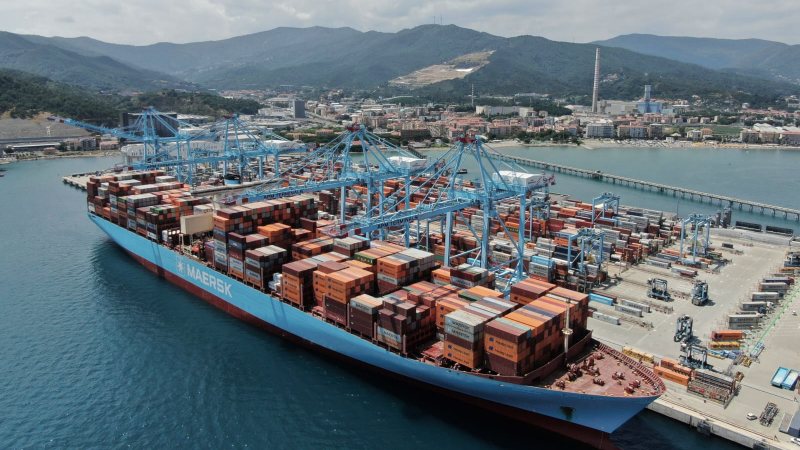
For maritime transport, the reform builds on a framework already in force since 1 January 2026, when shipping companies began offsetting 100% of CO2 emissions on intra-EU routes and at least 50% on routes between European and non-EU ports. The revision also extends the scope to certain ports in third countries located in Europe’s so-called “wider neighbourhood”. The dossier runs alongside work already under way on ETS2, the separate system that will cover buildings and road transport from 2028: in mid-June 2026, the (European Parliament and the Council of the EU reached a provisional agreement on price containment mechanisms and a strengthened market stability reserve (MSR), accompanied by €3 billion in advance funding for 2026-2027.
The announcement comes at the end of a preparatory process launched with a public consultation on CO2 benchmarks, which closed on 8 June 2026. Two days before the proposal was presented, ten member states led by Poland sent a joint paper calling for a “pragmatic and fair” revision, the reopening of the ETS2 dossier and a system more closely aligned with differences between member states in terms of energy mix and gross domestic product per capita. According to the requests made by the ten countries, free allocations should cover 78% of industrial emissions; the European Commission proposal instead provides for an overall allocation of about €100 billion to industry and an electrification target of 46%.
The text will now have to be negotiated by the European Parliament and the Council of the EU before final adoption and publication in the Official Journal of the EU. The new rules on the linear reduction factor would apply from the 2031-2035 period, while the effects on free allowances for CBAM sectors would remain in force until 2038.
Antonio Illariuzzi