










- Cargo theft in road haulage has taken on the features of a structured criminal activity, with incidents rising by 27% in North America in 2024 and annual losses estimated at up to $35bn, according to research by Geotab. The average cost of each incident has exceeded $202,000, while insurance premiums are rising and deductibles are increasing.
- The criminal model has evolved: physical robberies are increasingly being accompanied by document fraud, carried out through fake intermediaries, cloned identities and unauthorised collections. Some 23% of operators already identify fraud and scams, rather than break-ins, as the main threat. The driver cannot be the last line of defence against organisations that operate like legitimate freight forwarding agencies.
- The technological response exists and is economically viable, but adoption remains uneven. Some 41% of fleets use GPS tracking, while only 23% have adopted video solutions with artificial intelligence. Geotab identifies five integrated layers of defence, from biometrics to a unified data hub, with a measurable return on investment from the first avoided claim.
Cargo theft in road haulage is no longer a residual risk to be managed with a strong lock and an alert driver. It has become an organised criminal activity, with volumes, operating structures and strategies of its own, capable of eroding margins at transport and logistics companies faster than insurance cover can offset. According to data collected by Geotab in 2024, North America recorded a 27% increase in theft incidents compared with the previous year, with annual losses estimated at up to $35bn and the average value of each incident rising to $202,364, about €187,000.
These figures redefine the stakes for operators in the sector. The direct cost of a theft, including replacement of goods, deductibles and lost transport revenue, ranges from $205,000 to $215,000 per incident. Added to this is vehicle downtime for investigations, which costs between $448 and $760 a day, as well as the impact on commercial reputation: 18% of company managers identify loss of customer trust as the main secondary damage.
The threat has shifted from the physical level to the administrative one. The modern thief, as Geotab’s report puts it, "is more likely to use a file than a crowbar". Criminal organisations infiltrate the logistics chain by posing as legitimate intermediaries: through unauthorised double brokering or fake collections, they steal loads without ever forcing open a trailer door. Some 23% of operators already identify fraud and scams, rather than traditional break-ins, as the main risk factor, compared with 52% who still fear theft from unattended vehicles. That gap is set to narrow quickly in the coming years.
This transformation of crime has direct consequences for the workforce. Relying on driver vigilance as the main defence is not only operationally ineffective; it also creates unsustainable psychological pressure. Some 47% of North American operators report that fear and stress linked to theft are significant factors in job abandonment and professional burnout among drivers. In Europe and the MENA region, the figure reaches 88%. Replacing a burnt-out driver costs an average of $12,800, about €11,800, while training a driver in security procedures costs no more than $100.
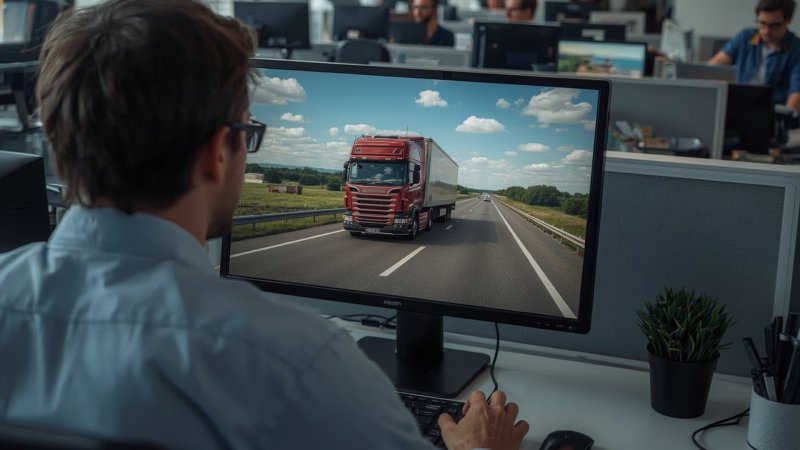
The technological divide across the sector is the core of the problem. According to the report, 41% of fleets currently use GPS tracking systems, but only 23% have adopted video recording solutions. Some 23% of operators still rely on purely physical strategies, such as locks and driver vigilance, in a scenario where criminals use sophisticated digital tools. Among those that have not yet invested in technology, 37% cite upfront costs as the main obstacle, while others point to the complexity of integration with existing systems and concerns over driver privacy.
Yet the numbers behind prevention tell a different story. A basic tracking system costs between $100 and $300 per vehicle; an advanced system with dedicated hardware ranges from $300 to $850, plus a monthly subscription of between $20 and $50. Compared with the average cost of a single theft, at more than $200,000, the economic logic is hard to ignore. Insurance companies have already begun translating this into practice: premiums are rising, deductibles, often between $5,000 and $10,000, are increasing, and some insurers require proof of active telematics systems as a condition for policy renewal.
Geotab has developed a structured response to this situation, summarised in what it calls "Blueprint 2026": a defence model built around five integrated layers. The first includes traditional physical barriers as the minimum entry threshold. The second introduces real-time asset tracking through GPS systems and geofencing of authorised areas. The third layer adds video monitoring with AI-equipped cameras and event-based recording. The fourth introduces biometric verification of driver identity, a direct tool against document fraud. The fifth, and most strategically important, is the unified data hub: an integration via application programming interfaces that centralises visibility across the entire operational chain.
This last element responds to one of operators’ most pressing needs: 31% of respondents believe that real-time data sharing with law enforcement is the most important factor in recovering stolen goods. The logistics chain is by nature distributed and fragmented, and data integration is the necessary condition for turning the response to theft, often slow and disorganised today, into a coordinated and effective intervention.
Telematics data also reveals a trend that deserves attention: drivers are independently changing their operating habits to reduce risk exposure, often with negative effects on efficiency. In Europe, night-time weekend journeys account for 40% of total trips, with figures of 30% in Brazil and Asia: a trend that suggests a desire to complete routes without stopping in areas perceived as dangerous. Brazil has also recorded a 42% increase in engine-on time while vehicles are stationary, compared with 26.5% in Asia: a sign that drivers are sleeping with the engine running so they can leave quickly in the event of an ambush. These behavioural anomalies, which are clearly inefficient in terms of fuel consumption and vehicle wear, are the direct result of a security system that places on the individual a responsibility that belongs to the organisation.
The response is not only technological. It is organisational and cultural. Logistics faces a choice with both economic and ethical implications: continue to entrust surveillance to people, exposing them to a risk they cannot manage alone, or shift that responsibility to automated systems, freeing drivers from a burden that does not belong to their role while protecting company balance sheets from events whose cost, as the data shows, is now systematically higher than the cost of prevention.
P.R.