









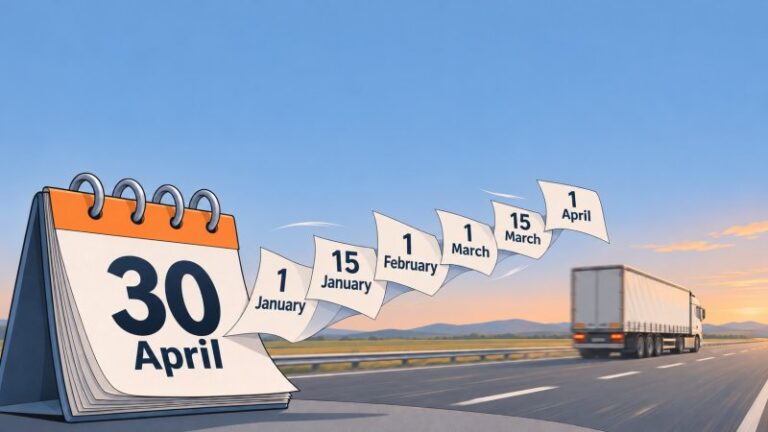
The goods have been delivered and the invoice issued, but payment can take 120 days, while the haulier still has to fund its operations and pay its subcontractors. Eliza Misiejuk of Schavemaker described this situation at ‘Polski transport drogowy i logistyka pod presją’ (Polish road transport and logistics under pressure), a conference organised by the Polish haulage association Transport i Logistyka Polska (TLP) at the European Parliament in Brussels on 18 November 2026. The conference also covered driver qualifications, vehicle weights, the ETS2 emissions trading system, military mobility and the powers of the European Labour Authority. TLP president Maciej Wroński fears that action in Poland alone could shift some business abroad. ‘If we shorten payment terms only in Poland, some customers may start commissioning transport services from other countries,’ he said. The association is therefore calling for common EU rules covering at least transport, freight forwarding and logistics. To support that call, participants proposed that industry associations from several countries agree a common position and take it forward with MEPs from different political groups. Kosma Złotowski, a member of the European Parliament’s Committee on Transport and Tourism, asked the association to specify which piece of legislation should be amended.
The association had examined the issue through an online survey whose findings it presented in Warsaw on 17 June 2025. The survey focused on what TLP calls ‘przemoc kontraktowa’, or abuse of bargaining power by customers. Payment terms of 30 to 60 days are the norm, with 85.1% of respondents encountering them very often or always. Terms of 60 to 120 days are encountered often or very often by 52.3%. Some 42.3% reported having been offered terms of more than 120 days at least occasionally. For 29.7% it happened rarely, while 12.7% encountered them often, very often or always. The clearest finding concerns when the payment period begins. Some 96.9% said it starts only once the paper documents have been delivered, including the original CMR consignment notes. This can delay payment by days or weeks and leaves the haulier bearing the risk of postal delays and documents going missing. TLP wants the payment period to start when the service is completed or, at the latest, when scanned copies are sent electronically. It also wants digital documents to be recognised as valid and electronic CMR consignment notes (e-CMR) and e-invoicing to be more widely used. For road freight, it is calling for a statutory 30-day limit that would apply to every party in the contracting chain, regardless of size, including subcontracted hauliers.
The European Commission appears to be moving in the opposite direction. On 4 November 2026 it listed its proposed regulation on combating late payment in commercial transactions, COM(2023) 533, in the withdrawals annex to its 2027 work programme. The proposal, presented on 12 September 2023, would have replaced Directive 2011/7/EU with directly applicable rules and set a general maximum payment period of 30 days. The Commission cited the more than three years the proposal had been before the co-legislators and opposition from a substantial number of Member States. It considers it unlikely that the proposal will secure the support of the Council of the EU within a reasonable time, while the European Parliament adopted its position in April 2024. Business groups are divided. SMEunited, which represents European small and medium-sized enterprises, opposes the withdrawal, while Eurochambres supports it. The Commission intends to withdraw the proposal within six months. The 2011 directive remains in force in the meantime and will continue to apply after the withdrawal unless new rules are introduced. It sets a 60-day payment period for business-to-business transactions unless the parties expressly agree to a different period that is not grossly unfair to the creditor.
Antonio Illariuzzi