




Array ( [0] => 8 [1] => 41 )

Podcast K44

Cronaca

  • 17 camionisti arrestati a Savona per furto di gasolio

    17 camionisti arrestati a Savona per furto di gasolio

    Un’indagine della Guardia di Finanza nel deposito fiscale carburanti di Vado Ligure ha coinvolto diciassette autotrasportatori, col sequestro di oltre 3.700 litri di gasolio. Il prodotto veniva sottratto durante il carico e rivenduto fuori circuito a prezzi inferiori.

Normativa

Mare

  • Si è svolto lo sciopero nel porto di Savona del 2 aprile

    Si è svolto lo sciopero nel porto di Savona del 2 aprile

    Il 2 aprile 2026 si è svolto lo sciopero di 24 ore indetto da Filt Cgil e Uiltrasporti, che hanno avviato una vertenza imperniata sull’applicazione del part-time nel terminal container Vado Gateway. Non vi sono novità nella trattativa.

Autotrasporto

  • Come la Spagna protegge l’autotrasporto dal caro gasolio

    Come la Spagna protegge l’autotrasporto dal caro gasolio

    Come il Governo di Madrid protegge il trasporto: obbligatoria la revisione automatica dei prezzi in funzione del costo del carburante, alza il peso del gasolio nella formula dal 30 al 40 percento e introduce obblighi di trasparenza in fattura. Il tutto dentro un pacchetto da cinque miliardi di euro pensato …

    Two ships hit in the Persian Gulf as Hormuz closes

    • Between 30 and 31 March 2026, the Persian Gulf entered a critical phase with direct attacks on commercial vessels. A Kuwaiti tanker was struck in the port of Dubai, while a container ship linked to Israel was targeted with ballistic missiles.
    • According to Bimco, more than 130 container ships are stranded in the Gulf, equivalent to 1.5% of global capacity, with 3% of container volumes immobilised. Major shipping lines have suspended services, while alternative ports are seeing traffic diversions.
    • The effects are spreading to energy markets and operating costs. Insurance premiums are rising and transit times are lengthening due to global rerouting. Crew safety is emerging as a critical factor in a scenario comparable to an active war zone.


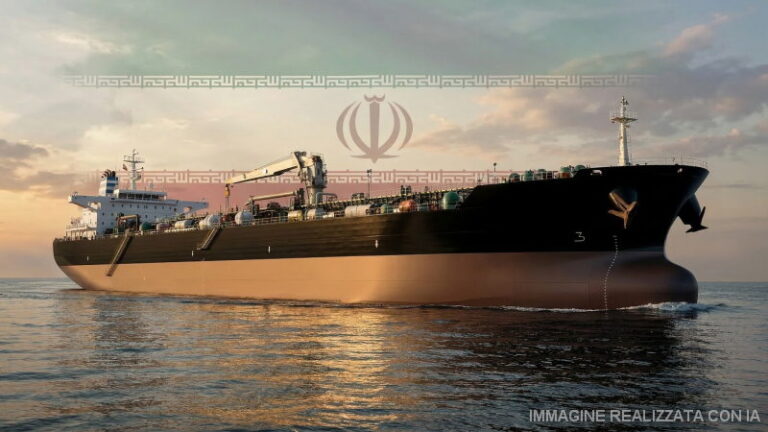
    On 30 and 31 March 2026, two attacks on cargo vessels were recorded in the Persian Gulf amid mounting tension and uncertainty over potential US military moves, as Washington concentrates forces in the region. Iran’s Islamic Revolutionary Guard Corps appears to be intensifying operations against civilian shipping, directly targeting tankers and container ships in transit or at anchor between the Persian Gulf, the Strait of Hormuz and the Gulf of Oman.

    It has been confirmed that the Kuwaiti tanker Al-Salmi, a Very Large Crude Carrier loaded with around two million barrels of crude oil, was hit by a drone while anchored off the port of Dubai. The attack caused a fire on board visible from a great distance. According to Kuwait Petroleum Corporation, all 24 crew members were evacuated without casualties, while UAE authorities intervened to contain the blaze and prevent a spill. The incident marks a critical escalation: a major port hub such as Dubai has been directly involved in a military action against a commercial vessel.

    The nature of the attack and the choice of target point to a deliberate strategy. Striking a fully laden tanker in one of the world’s leading logistics hubs sends a clear signal that no Gulf port can be considered safe. Kuwait Petroleum Corporation has attributed the attack to Iran, while several international sources link it to retaliation for raids carried out hours earlier by the United States and Israel in Iran’s Isfahan province.

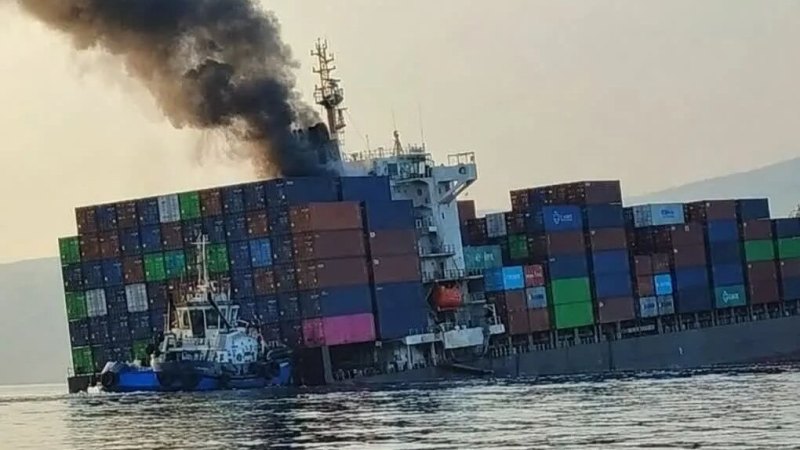
    The following day, 31 March, the crisis escalated further with an attack on the container ship Express Halfong. Iran’s Islamic Revolutionary Guard Corps officially claimed responsibility, stating it had used ballistic missiles against a vessel associated with Israel. According to the IRGC, this was the 88th wave of attacks since the start of the conflict. However, there has been no independent confirmation of the incident outside Iran. If verified, the use of ballistic missiles against a commercial ship would represent a significant shift in operational capability, increasing range, precision and lethality, and extending risk to any vessel with direct or indirect links to countries involved in the conflict.

    These incidents form part of a sequence of attacks that began on 1 March, when several vessels, including tankers and cargo ships, were struck off the coast of the United Arab Emirates using drones and other systems, resulting in at least one seafarer fatality. In the following days, further attacks targeted US tankers and US-flagged vessels, including the Stena Imperative, which was damaged near Bahrain. According to maritime intelligence sources, the campaign appears structured and sustained, with targets selected based on geopolitical affiliation.

    The most immediate operational impact concerns the closure of the Strait of Hormuz. According to Bimco’s Container Shipping Market Overview & Outlook, container ship transits have effectively been halted since late February. More than 130 vessels of this type are currently stationary in the Gulf, representing 1.5% of global capacity, while 3% of global container volumes cannot be moved. The impact extends to 5% of global vessel demand and, indirectly, to nearly 10% of the world fleet when accounting for diversions, suspensions and redeployments. Major shipping lines have suspended services to Gulf ports or reorganised routes to avoid transiting Hormuz. This has led to prolonged stays for vessels already in the area and congestion at regional ports. At the same time, alternative hubs such as Yanbu on the Red Sea are experiencing increased diverted traffic.

    Economic pressure is building along three main lines. The first concerns energy markets: attacks on tankers, particularly those on 5 March and 30–31 March, are fuelling concerns over supply continuity. Given that around 20–21% of global oil flows through Hormuz, any disruption or perceived risk translates into price volatility, as noted by analysts cited by Bloomberg. The second concerns insurance. War risk premiums have been widely reintroduced and have reached levels comparable to those seen during the Iran–Iraq war in the 1980s, directly affecting shipowners’ operating costs and, in turn, freight rates and global logistics costs.

    The third concerns maritime routes. The Gulf crisis compounds the situation in the Red Sea, where Houthi attacks between 2023 and 2025 had already reduced the viability of the Suez Canal. At the end of March, Yemeni forces announced their intention to resume attacks against Israel, raising the possibility of renewed strikes on passing vessels. The combined effect is forcing many Europe–Asia routes to divert via the Cape of Good Hope, extending transit times by 10–14 days, according to Bimco analysis. This increase is affecting fleet planning, container utilisation and inventory management across supply chains.

    At the same time, pressure on crew safety is intensifying. At least one seafarer has been killed in the early days of the conflict, and dozens of crews remain on board vessels stranded in the Gulf with no clear operational outlook. The International Maritime Organization (IMO) estimates that around 20,000 seafarers are effectively “trapped” in the Gulf. Organisations such as UANI and international maritime agencies continue to issue operational guidance to support shipowners’ decision-making in a high-risk environment.

    The international response remains fragmented. The United States continues military operations in Iran, while signals reported by Bloomberg suggest possible uncertainty over further escalation. The United Arab Emirates is managing operational disruptions in its ports without taking a clear political stance, while Kuwait, through Kuwait Petroleum Corporation, has openly blamed Iran for the attack on the Al-Salmi.

    M.L.

    © TrasportoEuropa - Riproduzione riservata - Foto di repertorio
    Segnalazioni, informazioni, comunicati, nonché rettifiche o precisazioni sugli articoli pubblicati vanno inviate a: redazione@trasportoeuropa.it


      Puoi commentare questo articolo nella pagina Facebook di TrasportoEuropa

      bottone newsletter piccolo Vuoi rimanere aggiornato sulle ultime novità sul trasporto e la logistica e non perderti neanche una notizia di TrasportoEuropa? Iscriviti alla nostra Newsletter con l'elenco ed i link di tutti gli articoli pubblicati nei giorni precedenti l'invio. Gratuita e NO SPAM!



    CONTENUTI SPONSORIZZATI


Videocast K44

Aereo

  • Primi razionamenti di carburante in aeroporti italiani

    Primi razionamenti di carburante in aeroporti italiani

    Air BP Italia ha emesso Notam di disponibilità ridotta di cherosene negli aeroporti di Linate, Bologna, Venezia e Treviso tra il 4 e il 10 aprile 2026, fissando tetti di rifornimento per volo e priorità alle categorie essenziali, sullo sfondo del blocco dello Stretto di Hormuz che minaccia circa la …

Ferrovia

  • Partito primo treno InRail da Pordenone

    Partito primo treno InRail da Pordenone

    Il 2 aprile 2026 è partito il primo treno InRail dall’Interporto di Pordenone, diretto a Cuneo e sono state inaugurate opere per sei milioni di euro. Gestione ponte del terminal dopo l’uscita di Hupac e percorso verso una società mista pubblico-privata per consolidare il ruolo nello scenario del Nord-Est.

Persone

  • Torello perde il fondatore Nicola

    Torello perde il fondatore Nicola

    La mattina del 5 marzo 2026, la società di trasporto campana Torello ha annunciato la morte del fondatore Nicola Torello. Ha trasformato un’impresa individuale in una multinazionale europea.
Still automatizza carico e scarico dei camion

TECNICA

Still automatizza carico e scarico dei camion
Amazon vuole portare i robot dal magazzino alla porta di casa

TECNICA

Amazon vuole portare i robot dal magazzino alla porta di casa
Linde MH presenta i carrelli retrattili Ri al LogiMat

TECNICA

Linde MH presenta i carrelli retrattili Ri al LogiMat
Schmitz rinnova la vasca leggera

TECNICA

Schmitz rinnova la vasca leggera
Kögel presenta in Italia un semirimorchio per container leggero

TECNICA

Kögel presenta in Italia un semirimorchio per container leggero
previous arrow
next arrow
Il tribunale liquida filiale francese di Ziegler

LOGISTICA

Il tribunale liquida filiale francese di Ziegler
La Cina avvia produzione industriale di robot umanoidi

LOGISTICA

La Cina avvia produzione industriale di robot umanoidi
Come funziona la nuova consegna ultrarapida di Amazon

LOGISTICA

Come funziona la nuova consegna ultrarapida di Amazon
Toyota entra nell’alleanza dell’idrogeno per i camion

LOGISTICA

Toyota entra nell’alleanza dell’idrogeno per i camion
Il Governo rinvia a luglio 2026 la tassa sui pacchi esteri

LOGISTICA

Il Governo rinvia a luglio 2026 la tassa sui pacchi esteri
previous arrow
next arrow
Il taglio delle accise è prorogato fino al primo maggio

ENERGIE

Il taglio delle accise è prorogato fino al primo maggio
Petrolio sopra 110 dollari al barile dopo dichiarazioni di Trump

ENERGIE

Petrolio sopra 110 dollari al barile dopo dichiarazioni di Trump
Scoperti a Fiumicino i vampiri del carburante per aerei

ENERGIE

Scoperti a Fiumicino i vampiri del carburante per aerei
Le condizioni dell’Iran per il transito delle navi a Hormuz

ENERGIE

Le condizioni dell’Iran per il transito delle navi a Hormuz
Il petrolio raggiunge i 116 dollari e rischio forniture Gnl

ENERGIE

Il petrolio raggiunge i 116 dollari e rischio forniture Gnl
previous arrow
next arrow
Trans.eu cresce in Italia con la borsa carichi relazionale

SERVIZI

Trans.eu cresce in Italia con la borsa carichi relazionale
L’evoluzione della borsa carichi autotrasporto è relazionale

SERVIZI

L’evoluzione della borsa carichi autotrasporto è relazionale
Padrosa realizzerà un parcheggio per camion ad Alessandria

SERVIZI

Padrosa realizzerà un parcheggio per camion ad Alessandria
Leviahub e Pionira accelerano sull’adozione dell’eCmr

SERVIZI

Leviahub e Pionira accelerano sull’adozione dell’eCmr
Trans.eu avvia il pagamento sicuro per l’autotrasporto europeo

SERVIZI

Trans.eu avvia il pagamento sicuro per l’autotrasporto europeo
Sanilog rinnova nel 2026 il piano sanitario per lavoratori della logistica

SERVIZI

Sanilog rinnova nel 2026 il piano sanitario per lavoratori della logistica
L’IA si sta sempre più integrando nel trasporto

SERVIZI

L’IA si sta sempre più integrando nel trasporto
Scania amplia la rete di assistenza nel Lazio

SERVIZI

Scania amplia la rete di assistenza nel Lazio
Nuovi contributi per cibersicurezza alle Pmi e autonomi

SERVIZI

Nuovi contributi per cibersicurezza alle Pmi e autonomi
Dkv Mobility presenta un nuovo software per gestione trasporti

SERVIZI

Dkv Mobility presenta un nuovo software per gestione trasporti
Forto nomina Matteo Caiti Country Manager Italia

SERVIZI

Forto nomina Matteo Caiti Country Manager Italia
Nuove tecnologie Geotab per il trasporto refrigerato

SERVIZI

Nuove tecnologie Geotab per il trasporto refrigerato
Sanzione antitrust di 5 milioni sul noleggio veicoli per Ald

SERVIZI

Sanzione antitrust di 5 milioni sul noleggio veicoli per Ald
Circle Group potenzia software per porti e interporti

SERVIZI

Circle Group potenzia software per porti e interporti
Scania realizza una struttura per i camion a Milano

SERVIZI

Scania realizza una struttura per i camion a Milano
previous arrow
next arrow