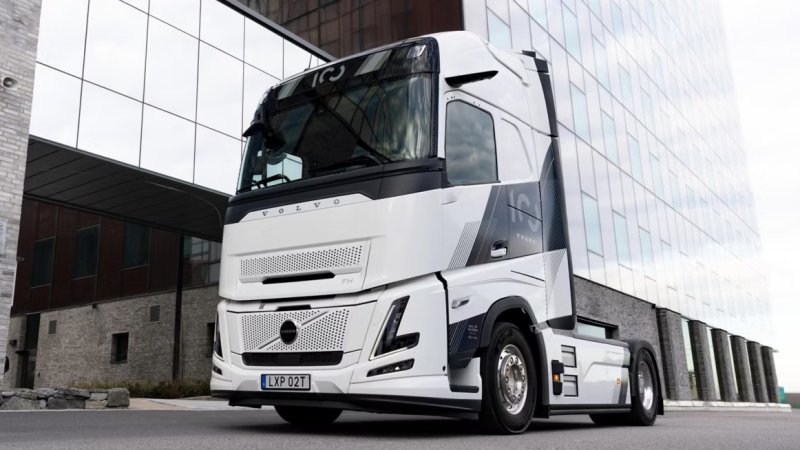








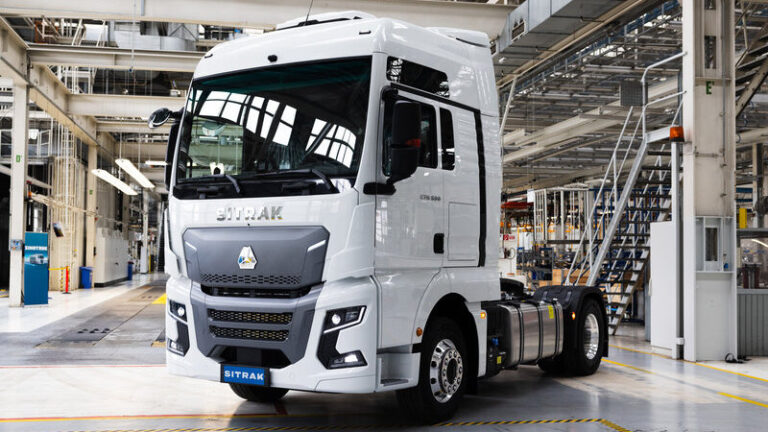
On 3 March 2026, the Austrian company Steyr Automotive announced the start of industrial vehicle production on behalf of the Chinese brand Sinotruck under a contract manufacturing arrangement, and on the same day the first unit rolled off the assembly line. Production has begun in semi-knocked down mode – meaning the vehicle arrives at the plant partially assembled – and will later continue in complete knocked down form, in which vehicles are delivered fully disassembled. This phase will also include the production and painting of the cabs, adding local value to the process.
At the Austrian factory, Steyr Automotive will produce both diesel and electric trucks in various configurations. In addition to the European market, Sinotruck will distribute these units in the Middle East and Africa, but assembling them in Europe demonstrates particular attention to EU countries. Production of between 600 and 800 vehicles is planned for 2026, compared with the plant’s capacity of up to 25,000 units per year operating on two shifts. The facility currently employs 1,100 people, a number that could rise to 2,000, similar to the period when the factory produced vehicles for MAN.
Sinotruck is entering Europe with the Sitrak brand, in collaboration with MAN Truck & Bus (Volkswagen Group). The German manufacturer has transferred platforms, cab design and engines derived from the MAN TGA/D20 and D26 series to the Chinese company, ensuring compliance with all EU regulations, including Euro VI standards for diesel engines, which deliver up to 540 hp and are available with long-haul cab configurations. At IAA 2024, the manufacturer also presented an electric version equipped with batteries of around 600 kWh.
Operating as a contract manufacturer, the plant will also be able to build trucks for other brands, which could mainly be Chinese. Steyr has already signed a contract with SuperPanther to produce electric trucks for the European market starting this year. Chinese manufacturers are interested in this option because it could allow them to avoid import duties on fully built vehicles. Japanese carmakers used a similar strategy in the 1980s to bring their passenger cars into Europe. Local production also improves brand perception among European customers and strengthens after-sales service.
Sinotruck is not the first Chinese industrial vehicle manufacturer to enter – or plan to enter – Europe. Other brands include SuperPanther, the giant BYD, already present with passenger cars, as well as Windrose and Sany. Their ambitions are significant and potentially challenging for the European industry. SuperPanther plans to produce 16,000 units by 2030, Windrose – which is based in Belgium and has a production programme in France – is focusing on electric models with ranges of up to 940 kilometres, Sany plans to deliver its first units by the end of 2026, and BYD already sells electric buses and intends to expand into trucks in the near future.
Antonio Illariuzzi