







For those involved in transport management and supply chain operations, growing complexity translates into an ever-increasing number of decisions that must be taken in ever shorter timeframes. Capacity constraints, volatile demand, unforeseen events along routes and cost pressures are making the operating environment increasingly challenging. In this context, artificial intelligence is moving beyond the boundaries of traditional automation to take on a more active role in decision-making processes.
Philipp Pfister, Sector Vice President at Transporeon, describes this shift as an evolution that is already under way: “Artificial intelligence can ease the daily decision-making burden by handling repetitive operational choices, from carrier selection to route optimisation and the management of disruptions, leaving people more space for strategy and relationships.” According to Pfister, this is not a futuristic vision, but a concrete trajectory that the sector is already following.
Transporeon believes that by 2030, 50% of supply chain solutions will integrate autonomous decision-making mechanisms. This figure highlights a structural change: systems are no longer designed solely to execute predefined instructions, but to contribute to the achievement of measurable operational objectives. The gap between potential and adoption, however, remains wide. Today, 36% of shippers state that they have basic or intermediate artificial intelligence capabilities in their transport management systems, while only 1% use advanced and autonomous decision-making solutions. At the same time, 23% of organisations are expanding the implementation of agentic artificial intelligence systems and a further 39% are experimenting with them, signalling a direction that is now clearly defined.
The difference between traditional and agentic automation is one of the key points highlighted by Pfister. The former operates on the basis of rigid rules, following a deterministic logic: if a specific condition occurs, the system executes a predefined action. “Agentic AI, by contrast, is goal-oriented and capable of planning and executing multiple stages of an operational flow, observing the context, making decisions and acting within boundaries set by the company.” It is no longer about carrying out a single command, such as booking a carrier at a fixed rate, but about pursuing overall outcomes, such as optimising transport costs while maintaining high service levels.
The first applications of these technologies are focusing on limited but highly decision-intensive areas: spot transport procurement, carrier evaluation and qualification, real-time monitoring of estimated times of arrival and the management of operational disruptions. Once effectiveness has been demonstrated in these contexts, the scope of use is set to expand, progressively involving the entire supply chain. According to Pfister, “limiting agentic artificial intelligence to a few use cases will become increasingly difficult as companies begin to understand its systemic value”.
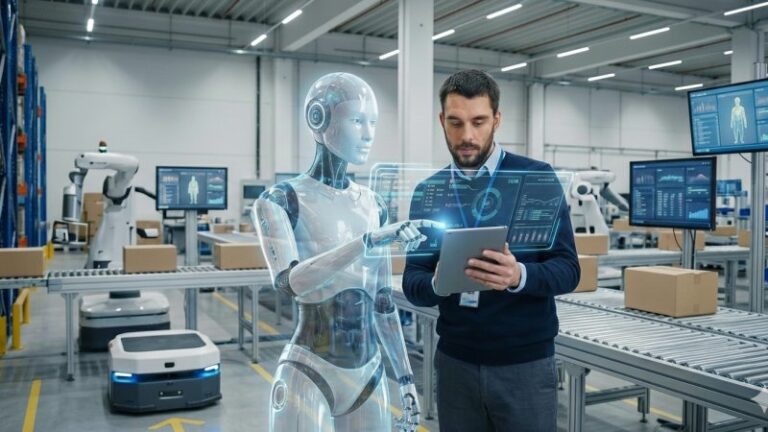
This change is also reflected in how artificial intelligence is perceived within companies. Whereas it was once considered primarily a tool, there is now growing discussion of “AI as a colleague”. Two thirds of shippers and more than half of carriers recognise artificial intelligence’s ability to automate repetitive tasks, freeing up time for higher value-added activities. “Agentic artificial intelligence systems are becoming an integral part of the workforce,” Pfister observes, stressing that the key issue is no longer whether AI can be useful, but whether it is capable of performing a specific task and how quickly it can deliver tangible results.
Despite the rising level of autonomy, human involvement in decision-making remains central. Pfister emphasises that agentic artificial intelligence must be treated as a new resource, with clear objectives, continuous feedback and ongoing evaluation. This approach makes it possible to build reliable support over time, avoiding uncontrolled drift. Operational roles are already evolving: transport planners and managers are increasingly taking on the role of supervisors of intelligent agents, retaining responsibility for strategic decisions while execution is progressively delegated to systems.
The infrastructure dimension represents one of the main enabling factors, but also one of the most significant barriers. Data quality continues to be cited as the primary obstacle to the adoption of artificial intelligence by more than half of shippers and carriers. However, as Pfister points out, the availability of accurate data is not sufficient if it remains confined within silos. Interoperability between systems and partners along the value chain amplifies the potential of AI, allowing agents to learn more quickly thanks to shared, real-time information.
Alongside interoperability, the modularity of solutions plays a decisive role. Companies must be able to integrate agentic artificial intelligence into existing infrastructures without having to rebuild them from scratch. A gradual adoption path makes it possible to align the pace of implementation with available resources and the organisation’s level of technological maturity, reducing operational and financial risks.
As decision-making autonomy increases, governance becomes an indispensable element. “It is essential to define clear boundaries around what artificial intelligence agents can do and what remains excluded,” Pfister underlines. Setting these limits before scaling up adoption makes it possible to monitor agent performance throughout all stages of the operational flow, not just the final outcome. This approach ensures visibility and enables potential errors to be identified promptly, allowing systems to be progressively refined once the pilot phase has been completed.
Relying on platforms recognised by the market and on a network of trusted partners helps to keep implementations aligned with corporate objectives. Looking ahead, Pfister identifies 2030 as a key horizon, with the adoption of agentic artificial intelligence potentially reaching 50%. After a phase of experimentation in 2025, 2026 is set to mark an acceleration, supported by assessments of data maturity, the launch of controlled pilot projects, the adoption of already validated governance models and targeted investments in people’s skills. “Digital colleagues based on artificial intelligence will become a structural component of supply chain teams,” Pfister concludes.