







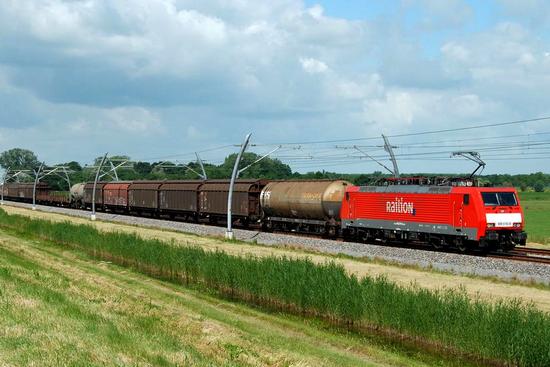
Relations between the Netherlands and Germany have reached what can be described as a dispute over the third track. At the heart of the disagreement is the upgrade of the main rail link to Germany and the Netherlands’ key freight artery known as the Betuweroute. Under an agreement signed in 2013, the project includes, on German territory, the construction of a third track alongside a comprehensive modernisation. However, German railways have taken a very relaxed approach to this commitment, a situation that the Netherlands now finds unacceptable, as stated by the Dutch State Secretary for Infrastructure, Thierry Aartsen.
The dispute stems from a communication sent by German rail network operator DB InfraGo to its Dutch counterpart ProRail, which contained no formal commitments on completion dates for the works along this corridor. This comes despite the fact that the Dutch railways have long since completed the upgrades falling under their responsibility. According to unofficial information gathered by ProRail, there is a risk that, given the large-scale works under way and planned across the German rail network, DB InfraGo may not be able to guarantee the upgrading of access to the Betuweroute for another ten years.
Looking more closely at the issue, the line concerned is the Oberhausen–Arnhem railway, also known in German as the Hollandstrecke, or “Dutch line”. This is a key double-track main line just over 90 kilometres long, running along the Lower Rhine through Wesel, Emmerich and the German-Dutch border to Arnhem, and forming part of the corridor between the Ruhr region and Amsterdam. While the Netherlands has completed the planned upgrade works, the German infrastructure manager, according to its Dutch counterpart, has caused frequent disruptions due to protracted works, with traffic often reduced to a single track or even fully suspended. A further long-term full closure is scheduled from 20 April to 17 May 2026. DB InfraGo had committed to carrying out the works within an 80-week timetable, which ProRail says will not be met.
In the meantime, numerous freight trains on cross-border services have been diverted. The main alternative route is the Brabant Route, which runs from the port of Rotterdam through the Venlo border crossing into Germany. However, this line already carries heavy traffic and, during closures of the main Betuweroute corridor, has had to absorb an average additional load of 135 freight trains per day. The outlook is far from encouraging, as Germany plans extensive works between 2025 and 2035 on numerous routes requiring radical modernisation, with significant consequences for operational reliability.
Piermario Curti Sacchi