







In January 2026 Hupac strengthened its intermodal rail connection between Novara and Duisburg, which has now reached six weekly services. The route directly links the main intermodal hub of the Ruhr area with one of Northern Italy’s key logistics nodes, further consolidating Hupac’s offer on the Germany–Italy corridor, a central axis of the Rhine–Alpine route. The connection is operated as a rail shuttle with regular transit times and loading profiles C70, C400 and P400, enabling the transport of standard intermodal units and high-profile semi-trailers. The service also accepts ADR goods and waste, provided they are not classified as ADR.
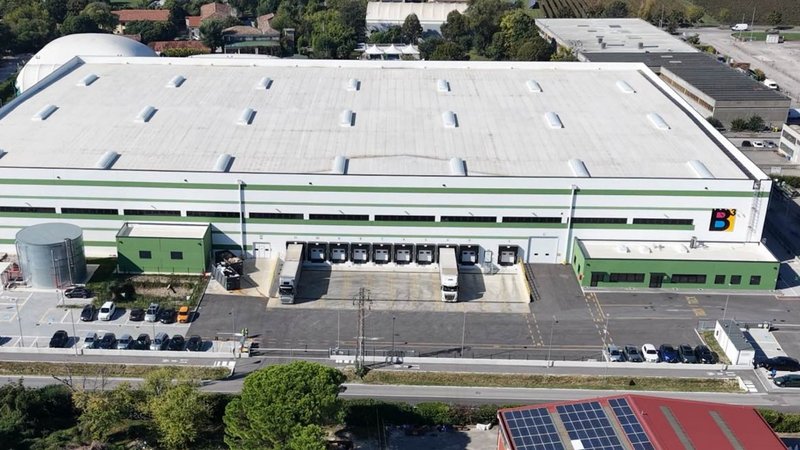
The Duisburg Gateway Terminal plays a strategic role within the Hupac network as a sorting platform for flows from the Benelux countries and North-Eastern Europe. Thanks to the connection with Novara, the service also enables efficient routings to and from Poland, Austria, Hungary, Romania and Turkey, leveraging the gateway connections already active at the German terminal. On the Italian side, Novara Cim is confirmed as a reference hub for distribution across Northern and Central Italy, as well as for domestic links with other terminals in the network.
From the Duisburg Dgt terminal, six weekly round trips are scheduled. From Monday to Thursday, the acceptance cut-off time is set at 22:00, with availability for collection at Novara Cim at 11:00. On Saturdays there are two cut-off options, at 11:00 and 14:00, both with availability for collection at Novara at 06:00. From the Novara Cim terminal, departures are scheduled from Monday to Saturday. For all operating days, the cut-off time is 12:00, with availability for collection at Duisburg Dgt at 06:00. From February, cut-off and collection times at Novara may improve, with later cut-offs and earlier collections.
This service upgrade forms part of a broader strengthening of relations along the Rhine–Alpine axis, which Hupac implemented in 2025 with the aim of increasing capacity, reliability and flexibility on one of Europe’s most important intermodal corridors. Among the main developments is the Ghent–Piadena service, linking the Belgian industrial area with a strategic terminal south-east of Milan. The service was launched with three pairs of weekly trains at the beginning of 2025, with plans to increase frequencies once the start-up phase has been completed.
Also on the Belgium–Italy corridor, Hupac increased the frequency of the Zeebrugge–Piacenza intermodal connection. The service, already active in previous years, has risen from three to four weekly rotations, with the aim of improving operational stability and making transit times along the North Sea–Italy axis more competitive. The connection uses the ClDn terminal in Zeebrugge as its point of origin and reinforces Piacenza’s role as a distribution hub for Emilia and North-West Italy.
On the domestic front, in 2025 the company also strengthened the internal shuttle between Busto Arsizio-Gallarate and Padua, increasing its frequency from four to six pairs of weekly trains, with departures from Busto from Tuesday to Saturday and returns from Padua from Monday to Saturday. The connection acts as a feeder for the entire Hupac network, ensuring operational continuity between domestic flows and international links to Germany, Switzerland, the Benelux and Spain.