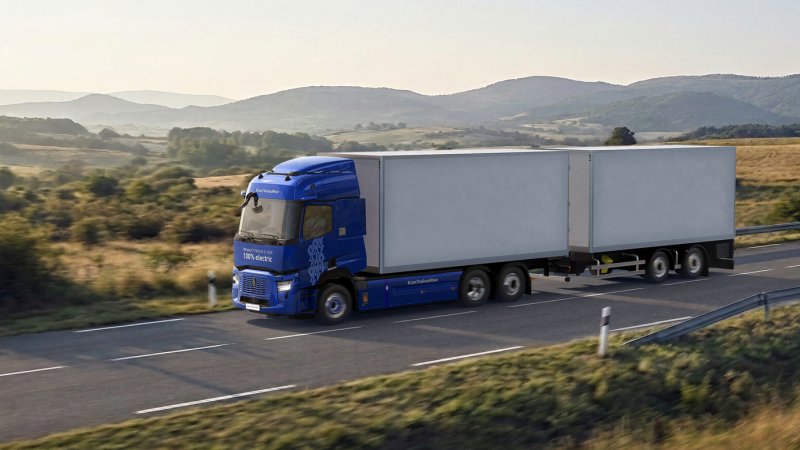










From 1 July 2026, one of the main regulatory extensions introduced by the European Union’s Mobility Package will come into force, with direct effects on the operational organisation of companies using light commercial vehicles. Vehicles with a gross mass over 2.5 tonnes and up to 3.5 tonnes, if employed in international freight transport or third-party cabotage operations, will be required to comply with the same obligations currently applicable to heavy vehicles, including the use of the second-generation smart tachograph, version G2V2.
According to the European Labour Authority (ELA), the scope of application concerns exclusively transport for hire or reward, thus excluding own-account transport. The new rules apply both to EU drivers and to non-EU drivers, provided they are employed by transport companies established in a Member State. Domestic transport, however, remains excluded and will continue to be governed by national regulations.
The obligation to use a tachograph goes hand in hand with the full application of the rules on driving and rest times. Daily driving time may not exceed nine hours, extendable to ten hours no more than twice a week, while weekly driving time will be limited to 56 hours, with a maximum of 90 hours over two consecutive weeks. After 4.5 hours of driving, a break of at least 45 minutes will be mandatory, which may be split into periods of 15 and 30 minutes. Daily rest must be at least 11 consecutive hours, with the possibility of a reduction to nine hours in specific cases, while regular weekly rest remains set at 45 continuous hours.
The introduction of the G2V2 tachograph is also closely linked to the rules on the posting of drivers. Under EU legislation, a driver is considered posted when temporarily working in a Member State other than the one where the company is established. In cabotage, meaning domestic transport carried out in a State where the undertaking is not established, posting always applies. The same applies to cross-trade operations, when transport takes place between two Member States or between a Member State and a third country without the company being established in either. Bilateral operations, namely journeys from the State of establishment to another country and back, as well as simple transit without loading or unloading, are excluded from posting.
In this context, the tachograph also takes on an operational role in the administrative management of posting, as the recorded data can be used to verify the type of operations carried out and their duration. Drivers will also be required to carry the posting declaration and the documentation requested by control authorities, while companies will have to organise work schedules in line with time limits and minimum rest periods.
Pietro Rossoni