




Array ( [0] => 8 [1] => 41 )

Podcast K44

Cronaca

  • Carabinieri scoprono 387 kg di hashish su camion a Capua

    Carabinieri scoprono 387 kg di hashish su camion a Capua

    Un autoarticolato con targa spagnola partito da Barcellona e diretto nel Casertano è stato fermato dai carabinieri al casello di Capua lungo l’A1. Nel semirimorchio, tra l’ortofrutta i militi hanno scoperto 387 kg di hashish confezionati in panetti.

Normativa

Mare

Autotrasporto

    ANALYSIS | US shipyards, from golden years to Chinese dominance

    Immagine: TrasportoEuropa

    Between the end of World War II and the 1970s, the American shipbuilding industry represented a strategic asset for both national defence and the economy. This supremacy stemmed from the post-war industrial reconversion, which enabled the United States to capitalise on cutting-edge infrastructure, a skilled workforce, and technological dominance across the entire production chain. American shipyards were capable of producing naval units for both military and commercial purposes, directly influencing the global maritime geopolitical balance.

    With the rise of globalisation and the emergence of new manufacturing powers, the US shipbuilding sector began to lose ground. From the 1980s onwards, competition from countries such as Japan, South Korea and later China drastically eroded the competitiveness of American firms. The reasons lie in several structural factors: the lack of an integrated industrial policy, rising production costs, the decline of specialised labour, and the progressive closure of many civilian shipyards. It is also worth noting that President Reagan eliminated state subsidies for the sector. Today, the US share of the global commercial shipbuilding market stands at around 0.1 per cent, reflecting an almost complete loss of relevance in the industry.

    Meanwhile, China has adopted a planned approach to maritime dominance. Through government subsidies, public-private synergies, and the expansion of capacity in modern shipyards, China has secured over 50 per cent of global shipbuilding orders. The Chinese approach has been systemic: shipbuilding was elevated to a tool of geopolitical projection, integrated within an ecosystem encompassing freight transport, port logistics, and military capabilities. Moreover, China’s shipbuilding industry has succeeded in positioning itself as a preferred supplier in emerging markets, consolidating its influence across strategic maritime corridors through the Belt and Road Initiative.

    In this context, the Trump administration outlined a plan to revive the American shipbuilding sector, now seen as a weak link in the country’s industrial structure and strategic resilience. The plan includes the creation of a Shipbuilding Policy Office within the National Security Council, the introduction of punitive tariffs of at least one million dollars for each Chinese vessel docking in US ports, and a requirement to use American ships for transporting certain categories of domestic goods. The protectionist objective is twofold: to curb Chinese expansion and stimulate the reactivation of a national industrial supply chain.

    However, the director of the Port of Los Angeles, Gene Seroka, has warned of the complexity of such an endeavour. “Shifting the balance of the global shipbuilding industry is not a matter of months, but of decades,” he told Bloomberg Television. Seroka also noted that, in anticipation of the new tariffs, many companies have accelerated imports, creating a surplus of inventory in port warehouses.

    Reviving the shipbuilding sector will require long-term strategic planning and massive investment. The United States faces structural challenges: a shortage of skilled labour, outdated infrastructure, regulatory fragmentation, and difficulties in accessing capital for new industrial ventures. Emblematic of these issues is the case of the USS Constellation, the navy’s new frigate, whose delays and budget overruns highlight the sector’s operational weaknesses.

    According to many analysts, regaining a competitive position in the global market could take between 15 and 25 years, depending on the consistency and continuity of the policies implemented. This is not merely a matter of technological upgrades or economic incentives: an entire industrial ecosystem must be rebuilt. Training a new generation of professionals specialising in naval engineering, advanced welding, complex project management and maritime logistics will be essential. Investment in technical universities, public-private apprenticeship and applied research programmes, and regulatory modernisation to streamline shipbuilding authorisation procedures will all be required.

    Strengthening the supplier network will also be critical, as it is currently fragmented and, in many cases, reliant on foreign components. Without a robust network of subcontractors capable of delivering quality and competitive lead times, the shipbuilding sector remains vulnerable. In addition, integrating digitalisation, automation, and environmental sustainability into new production facilities will be essential. Any revival of the shipbuilding industry must embrace Industry 4.0 technologies and comply with environmental standards, which are increasingly becoming key criteria for international contracts.

    Finally, connectivity with the port and logistics system will be decisive. The rebirth of the American shipbuilding industry must be underpinned by a port infrastructure capable of supporting the expansion of trade flows and the maintenance of a modern fleet. Without an integrated plan for port modernisation, any revival effort risks being ineffective. US shipbuilding now stands at a crossroads: to attempt a structural comeback or to accept a residual role on the global stage.


    © TrasportoEuropa - Riproduzione riservata - Foto di repertorio
    Segnalazioni, informazioni, comunicati, nonché rettifiche o precisazioni sugli articoli pubblicati vanno inviate a: redazione@trasportoeuropa.it


      Puoi commentare questo articolo nella pagina Facebook di TrasportoEuropa

      bottone newsletter piccolo Vuoi rimanere aggiornato sulle ultime novità sul trasporto e la logistica e non perderti neanche una notizia di TrasportoEuropa? Iscriviti alla nostra Newsletter con l'elenco ed i link di tutti gli articoli pubblicati nei giorni precedenti l'invio. Gratuita e NO SPAM!



    CONTENUTI SPONSORIZZATI


Videocast K44

Aereo

  • Corte UE conferma le condanne sul cartello trasporto aereo

    Corte UE conferma le condanne sul cartello trasporto aereo

    La Corte di Giustizia dell'Unione Europea ha reso definitive le sanzioni per tredici compagnie aeree sul cartello nel trasporto delle merci, per un totale di circa 776 milioni di euro. La sentenza chiude un contenzioso durato oltre quindici anni e rafforza i poteri della Commissione Europea sui cartelli globali.

Ferrovia

  • Treno intermodale Fhp tra Nord Italia e Catania

    Treno intermodale Fhp tra Nord Italia e Catania

    Fhp Intermodal avvierà a marzo 2026 un nuovo servizio ferroviario multicliente tra Nord Italia, Bari e Catania. Il collegamento prevede inizialmente due coppie di treni settimanali con possibile aumento a tre e punta a rafforzare i flussi logistici intermodali da e verso la Sicilia.

Persone

  • Torello perde il fondatore Nicola

    Torello perde il fondatore Nicola

    La mattina del 5 marzo 2026, la società di trasporto campana Torello ha annunciato la morte del fondatore Nicola Torello. Ha trasformato un’impresa individuale in una multinazionale europea.
Geotab presenta la dash cam GO Focus Pro con IA

TECNICA

Geotab presenta la dash cam GO Focus Pro con IA
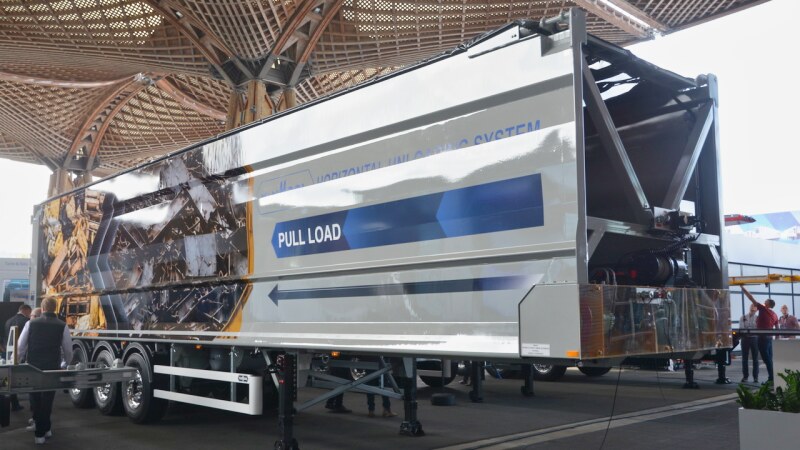
Viberti presenta Evo, semirimorchio centinato competitivo

TECNICA

Viberti presenta Evo, semirimorchio centinato competitivo
Camion ad accesso laterale integrale per la distribuzione

TECNICA

Camion ad accesso laterale integrale per la distribuzione
Nuovo semirimorchio Schmitz, con uno sguardo all’America

TECNICA

Nuovo semirimorchio Schmitz, con uno sguardo all’America
Traton e PlusAI rafforzano l’alleanza sul camion autonomo

TECNICA

Traton e PlusAI rafforzano l’alleanza sul camion autonomo
previous arrow
next arrow
Come lo spedizioniere può affrontare una crisi geopolitica

LOGISTICA

Come lo spedizioniere può affrontare una crisi geopolitica
Raben Italy rafforza hub logistico Bologna

LOGISTICA

Raben Italy rafforza hub logistico Bologna
Confetra ricorre al Tar contro la tassa sui pacchi

LOGISTICA

Confetra ricorre al Tar contro la tassa sui pacchi
Due arresti per appalti illegali nella logistica di Trieste

LOGISTICA

Due arresti per appalti illegali nella logistica di Trieste
Tribunale di Milano sequestra 27 milioni a Ceva per frode fiscale

LOGISTICA

Tribunale di Milano sequestra 27 milioni a Ceva per frode fiscale
previous arrow
next arrow
La guerra all’Iran spinge in alto il prezzo di gasolio e Gnl

ENERGIE

La guerra all’Iran spinge in alto il prezzo di gasolio e Gnl
La crisi di Hormuz può portare il gas europeo a 90 € per MWh

ENERGIE

La crisi di Hormuz può portare il gas europeo a 90 € per MWh
Hormuz bloccato e i prezzi di petrolio e gas aumentano

ENERGIE

Hormuz bloccato e i prezzi di petrolio e gas aumentano
Iran annuncia la chiusura di Hormuz, aumenta il prezzo del petrolio

ENERGIE

Iran annuncia la chiusura di Hormuz, aumenta il prezzo del petrolio
Il 2026 sarà l’anno delle batterie al sodio per i veicoli elettrici

ENERGIE

Il 2026 sarà l’anno delle batterie al sodio per i veicoli elettrici
previous arrow
next arrow
Padrosa realizzerà un parcheggio per camion ad Alessandria

SERVIZI

Padrosa realizzerà un parcheggio per camion ad Alessandria
Leviahub e Pionira accelerano sull’adozione dell’eCmr

SERVIZI

Leviahub e Pionira accelerano sull’adozione dell’eCmr
Trans.eu avvia il pagamento sicuro per l’autotrasporto europeo

SERVIZI

Trans.eu avvia il pagamento sicuro per l’autotrasporto europeo
Sanilog rinnova nel 2026 il piano sanitario per lavoratori della logistica

SERVIZI

Sanilog rinnova nel 2026 il piano sanitario per lavoratori della logistica
L’IA si sta sempre più integrando nel trasporto

SERVIZI

L’IA si sta sempre più integrando nel trasporto
Scania amplia la rete di assistenza nel Lazio

SERVIZI

Scania amplia la rete di assistenza nel Lazio
Nuovi contributi per cibersicurezza alle Pmi e autonomi

SERVIZI

Nuovi contributi per cibersicurezza alle Pmi e autonomi
Dkv Mobility presenta un nuovo software per gestione trasporti

SERVIZI

Dkv Mobility presenta un nuovo software per gestione trasporti
Forto nomina Matteo Caiti Country Manager Italia

SERVIZI

Forto nomina Matteo Caiti Country Manager Italia
Nuove tecnologie Geotab per il trasporto refrigerato

SERVIZI

Nuove tecnologie Geotab per il trasporto refrigerato
Sanzione antitrust di 5 milioni sul noleggio veicoli per Ald

SERVIZI

Sanzione antitrust di 5 milioni sul noleggio veicoli per Ald
Circle Group potenzia software per porti e interporti

SERVIZI

Circle Group potenzia software per porti e interporti
Scania realizza una struttura per i camion a Milano

SERVIZI

Scania realizza una struttura per i camion a Milano
Transporeon introduce nuove soluzioni TMS con l’intelligenza artificiale

SERVIZI

Transporeon introduce nuove soluzioni TMS con l’intelligenza artificiale
Pietro Lanza è direttore generale di SB Italia

SERVIZI

Pietro Lanza è direttore generale di SB Italia
previous arrow
next arrow