



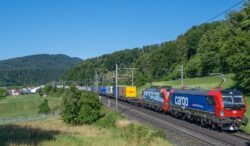

CargoBeamer increases frequencies between Germany, Italy and France
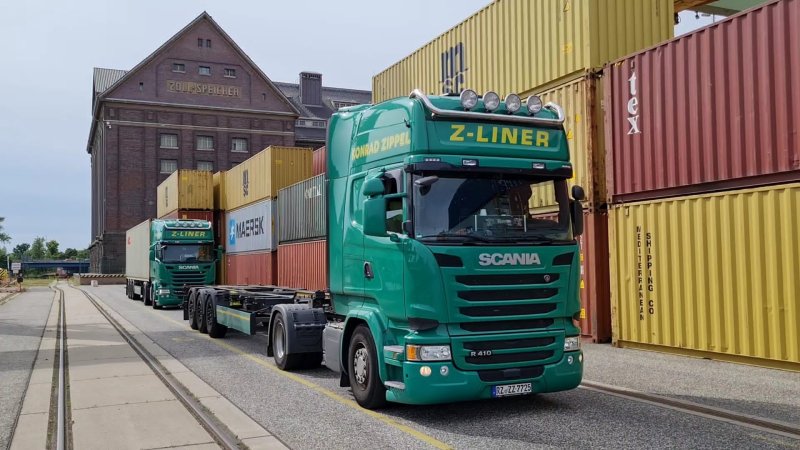
CargoBeamer has strengthened three intermodal rail services linking Germany, Italy and France, increasing frequencies for the transport of craneable and non-craneable semi-trailers. The Kaldenkirchen–Domodossola route now operates 22 return services a week, making it one of Europe's highest-frequency intermodal connections. In France, the Calais–Perpignan service has increased to eight return services a week, doubling its frequency in less than six months following two expansions in 2026. The operator plans a further increase to two daily departures to meet the needs of time-sensitive freight transport. The service between Kornwestheim, near Stuttgart, and the Milan area has also increased from four to five weekly return services, with departures every working day. Launched in April 2026 to replace the rolling motorway service, the connection also offers dedicated capacity for non-craneable semi-trailers. Further expansion is planned for 2027, when the upgraded terminals at Kaldenkirchen and Domodossola become operational, enabling CargoBeamer to increase frequencies further between Germany and Italy.
IATA calls for tighter checks on dangerous goods
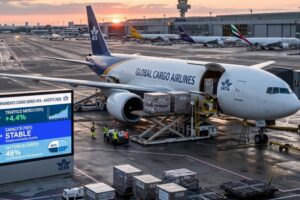
The International Air Transport Association (IATA) is calling for tighter checks throughout the air cargo supply chain to tackle the risks posed by undeclared or misdeclared dangerous goods. In the first half of 2025, around 80% of dangerous goods incidents reported to the association involved undeclared or concealed products, including lithium batteries, electronic cigarettes and aerosols. According to IATA, airport security screening, primarily designed to detect explosives and terrorist threats, is not sufficient to identify all hazardous substances. Action is therefore needed before shipments reach airports, involving manufacturers, e-commerce platforms, freight forwarders and postal operators. The association is calling for stronger regulatory oversight, accurate product identification, improved training and acceptance checks, and more effective use of shipment data to identify high-risk cargo. Airlines and ground handling operators should step up checks before loading, while airports are being urged to improve coordination and information sharing among operators.
Alliance against driver fatigue
More than 60% of lorry drivers and 66% of bus drivers say they regularly drive while fatigued. Figures released by the European Transport Workers' Federation (ETF) highlight a road safety problem largely linked to long working hours, irregular shifts and insufficient rest periods. To raise awareness among operators and authorities, ETF and Roadpol, the European Roads Policing Network, organised a day of activities focused on preventing driver fatigue. One event took place at a parking area near Raeren, on the Belgium–Germany border, bringing together professional drivers, trade unions and law enforcement representatives. Discussions highlighted the need for stronger enforcement of driving and rest time rules and more effective application of European regulations. According to ETF, fatigue is not simply an individual issue but also stems from working arrangements and the economic pressures affecting the road haulage industry.
Dutch road haulage costs set to rise
Road haulage costs in the Netherlands are expected to increase by between 2.9% and 4.6% for domestic services and between 2.9% and 3.3% for international services in 2027, excluding fuel and tolls. The forecasts come from an annual survey conducted by research institute Panteia on behalf of trade associations evofenedex and TLN. The increase follows a year in which domestic transport costs rose by between 3.6% and 5.4% in 2026, reaching 6.2–11.5% when fuel costs are included. Labour remains one of the main sources of cost pressure, with an increase of 4.9% forecast for 2027, following a 6.1% rise in 2026. Insurance premiums are also expected to increase by 7%, alongside higher vehicle depreciation, financing and maintenance costs. A further burden will come from the heavy goods vehicle toll introduced on 1 July 2026, which will apply throughout 2027 without the temporary discount granted in the second half of 2026 and with indexed rates. The impact will vary depending on vehicle characteristics, distances travelled and routes. As for energy costs, following a 33.5% increase in the average diesel price in 2026, Panteia forecasts a 9.4% decline in 2027, while stressing the uncertainty surrounding oil prices. Hauliers will also have to contend with staff shortages, sickness absence and higher operating costs caused by roadworks. Evofenedex recommends agreeing specific fuel and toll clauses with customers, keeping these components separate from standard transport rates. The transition to electric vehicles could offer opportunities to reduce costs through toll concessions and incentives, although the financial benefits will depend on operating conditions and charging infrastructure.