





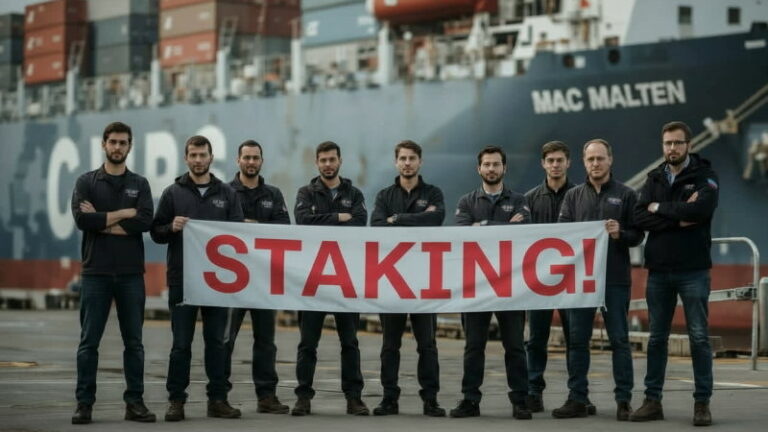
On 13 October 2025, the Rotterdam District Court ordered a temporary suspension of the strike by container lashing workers, which had been ongoing since 8 October. The measure, effective from 7 a.m. on Monday until Friday 17 October, enables port operations to resume for five days while unions and companies resume negotiations to reach a new collective labour agreement.
According to Dutch media reports, the decision came after an extraordinary hearing held on the evening of Saturday 12 October, lasting more than five hours. During the session, representatives from the FNV union and the two main lashing companies at the port—International Lashing Services and Matrans Marine Services—agreed to restart negotiations, temporarily halting industrial action.
The judicial intervention followed an urgent appeal lodged by a group of logistics companies, including the Port of Rotterdam Authority, which had warned of severe economic repercussions from the strike. The companies argued that the prolonged disruption was jeopardising supply security and causing major damage to supply chains.
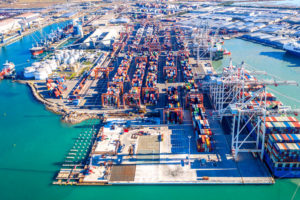
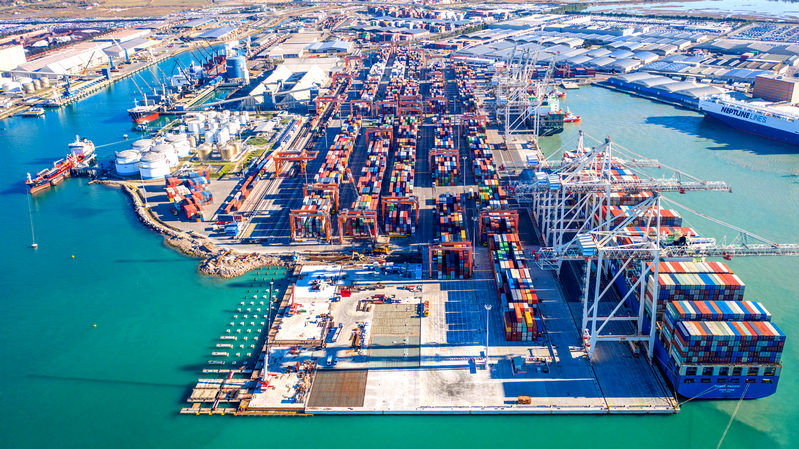
At the time of the suspension, the port’s operational situation was considered critical: according to the Port Authority, more than twenty containerships were waiting offshore, with four to five additional vessels arriving daily beyond normal traffic levels. All major container terminals—including APM Maasvlakte II, ECT Delta, Hutchison Ports Delta II and Rotterdam World Gateway—had been paralysed for almost a week.
The dispute between unions and companies centres mainly on wage increases and working conditions. FNV had lowered its initial demand from 7% to 6.5%, also calling for continued inflation indexation and a 35% supplement for team shifts. The companies had offered rises between 4% and 6%, deemed inadequate by workers. Union representative Niek Stam described the court’s decision as “satisfactory”, adding that “less than one euro per container would be enough to settle the dispute”. The companies, while viewing the measure as temporary, acknowledged that it would allow operations to restart and reduce the backlog of ships waiting to dock.
According to Deltalinqs, the association representing Dutch port operators, around 17,000 full containers per day were left unmoved during the strike, directly affecting the distribution of food, medicines and industrial materials. Shipping lines Maersk and MSC reported delays and route adjustments, while the Port Authority warned of prolonged congestion even after operations resume. The Rotterdam strike forms part of a wider wave of tension that also affected other Northern European ports in early October. In Belgium, the port of Antwerp-Bruges was hit by a protest by maritime pilots, while Germany’s Hamburg and Bremerhaven terminals faced significant congestion.