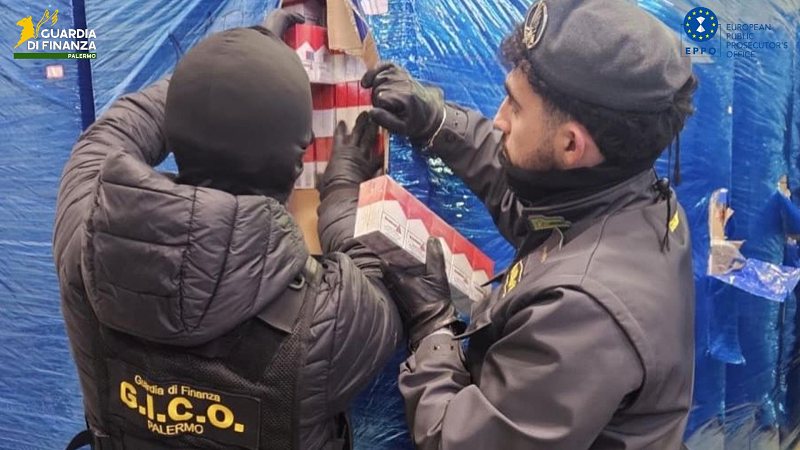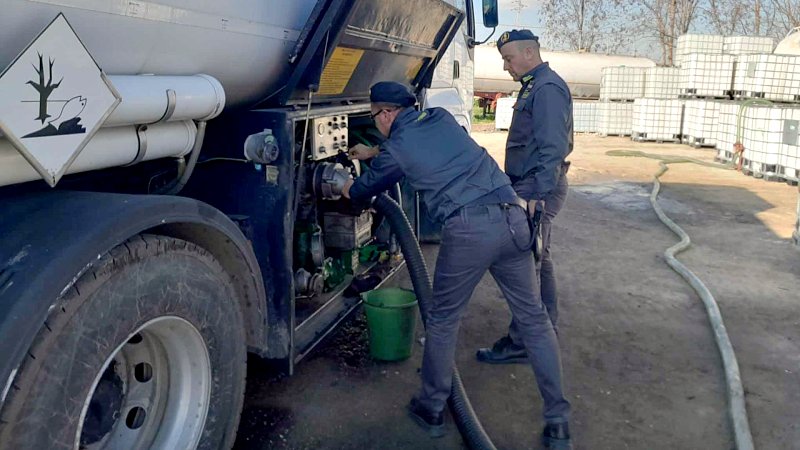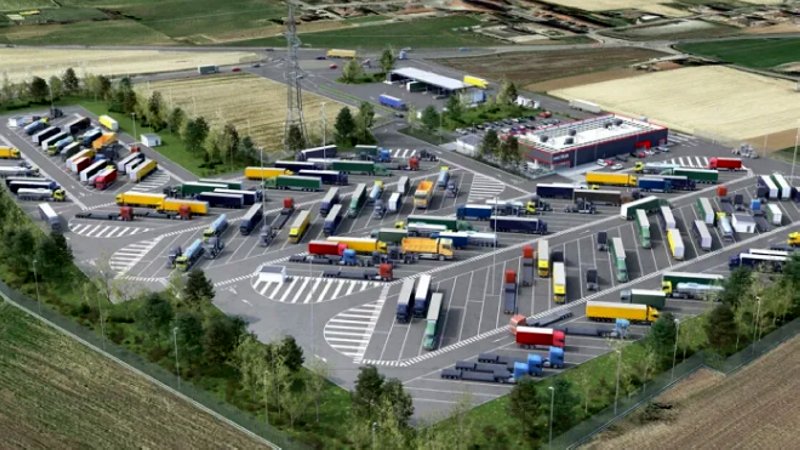







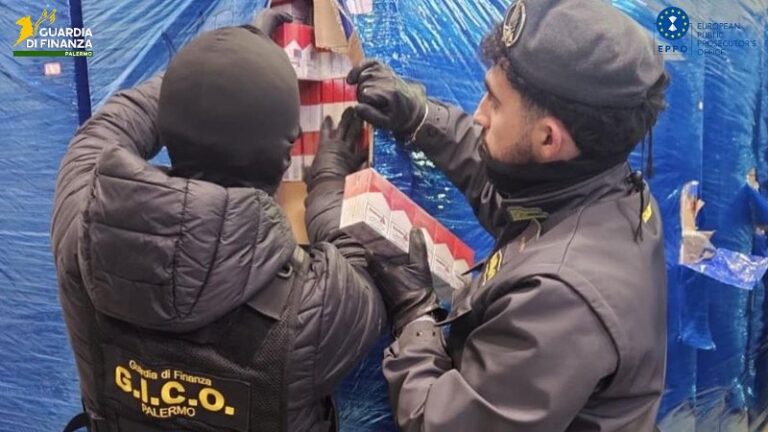
The provincial command of the Guardia di Finanza in Palermo, in an operation coordinated by the European Public Prosecutor’s Office, has dismantled a clandestine supply chain for the production and storage of smuggled manufactured tobacco stretching from Sicily to the Veneto region. The main outcome was the seizure of 17 tonnes of cigarettes ready for sale, 8 tonnes of shredded tobacco and a large clandestine factory set up inside a logistics hub in Castagnaro, in the province of Verona.
The operation involved more than 70 Guardia di Finanza officers, supported by units from Verona and Padua. At the site in Verona, investigators identified a plant worth over €2 million, equipped with machinery and tools capable of sustaining large-scale production. According to investigators, the factory could produce around four million cigarettes per day, generating estimated illicit profits of €700,000 per day and more than €240 million per year, with damage to public finances estimated at around €160 million.
Inside the facility, which covers more than 5,000 square metres, officers found 8 tonnes of cigarettes, around 8 tonnes of shredded tobacco and 108 pallets of precursors, including packaging materials bearing the Marlboro and Winston brands. Additional seizures were carried out in depots in Monselice and Terrassa Padovana, both in the province of Padua, where 31 pallets of production materials and a further 9 tonnes of illegally manufactured cigarettes were discovered.
The investigation led to 13 people being reported to the judicial authorities: eleven Bulgarian and Ukrainian nationals found at the site and housed in makeshift accommodation inside the complex, and two Italian nationals identified as the owners of the factory and the depot where the tobacco was stored. The offences alleged, according to the Guardia di Finanza, concern the possession of smuggled manufactured tobacco and trademark counterfeiting.
A key element of the investigation involved reconstructing the supply chain. Officers traced the production sites starting from earlier cigarette seizures carried out in the Palermo area. From there, they rebuilt the logistics network used to support production and distribution, despite the precautions taken by transport operators to conceal the manufacturing locations. To locate the facilities, investigators carried out prolonged surveillance activities, including video monitoring, stakeouts and tailing operations, which made it possible to track the movements of articulated lorries along the route.
The case highlights a specific operational model involving the logistics chain: the embedding of clandestine activities within hubs and depots, the separation between production sites and storage locations, the use of heavy goods vehicles for transport and the availability of packaging materials already prepared for well-known brands. It is a model that exploits infrastructure, space and flows typical of logistics to conceal illegal industrial-scale activities.